 Skip to content

Most people considering scalp micropigmentation qualify for some version of it. Standalone SMP works well for men with advanced hair loss who want a shaved-head look, for anyone with transplant scarring, and for many with thinning hair who are willing to keep their hair short. The exceptions are real, though, and they usually turn on scalp condition, medication history, or hair contrast that a photo can’t reveal. A short consult settles it in minutes, and most SMP suitability assessments include a small pigment test before anyone commits to a full session plan.
TL;DR:
- Most candidates for SMP have advanced hair loss, scars, or thinning hair suitable for short hairstyles, but scalp condition and medication use can disqualify or delay treatment.
- Scalp health, skin contrast, and medical history, especially active skin conditions or certain medications like isotretinoin and blood thinners, influence pigment retention and healing.
- SMP can be combined with hair transplants or medical therapy, with timing and sequencing tailored to individual hair loss patterns and donor hair availability.
- Absolute contraindications include active scalp diseases and uncontrolled bleeding disorders, while scars under 12 months or autoimmune conditions require careful assessment and waiting.
- Skilled, specialized technicians with experience in corrective work, scars, and female SMP provide better outcomes, particularly for complex or borderline cases.
Table of Contents
- Who Is a Good Candidate for SMP?
- What Affects Whether SMP Will Work for You?
- Can SMP Be Combined With a Hair Transplant?
- What Disqualifies Someone From Getting SMP?
- What Happens During an SMP Consultation?
- Why Specialist Experience Changes the Answer
- Ready to Find Out if You Qualify?
- Sources
- FAQ
Who Is a Good Candidate for SMP?
Candidacy questions almost always break down into three buckets: standalone SMP, hybrid SMP paired with a hair transplant, or “not yet.” That framework, used by clinics like Shapiro Medical, is a far more useful way to think about SMP suitability than a simple yes or no.
Full loss and shaved-head simulation. Men at Norwood 5 through 7, meaning most or all of the crown and mid-scalp hair is gone, tend to be the strongest standalone candidates. There’s no donor hair left to harvest for a transplant, so SMP becomes the primary option rather than a backup plan. The result mimics closely buzzed stubble, and it holds up because there’s no live hair nearby to grow out and expose uneven density underneath.

Thinning and density enhancement. Patients with moderate hair thinning, where scalp is visible through existing hair, are a different case. SMP fills in the gaps between remaining strands, reducing the contrast between skin and hair rather than replacing hair outright. This generally works better on shorter hairstyles, as longer hair can reveal inconsistencies.
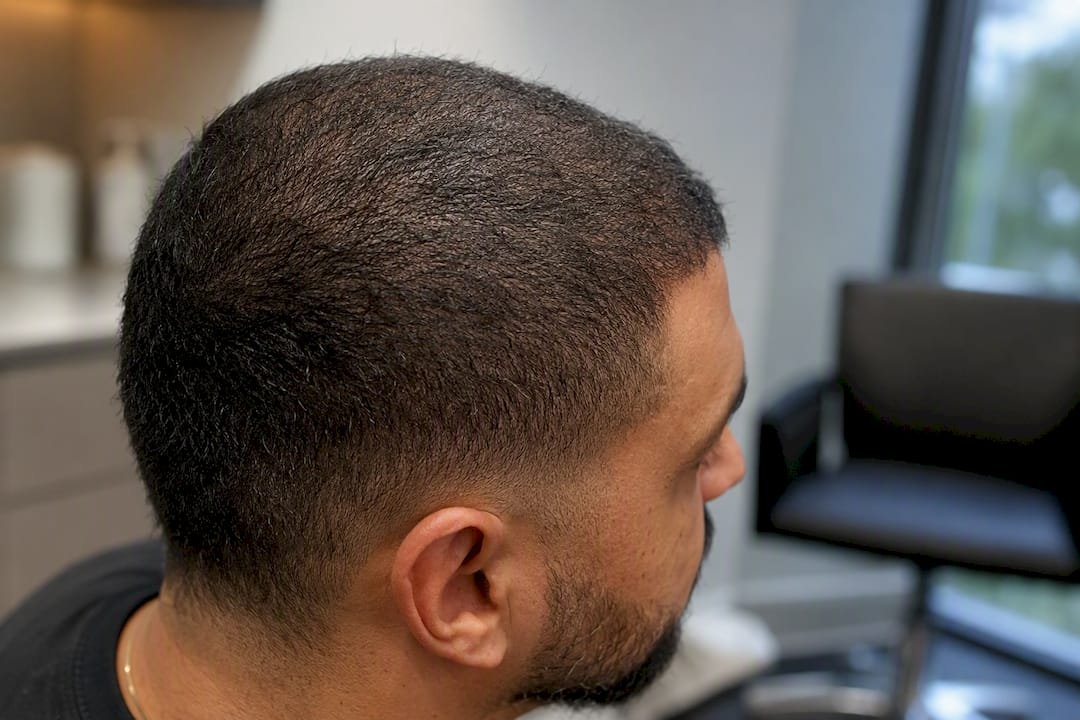
Scar camouflage. FUT strip scars and FUE dot scarring both respond well to pigment work, though outcomes vary by scar type. Raised or stretched scar tissue can hold pigment differently than surrounding skin, which is why dedicated scar camouflage protocols treat scars as their own category rather than an afterthought to a standard session.
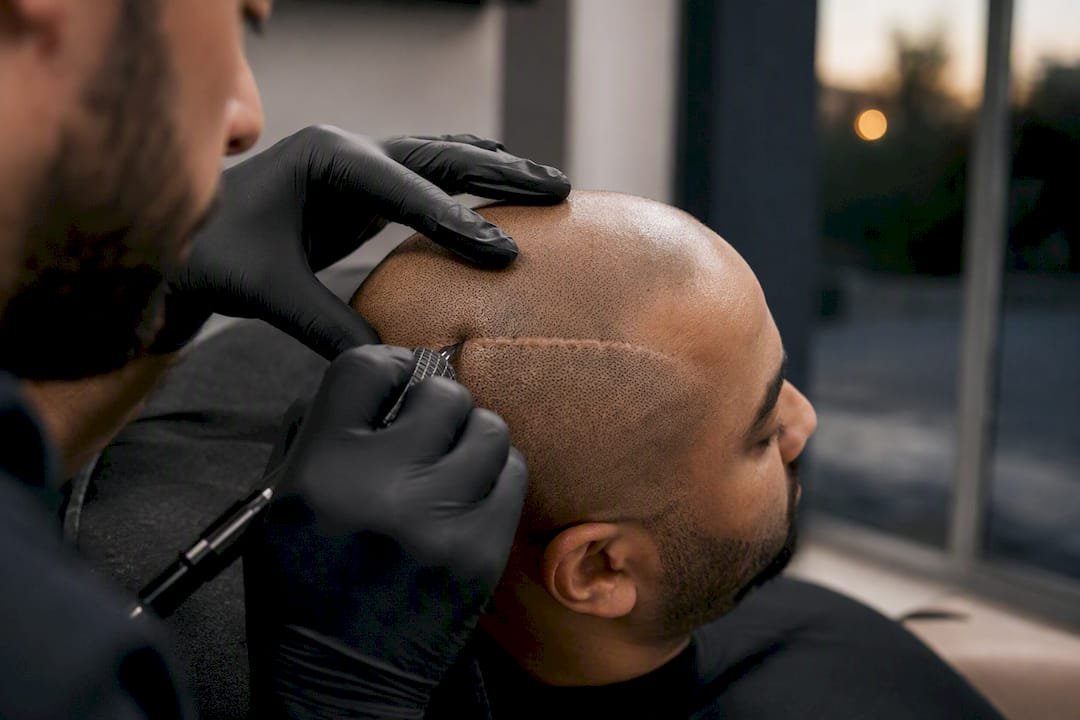
Female candidates. Diffuse thinning in women is often the exact scenario where SMP outperforms other options, mainly because donor hair for a transplant is frequently insufficient. Charles Medical Group notes that female SMP relies on softer gradients and more nuanced shading than the crisper follicle dots used on shaved male scalps, since the goal is added density under existing hair rather than a bald simulation. Female-specific SMP techniques account for that difference from the first consult.
What Affects Whether SMP Will Work for You?
Pattern of loss matters, but so does what’s happening at the skin level. A few physical and lifestyle factors shift someone from an easy yes to a “let’s discuss it” case.
- Scalp condition. Oily or flaky scalps can affect how pigment settles and heals, and scar tissue doesn’t always take pigment the same way healthy skin does.
- Hair and skin contrast. Very light, gray, or white hair against pale skin creates a low-contrast situation that’s genuinely hard to simulate convincingly with a shaved-head design, since the pigment needs enough visual difference from the skin tone to read as stubble.
- Medications and medical history. Isotretinoin (commonly known by the former brand name Accutane) and blood thinners are the two most common reasons a technician will pause treatment, sometimes temporarily and sometimes for the duration of the medication.
- Lifestyle fit. SMP looks best on hair kept short. If you’re not willing to maintain a buzzed or closely cropped style, density work will look inconsistent as hair grows out.
Pro Tip: If you’re unsure how your scalp will take pigment, ask about a small test patch before booking a full session. It’s a low-risk way to check retention on tricky skin, and reputable clinics build this into the process for exactly that reason.
None of these factors are guesswork on the clinic’s side. The International Society of Hair Restoration Surgery points out that some scalps simply retain pigment poorly regardless of technique, which is exactly why a patch test beats a phone consultation every time.
Can SMP Be Combined With a Hair Transplant?
Hybrid treatment is common, and it usually solves a problem neither procedure handles well alone. A frontal hair transplant can rebuild a hairline, but it won’t hide a donor-area scar or fix crown thinning on its own. That’s where SMP comes in as a companion treatment rather than a replacement.
- Timing matters. Most clinicians recommend waiting several months after a transplant before starting SMP, giving transplanted grafts time to settle and swelling to fully resolve.
- Scar and gap coverage. SMP conceals both FUT linear scars and FUE dot scarring, and it fills density gaps in areas the transplant didn’t fully restore.
- Sequencing decisions. When donor hair is abundant and the goal is a natural hairline, transplant-first usually makes sense. When hair loss is still progressing, ongoing medical therapy, such as finasteride or minoxidil, often runs alongside SMP rather than before it.
Finasteride is FDA-indicated for men only. Women who are or may become pregnant must not handle crushed or broken finasteride tablets, due to the risk of harm to a male fetus. It can also cause sexual side effects (reduced libido, erectile dysfunction) in a minority of men, which usually resolve after stopping treatment. Discuss these risks with a physician before starting.
What Disqualifies Someone From Getting SMP?
Some contraindications are permanent, at least for now. Others are temporary and resolve with time or a change in treatment plan.
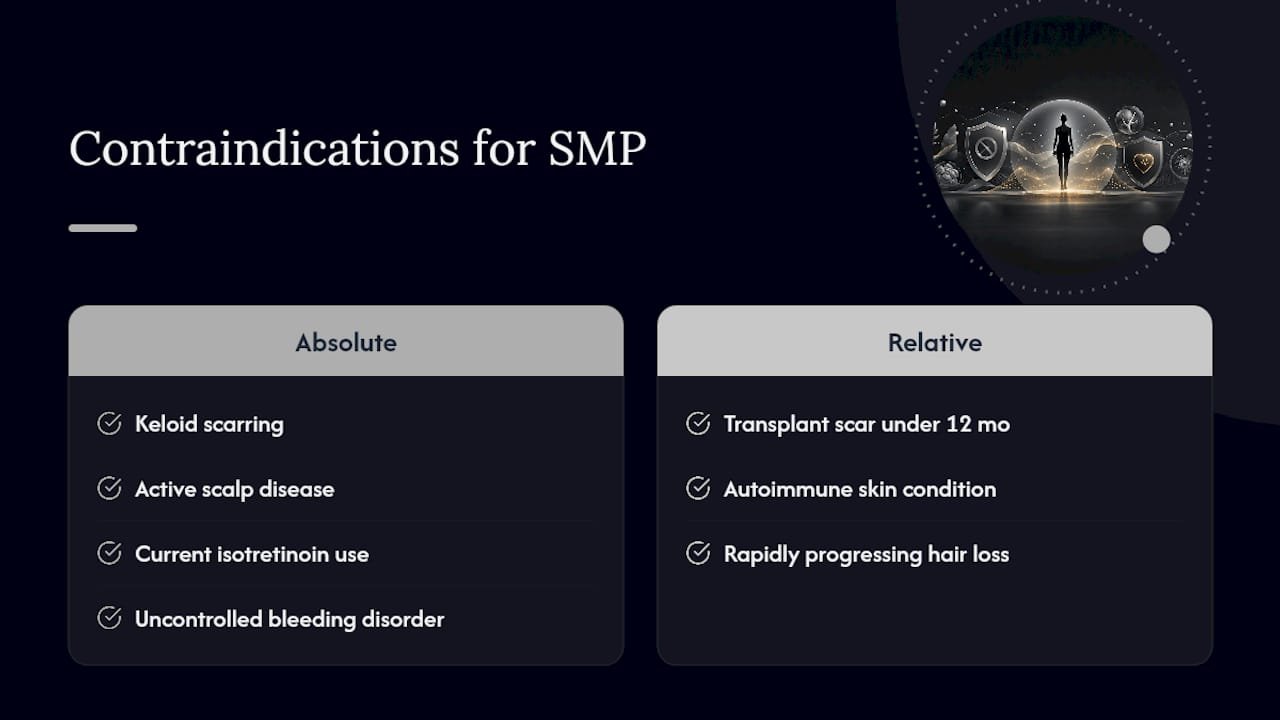
Absolute contraindications include a history of keloid scarring, active scalp disease such as psoriasis or untreated dermatitis, current isotretinoin use, and uncontrolled bleeding disorders. These aren’t judgment calls. They’re the kind of thing Shapiro Medical’s candidacy framework flags as reasons to hold off entirely until the underlying issue is addressed.
Relative contraindications need more nuance. A transplant scar under 12 months old hasn’t finished maturing, so pigment placed too early can migrate or fade unevenly. Autoimmune skin conditions and rapidly progressing hair loss also call for a closer look rather than an automatic no.
The path forward, when one of these applies, is usually straightforward: treat the scalp condition, pause the medication under a doctor’s guidance if that’s appropriate, or simply wait for a scar to fully mature. None of this is something you can self-diagnose from a mirror. A clinician needs to see the scalp in person to confirm where you land.
What Happens During an SMP Consultation?
A real consultation goes well beyond eyeballing a hairline. Technicians evaluate hair-loss staging, examine the scalp for texture and past surgical scarring, review medical history, and talk through what result you’re actually expecting versus what’s realistic.
- Staging review against Norwood or Ludwig classifications
- Scalp exam for oiliness, flaking, or scar tissue
- Medical history check, including current medications
- A pigment patch test on scalps where retention is uncertain
- A session plan, typically two to four appointments, with healed photos taken between sessions
| What gets assessed | Why it matters |
|---|---|
| Hair-loss stage (Norwood/Ludwig) | Determines standalone vs. hybrid approach |
| Scalp health and texture | Affects pigment retention and healing |
| Scar age and type | Impacts timing and camouflage technique |
| Medication history | Flags temporary or permanent contraindications |
| Maintenance expectations | Sets touch-up schedule, generally every 4 to 6 years |
Bring questions about the technician’s specific SMP training, not just general tattooing experience, and ask to see healed results on scalps similar to yours before booking anything.
Why Specialist Experience Changes the Answer
Borderline cases are where experience actually shows. Anyone can tell a Norwood 6 client with no complicating scars that they’re a good candidate. The harder calls, a woman with diffuse thinning and thin donor supply, a man with a botched prior SMP job growing patchy, someone with a scar that’s technically old enough but still slightly raised, are where training and case history matter.
There’s no single international licensing body for SMP, a gap the ISHRS has pointed out directly, which means the difference between a good outcome and a regrettable one often comes down to whether the technician trained specifically in SMP or is applying general tattoo skills to scalp work. That distinction matters more on corrective cases and unusual scarring than on a straightforward shaved-head simulation. A technician who has handled corrective work, failed prior SMP, laser removal cases, and scar camouflage will spot problems a generalist might miss until healing reveals them.
Enhanced Scalp built its practice around exactly those harder cases, corrective SMP, female SMP, and scar camouflage, with conservative hairline design and documented healed results rather than the darker, flatter look some rushed sessions produce.
— James Christopher
Ready to Find Out if You Qualify?
Enhanced Scalp specializes in the cases many clinics avoid: corrective work on failed prior SMP, laser-removal touch-ups, transplant scar camouflage, and female SMP for diffuse thinning where transplant surgery isn’t the right fit. If a general online quiz left you uncertain, a real consultation with technicians who train specifically in SMP, not general tattooing, gives you a straight answer instead of a guess.
Serving Toronto, the greater GTA, and clients across Canada, the United States, and internationally, Enhanced Scalp reviews your hair-loss stage, scalp condition, and prior treatment history before recommending anything. That includes an honest conversation if you’re not quite ready yet, and what would need to change first. Book a consultation through the scalp micropigmentation service page to get a direct read on your own candidacy, or browse healed results in the gallery to see what conservative, natural-looking work actually looks like months after treatment.
Sources
- Scalp Micropigmentation (SMP): All You Need to Know – ISHRS
- Scalp Micropigmentation: Clinical Self-Qualification Guide – Shapiro Medical
- Is Scalp Micropigmentation Right for You? – Charles Medical Group
FAQ
Is SMP risky?
SMP carries the same general risks as any tattooing procedure, including infection if aftercare is ignored or allergic reaction to pigment, but serious complications are uncommon when a trained technician follows proper sterilization and pigment selection. The bigger risk for most people is a poor cosmetic outcome from an inexperienced provider, not a medical complication.
What does SMP stand for in medical contexts?
SMP stands for scalp micropigmentation, a form of medical-grade micro-tattooing that deposits pigment into the scalp’s upper dermis to simulate hair follicles or add the appearance of density.
What age is best for SMP?
There’s no fixed age cutoff, but most clinicians prefer to wait until hair loss has stabilized somewhat, since SMP designed around a hairline that keeps receding may need revision later. Younger patients with early, aggressive loss are usually advised to discuss timing carefully during consultation rather than book immediately.
Can women get SMP for thinning hair?
Yes, and diffuse thinning in women is one of the clearer cases where SMP is often the primary option, particularly when donor hair is too limited for a transplant. Female SMP uses softer, more gradual shading than the crisper dot pattern used for a shaved male scalp.
How soon after a hair transplant can I get SMP?
Most providers recommend waiting several months after transplant surgery before adding SMP, giving grafts time to fully settle and scarring time to mature. Starting sooner risks uneven pigment placement as the scalp continues healing.
Will my SMP results fade over time?
Yes, gradual fading is normal and expected, with most people needing a touch-up roughly every 4 to 6 years depending on skin type, pigment used, and sun exposure.

