 Skip to content

Swimming after scalp micropigmentation requires a genuine waiting period, not just a cautious peek at the water. Avoid submersion entirely for at least the first 7 to 14 days, and treat the scalp as fully off limits to pools, hot tubs, and open water for the first 72 hours. Chlorine, saltwater, and bacteria in natural waters can fade, discolor, or infect fresh pigment before it settles, and most practitioners consider healing complete around 28 to 30 days. When in doubt, check with the clinic that performed your session before you get anywhere near a pool deck.
TL;DR:
- Swimming should be avoided for at least 7 to 14 days after SMP, with full submersion prohibited for the first 72 hours to prevent pigment loss or infection.
- After two weeks, water exposure is limited to gentle showers, and full water immersion remains risky until healing checks confirm no redness, scabbing, or tenderness.
- Chlorinated pools can damage pigment by drying out the skin and introducing chemicals that leach color, especially if the pool is poorly maintained or heavily chlorinated.
- Natural waters like lakes and rivers pose infection risks and can disturb pigment due to bacteria, parasites, or swimmer’s itch, requiring prompt rinsing and patience before swimming.
- Clients with scars, skin conditions, or multiple sessions should expect longer healing times and more cautious water exposure, with ongoing monitoring for signs of infection or pigment fading.
Table of Contents
- How Long to Wait Before Swimming After SMP
- Why Pools, Saltwater, and Sweat Threaten Fresh Pigment
- Practical Steps to Protect SMP Around Water
- Special Cases: Scars, Skin Conditions, and Frequent Swimmers
- Enhanced Scalp’s Aftercare Approach and When to Call the Clinic
- A Realistic Take on Getting Back in the Water
- Get Expert SMP Aftercare Guidance From Enhanced Scalp
- Sources
- FAQ
How Long to Wait Before Swimming After SMP
The honest answer depends on where you are in the healing cycle, not just the calendar date of your last session. SMP works by depositing pigment into thousands of tiny puncture points in the scalp, and each of those points behaves like a micro-wound while it closes. Water, especially treated pool water, complicates that closing process in ways that plain air exposure does not.
The first 72 hours: zero water, no exceptions. Your scalp is essentially an open wound field at this stage. Standard aftercare for fresh tattoos and piercings applies the same logic: keep the treated area dry to reduce infection risk during initial healing, and SMP follows the same biological rulebook since it places pigment under the skin.
Days 4 through 14: showers yes, submersion no. Most clinics clear clients for brief, gentle showers once visible scabbing has settled, but full submersion, pool visits, and ocean swims stay off the table. This is the window where pigment is still stabilizing and the skin barrier is at its most fragile.
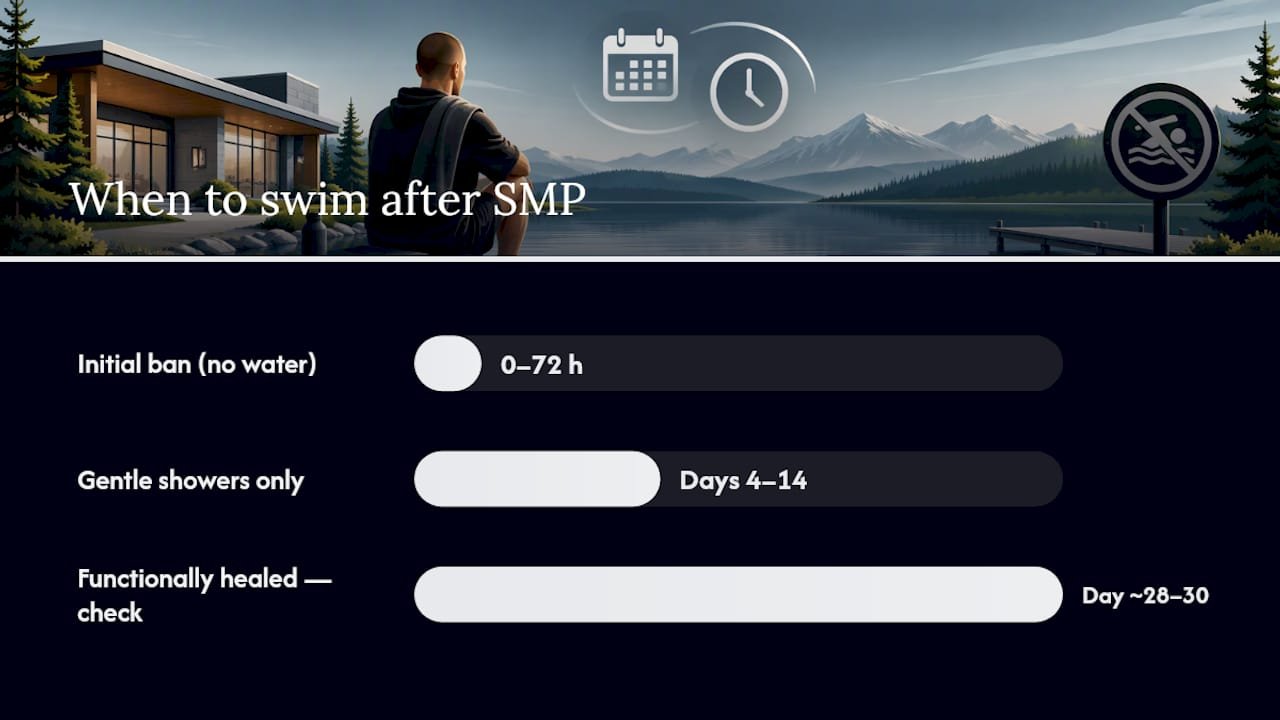
Weeks 3 through 4: functionally healed, but verify. By around day 28 to 30, most clients are considered fully healed and pigment has settled into its final tone. That said, “most people” is not “everyone,” and a quick self-check beats guessing.
Before you swim again, confirm all three of these:
- No visible scabbing, flaking, or oozing anywhere on the treated scalp
- Redness has faded to nearly nothing, not just “less than before”
- No tenderness or warmth when you touch the area
If you’re doing multiple sessions, which most SMP treatments involve, the clock resets after each one. A second or third session reopens the same micro-wound process, so the swim ban starts over every time you sit in the chair. Reviewing the session-by-session expectations for the SMP process before booking helps you plan pool trips, vacations, or swim meets around your actual treatment schedule instead of guessing.
Why Pools, Saltwater, and Sweat Threaten Fresh Pigment
Chlorine does more than sting your eyes. Research on swimmers shows that chronic exposure to pool disinfectants increases transepidermal water loss, one study recorded a jump from a baseline of 8.5 g/m²/h to 14.3 g/m²/h immediately after training sessions, which means the skin barrier dries out and weakens with repeated exposure. On fresh SMP, that same chemical stress on the skin barrier can leach pigment prematurely and leave results patchy instead of crisp.
Pool maintenance problems add a second layer of risk most people never consider. Poorly balanced pools with high copper content can cause chlorotrichosis, the same condition that turns blond swimmers’ hair green. The mechanism is metal deposition, not chlorine bleaching as most people assume, and it can affect pigment sitting near the skin’s surface too. Dermatology literature documents EDTA-containing shampoos as an effective remediation for copper buildup, which is worth knowing if you swim regularly in an older or heavily used pool.
Hot tubs carry their own set of problems. Warm, aerated water is a favorable environment for Pseudomonas and environmental mycobacteria, both of which pose a higher infection risk to skin with open micro-wounds than a standard swimming pool does.
Natural waters bring a different threat entirely:
- Lakes, rivers, and ponds can carry enteric bacteria and parasites that increase infection risk on broken skin
- Some freshwater sources host the parasite responsible for swimmer’s itch, a localized allergic reaction that triggers intense itching
- Scratching an itchy, healing scalp is one of the fastest ways to disturb settling pigment and invite secondary infection
That itch-scratch cycle deserves its own callout because it’s an easy trap. Swimmer’s itch shows up hours after exposure, well after you’ve toweled off and gone home, so the urge to scratch often hits when you’re least prepared for it. Parks Canada’s guidance on cercarial dermatitis recommends showering promptly after exposure to affected waters and resisting the scratch reflex, advice that matters even more when there’s pigment underneath the itch.
Practical Steps to Protect SMP Around Water
Protecting a fresh SMP treatment is less about perfection and more about a short list of habits you follow every single time water is nearby. Here’s the sequence that actually works:
- Confirm healing status first. Run through the three readiness checks (no scabbing, minimal redness, no tenderness) before you even pack a towel.
- If you’re not healed, don’t submerge, period. A quick rinse in a clean shower is fine; ducking your head under pool water is not.
- Skip hot tubs and public spas entirely during healing. The bacterial risk profile is worse than a standard pool, and the exposure time tends to be longer since people linger in hot water.
- Choose the least chemically aggressive pool available if you must be near water. Heavily chlorinated public pools carry more disinfectant byproduct exposure than a well maintained residential pool.
- Use a barrier when appropriate. A silicone-based barrier cream or a snug swim cap can reduce direct water contact, though neither is a substitute for simply waiting until you’re healed. Water-resistant, film-forming products help lower transepidermal water loss and reduce oxidative stress from disinfectant byproducts once your scalp is further along in healing.
- Rinse with clean water immediately after any pool or lake exposure, then pat the area dry with a clean towel. Never rub.
- Apply the moisturizer your practitioner recommended, not whatever is in your shower caddy.
- Watch for red flags for the next 48 hours: spreading redness, pus, fever, or pigment that looks like it’s lifting or fading unevenly.
Pro Tip: Keep a travel-size gentle cleanser and a fresh towel in your gym bag during the healing window. The habit of rinsing and drying immediately, rather than “later,” is what actually prevents most swimming-related SMP problems.
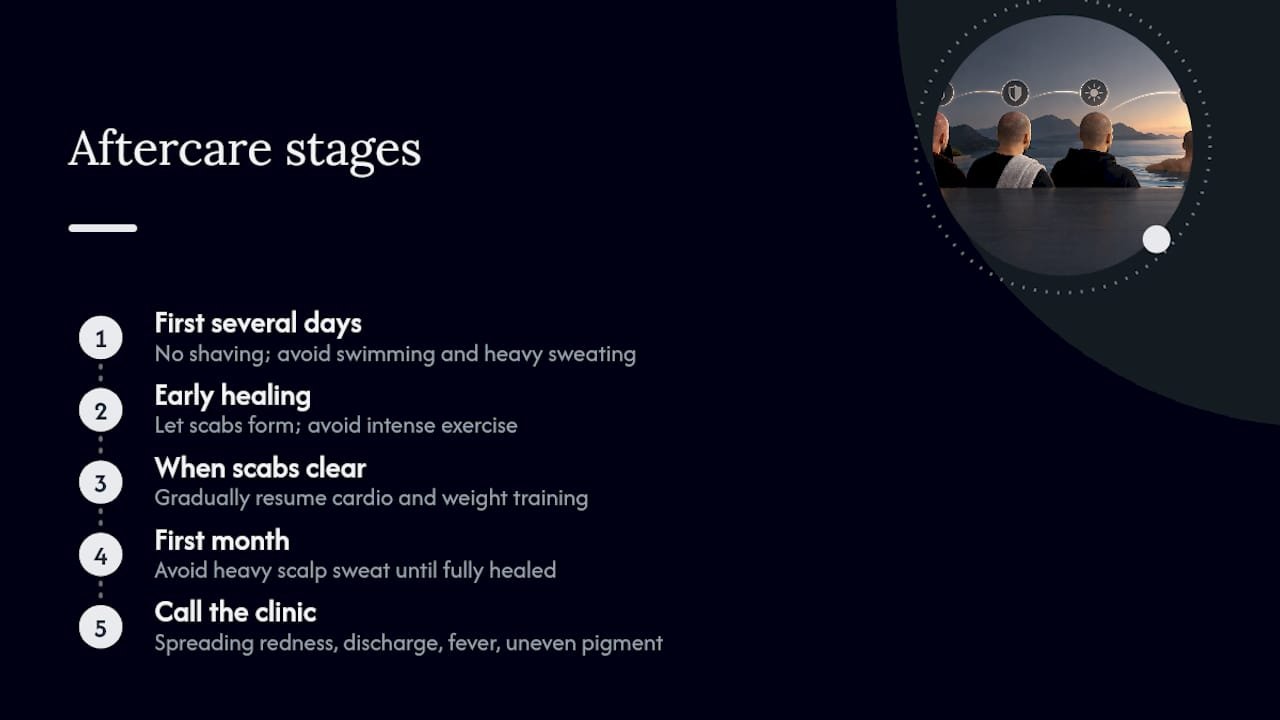
If you notice spreading redness, discharge, fever, or rapid, patchy pigment loss, contact your clinician the same day. These aren’t signs to wait out over a weekend.
Special Cases: Scars, Skin Conditions, and Frequent Swimmers
Not every scalp heals on the same schedule, and a few situations call for extra caution beyond the standard timeline.
SMP over scar tissue heals slower than SMP on healthy scalp skin, because scar tissue has different blood flow and collagen structure. Clients getting scar camouflage treatment after a hair transplant or injury should expect a longer wait before any pool exposure, and a practitioner will often recommend a test spot to gauge how that specific scar responds before committing to full coverage.
Psoriasis, eczema, or other chronic skin conditions change the calculus too. Flare-ups can mimic or mask normal healing signs, so these clients should lean on their practitioner’s explicit clearance rather than a generic day count.
Frequent swimmers, competitive athletes, lifeguards, and anyone who trains in a pool several times a week, face a different long-term reality: more frequent touch-ups. Repeated chemical exposure over months and years accelerates fading even after full healing, so build that into your maintenance budget from the start.
A few extra watch-outs worth flagging:
- Light or blond natural hair around the treated area is more visibly prone to greenish copper tinting, making EDTA shampoos worth keeping on hand
- Swimmers who train in outdoor or public pools with inconsistent maintenance should ask about water testing frequency before assuming chemical balance is fine
- Anyone managing a healing scar and a swim schedule at the same time should plan sessions around off-season months when possible
Enhanced Scalp’s Aftercare Approach and When to Call the Clinic
Some clinics build treatment plans around healing-first outcomes rather than rushing clients back to normal activity. This often means conservative timelines by design, since long-term pigment retention depends heavily on what happens (or doesn’t happen) in the first month after each session.
Clients are often advised against shaving the treated area for the first several days, and heavy sweating from intense exercise is given the same caution as swimming: both can disturb settling pigment and irritate healing skin. Cardio and weight training can typically resume gradually once initial scabbing clears, but anything that causes heavy sweat on the scalp itself should wait until full healing.
Contact your clinic promptly if you notice spreading redness, unusual discharge, fever, or pigment that seems to be fading unevenly rather than settling naturally. Reviewing what to expect in terms of side effects session by session helps set realistic expectations before you ever pick up a swim cap.
A Realistic Take on Getting Back in the Water
Wanting to swim again is completely normal, and telling a swimmer to wait a month can feel like torture. But the pigment settling into your scalp right now is a one-time investment, and rushing it for a single pool day rarely feels worth it three months later when the color looks patchy instead of even. Treat the wait as an investment in the final result, and let your practitioner, not your calendar, make the final call on timing.
— James Christopher
Get Expert SMP Aftercare Guidance From Enhanced Scalp
Some clinics design treatment plans around long-term results, which means aftercare instructions come from the same team that mapped your hairline rather than a generic printout. This personalized care is important for knowing precisely when your scalp has cleared the healing checkpoints that make swimming safe again.

If you’re considering SMP for the first time, Enhanced Scalp’s treatment page outlines what a full session involves and what recovery actually looks like week by week. Clients dealing with hair transplant scarring or previous corrective work can review the scar camouflage service for scar-specific healing considerations, since scar tissue often needs a longer runway before it’s ready for pool exposure. And if hair loss itself is a newer development, the partner resource on GLP-1 medications and hair loss is worth a read before your consultation. Booking a consultation through an SMP provider’s treatment page can help get a healing timeline built around your actual scalp, not just a general estimate.
Sources
The Canadian government’s recreational water quality guidelines back the claims about bacterial and parasitic risks in natural waters. The chlorotrichosis case report supports the copper discoloration and EDTA shampoo remediation details. The pool disinfectant review supports the transepidermal water loss figures and barrier-strategy recommendations. MedlinePlus supports the dry-healing aftercare principle applied to SMP.
- Chronic effects of swimming pool disinfectants on skin and hair
- The Greening of Hair: A Unique Case of Chlorotrichosis and Its Management
- Guidelines for Canadian recreational water quality: Microbiological pathogens and biological hazards
- MedlinePlus: Tattoos and body piercings — aftercare and risks
FAQ
Does Semi-Permanent Pigment Wash Out in Chlorine?
SMP pigment doesn’t simply rinse away like hair dye, but chlorine exposure during the healing window can cause premature fading and blotchiness while the pigment is still settling. Once fully healed at roughly 28 to 30 days, pigment is far more resistant to chlorine, though frequent long-term exposure still accelerates gradual fading over years.
What Should You Avoid Doing After SMP?
Avoid submerging your scalp in pools, hot tubs, or natural water for at least the first one to two weeks, and skip scratching, picking, or rubbing the treated area at any point during healing. Heavy sweating from intense exercise and unprotected sun exposure should also wait until scabbing has fully cleared.
How Long Does It Take for SMP to Fully Heal?
Most clients reach full healing around 28 to 30 days, though visible scabbing typically resolves within the first one to two weeks. Each additional session resets this healing clock, so multi-session treatments extend the total timeline before you’re fully clear for swimming.
Can You Go in a Pool With Fresh SMP?
Not during the first 72 hours, and ideally not for the first 7 to 14 days while the skin is still closing its micro-wounds. Enhanced Scalp recommends waiting until scabbing, redness, and tenderness have fully resolved before any pool, hot tub, or open water exposure.

