 Skip to content

Properly performed scalp micropigmentation does not destroy hair follicles or cause typical hair loss. The pigment sits in the upper dermis, above where follicles live, so a skilled technician never gets close enough to the growth structure to disrupt it. The rare cases of real harm trace back to infection, allergic reaction, or a needle driven too deep. The rest of this article walks through the clinical evidence, the actual mechanisms of harm, and how to vet a clinic so you land in the safe majority.
TL;DR:
- SMP does not damage hair follicles when performed correctly, as pigment is deposited in the upper dermis well above follicle structures.
- The main risks arise from infection, allergic reactions, or over-penetration caused by unsterile equipment or improper technique.
- Scar tissue and fragile scalps can affect pigment retention and healing, requiring adjusted expectations and possibly more touch-up sessions.
- Laser removal targets pigment, not follicles, and involves multiple sessions with minimal risk if done under medical supervision.
- Vetting a clinic through sterile practices, healed result photos, and experience with scar work reduces the chance of damage or poor outcomes.
Table of Contents
- How Does SMP Actually Work on Your Scalp?
- Do Studies Show SMP Damages Hair Follicles?
- What Actually Causes Scalp Damage From SMP?
- Is SMP Riskier on Scars or a Fragile Scalp?
- Can Laser Removal of SMP Damage Hair Follicles?
- How Do You Vet a Clinic to Avoid SMP Damage?
- What’s Normal Healing and Long-Term Fading After SMP?
- Enhanced Scalp’s Approach to Safety and Natural Results
- The Real Question Isn’t “Does SMP Damage Hair?”
- Get a Professional Scalp Assessment Before You Decide
- Sources
- FAQ
How Does SMP Actually Work on Your Scalp?
Scalp micropigmentation is a form of medical tattooing. A technician deposits tiny dots of pigment into the skin to mimic the look of short, shaved hair follicles. That distinction, cosmetic tattoo versus surgical procedure, matters for understanding why the risk profile is what it is.
The pigment goes into the papillary dermis, a shallow layer of skin that sits well above the hair follicles anchored deeper in the subcutaneous tissue. A histologic review of SMP confirms that pigment particles get taken up by dermal macrophages at this level, which is also why the pigment fades gradually over years instead of staying permanently crisp.
The actual technique breaks down like this:
- Microdot stippling: thousands of individual pigment dots, each mimicking one hair follicle, applied in randomized patterns to avoid a grid-like, unnatural look.
- Multiple sessions: most treatments run across two to four visits, letting the technician build density gradually and check how skin responds to earlier passes.
- Needle depth control: SMP needles are shorter and calibrated differently than standard tattoo needles, built specifically to stay shallow.
- Layering: later sessions correct tone, fill gaps, and darken areas that faded during healing, rather than redoing the whole scalp at once.
Depth precision is the entire game here. Too shallow and pigment fades unevenly within months. Too deep and pigment can spread under the skin, causing the smudged, blue-gray look often mistaken for a botched job, and in rare cases, disrupting tissue near the follicle.
Do Studies Show SMP Damages Hair Follicles?
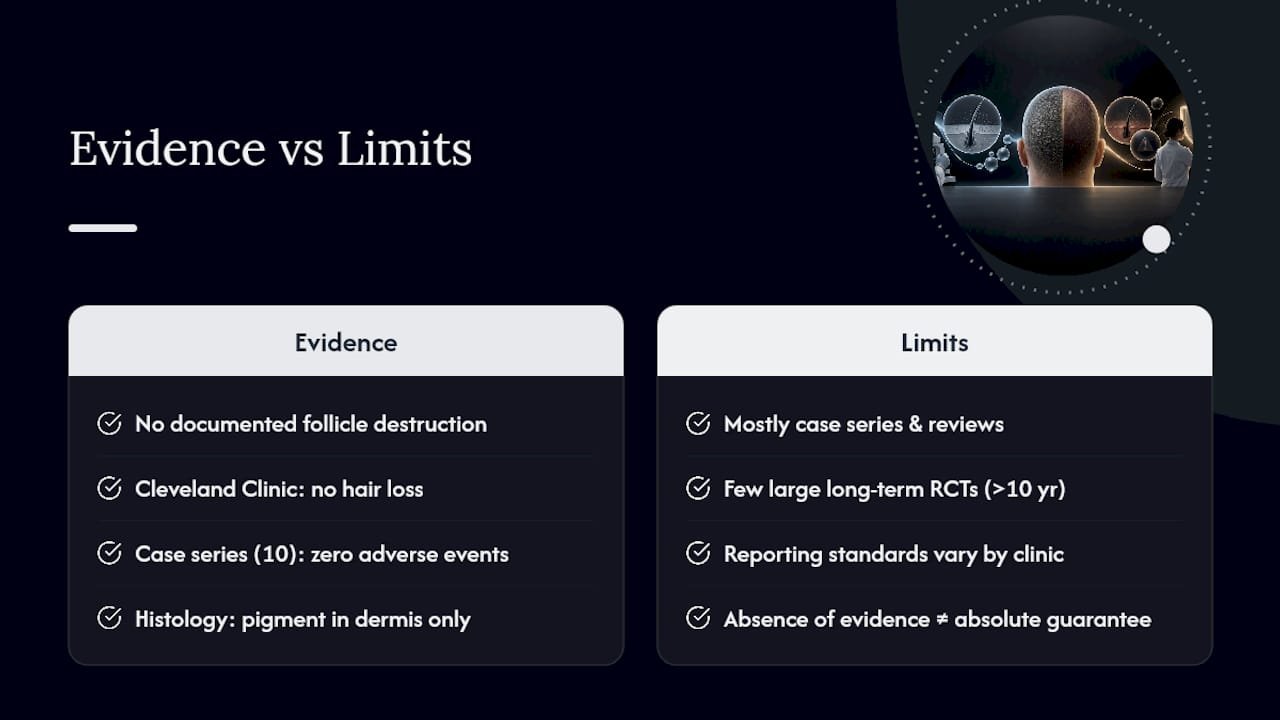
No peer-reviewed study or major medical institution has documented SMP causing hair follicle destruction or new hair loss when the procedure is done correctly. The Cleveland Clinic states plainly that SMP won’t cause hair loss or damage existing follicles, framing the real risks as infection or allergic reaction tied to how the treatment is performed, not the treatment itself.
A case series of ten patients treated for localized alopecia reported significant cosmetic improvement, high patient satisfaction, and zero adverse events in the cohort. Pigment fading and the need for touch-ups showed up in follow-up, but nothing resembling follicle damage or worsening hair loss.
That finding comes from a technical analysis and series of ten case reports published in the clinical literature, and it lines up with what histologic work shows at the tissue level: pigment sitting in the dermis, taken up by macrophages, with no consistent pattern of perifollicular fibrosis in scalps without pre-existing scarring.
Broader clinical reviews echo the same picture. A 2021 review in the Journal of Craniofacial Surgery describes SMP as a minimally invasive option for camouflaging hair loss, noting transient effects like redness and mild swelling rather than lasting tissue injury, while stressing that technical skill drives the outcome.
The honest caveat: most published evidence comes from case series and technical reviews rather than large randomized cohorts followed for a decade or more. Long-term cellular effects at the ten-plus-year mark are not exhaustively studied, and reporting standards vary between clinics and researchers. The absence of documented follicle damage across thousands of treatments performed globally is a strong signal, not an absolute guarantee for every possible variable.
What Actually Causes Scalp Damage From SMP?
If SMP itself doesn’t damage follicles, where does real harm come from? Three mechanisms account for nearly everything that goes wrong.
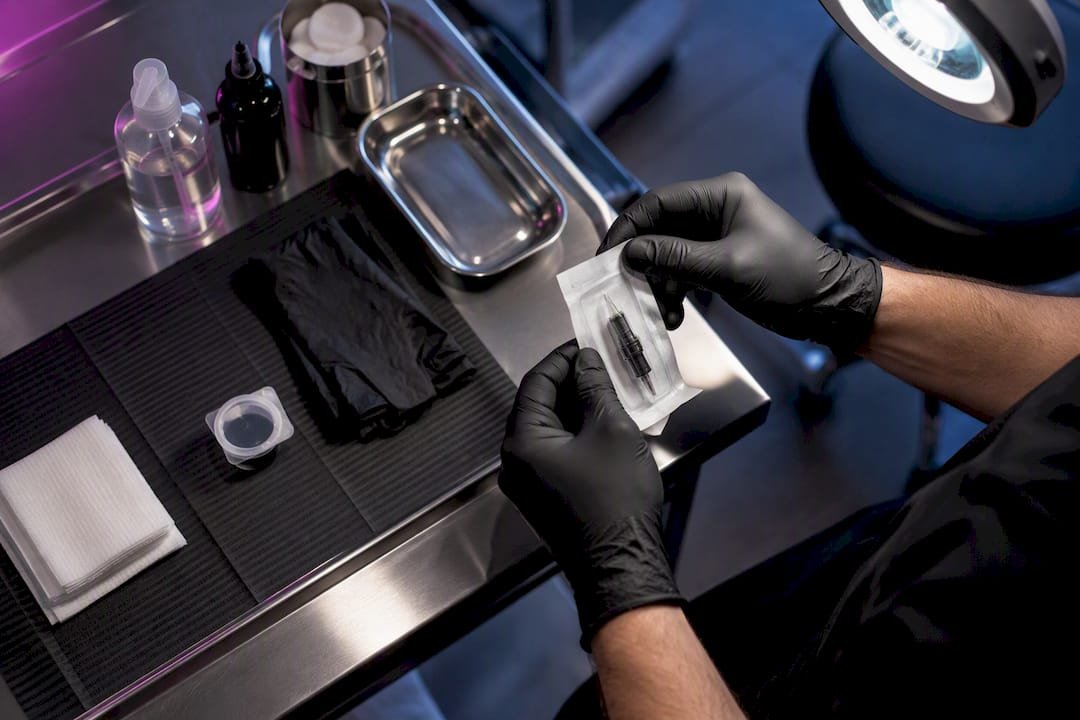
Infection and blood-borne risk. Unsterile needles or a poorly controlled environment can introduce bacterial infection or, in serious cases, transmit blood-borne disease. This is the risk category the Cleveland Clinic points to directly, and it’s entirely dependent on clinic hygiene, not the procedure’s design.
Allergic reactions. Pigment sensitivities happen, though they’re uncommon relative to the volume of treatments performed. Reactions typically show up as persistent redness, itching, or swelling around treated dots rather than anything systemic.
Over-penetration. A needle driven too deep pushes pigment past the dermis, where it can spread laterally under the skin. This causes the patchy, blurred look practitioners call migration, and in more severe cases can irritate tissue near the follicle bed, even without destroying the follicle itself.
Certain patients carry higher baseline risk:
- People with a personal or family history of keloid scarring
- Active dermatoses like psoriasis or eczema on the scalp
- Immune-suppressed patients, who heal slower and face higher infection risk
- Anyone with an undiagnosed scalp condition that hasn’t been evaluated
Pro Tip: Ask your technician directly how they sterilize equipment and whether they use single-use needle cartridges. A confident, specific answer, not a vague reassurance, is itself a screening tool.
Is SMP Riskier on Scars or a Fragile Scalp?
Scarring alopecia and hair transplant scar tissue behave differently under the needle, and this is where outcomes get genuinely variable. A 2025 study published in the Journal of Cosmetic and Aesthetic Surgery found universal pigment fading by one month across its cohort, with pigment spreading in many patients and notably lower favorable outcomes in conditions like morphea and lichen planopilaris compared to standard density work.
The reason is tissue biology, not technique failure. Fibrotic, atrophic scar tissue has reduced blood supply and a different dermal structure than healthy scalp skin, so it holds pigment less predictably and heals less consistently.
That doesn’t rule out SMP for scars. It means expectations need to be scaled to the tissue involved.
- Request a test patch before committing to a full session on scarred or fibrotic tissue.
- Get a dermatology consult first if you have active scarring alopecia or an unclear diagnosis.
- Plan for more touch-ups than you’d expect on non-scarred skin.
- Ask your technician specifically about their experience with scar camouflage work, not just standard SMP.
Can Laser Removal of SMP Damage Hair Follicles?
Lasers used to remove SMP target the pigment particles themselves, not the follicle. The laser energy is tuned to chromophores in the ink, breaking pigment into fragments small enough for the body to clear, which is a fundamentally different mechanism than anything that touches hair growth structures.
That said, removal isn’t risk-free. Community accounts describe transient scalp sensitivity after sessions, and heat delivered near the skin’s surface can cause temporary irritation in the treated area.
- Consult dermatology before starting removal, especially if you have an upcoming hair transplant planned.
- Flag any active scalp disease before scheduling laser sessions.
- Expect multiple sessions, since full pigment clearance rarely happens in one pass.
- Mention any embedded pigment to imaging staff before an MRI, since the FDA notes that metallic components in some inks can rarely cause a transient sensation during scanning.
How Do You Vet a Clinic to Avoid SMP Damage?
Most of the risk in SMP isn’t the treatment. It’s who’s holding the needle. Professional bodies like the ISHRS emphasize training standards and infection control precisely because incorrect technique, not the procedure itself, is what causes the rare bad outcomes.
Run through this before booking:
- Confirm single-use, sterile needle cartridges. Ask to see the packaging opened in front of you, not just a verbal assurance.
- Request healed photos, not just fresh work. Fresh SMP looks sharp on everyone. Photos at six months or a year show whether the pigment held its color and shape.
- Ask about their test patch policy. A clinic confident in its pigment and technique will happily test a small area first, especially on scarred or unusual skin.
- Ask where the pigment comes from. In Canada, Health Canada runs compliance verification projects testing tattoo inks and permanent makeup pigments, and a legitimate clinic should know exactly what they’re using and where it’s sourced from.
- Review the informed consent process. A thorough consultation covering risks, realistic outcomes, and aftercare is a baseline expectation, not a bonus.
Walk away from anyone who guarantees hair regrowth, refuses to show healed results, or offers prices so low they can’t plausibly cover sterile single-use supplies.
Pro Tip: Search the technician’s name alongside “healed results,” not just their studio name. Individual skill varies more than clinic branding does.
What’s Normal Healing and Long-Term Fading After SMP?
Redness, mild swelling, and light scabbing over the first several days are normal and typically resolve within a week to ten days. Persistent redness, spreading warmth, or discharge past that window is not normal and warrants a call to your provider.
Fading is built into how SMP works, not a sign anything went wrong biologically.
- Pigment naturally lightens over roughly two to five years as dermal macrophages process the particles.
- UV exposure accelerates fading, which is why aftercare guidance usually includes sun protection on the scalp.
- Most clients return for a touch-up session somewhere in that window to refresh density and tone.
- Color shifting toward a blue or gray tone over time reflects pigment breakdown chemistry, not follicle loss.
None of this involves the hair growth structures underneath. Fading is a pigment story, not a scalp health story.
Enhanced Scalp’s Approach to Safety and Natural Results
Enhanced Scalp builds every treatment plan around conservative hairline design and realistic density, an approach that leaves margin for error on the safe side rather than pushing pigment too dark or too deep. Test patches, careful pigment selection, and a focus on documented healed outcomes, not just fresh photos, are standard parts of how the clinic evaluates each case, including corrective work for clients who’ve had prior poor SMP or a failed transplant.
The Real Question Isn’t “Does SMP Damage Hair?”
The evidence on follicle damage is about as settled as cosmetic dermatology gets: it doesn’t happen when the procedure is done right. The question worth losing sleep over isn’t whether SMP is inherently safe. It’s whether the person holding the needle actually knows what “done right” means in practice.
That’s a skill gap, not a treatment flaw, and it’s the reason two people can get SMP from different providers and walk away with wildly different risk exposure from the exact same procedure. Ask about depth control, sterile practice, and healed results before you ask about price. The pricing question sorts itself out once you’ve filtered for competence.
— James Christopher
Get a Professional Scalp Assessment Before You Decide
Enhanced Scalp approaches every consultation the way this article approaches the evidence: safety and realistic outcomes first, cosmetic ambition second. That means a scalp assessment, a discussion of your specific hair loss pattern or scarring, and, where it matters, a test spot before committing to a full session.
A consultation covers where your hairline should realistically sit, what density looks natural for your skin tone and age, and an aftercare plan that protects your investment as pigment naturally fades over the years. If you’re dealing with a prior failed procedure, transplant scarring, or just want an honest read on what SMP can do for your specific scalp, the main treatment page walks through what to expect session by session. Clients dealing specifically with scar tissue from a prior transplant can also look at the scar camouflage treatment page for what test-spot planning looks like on fibrotic skin. Book a consultation to get a straight answer on your case instead of a generic one.
Sources
- Scalp Micropigmentation — Cleveland Clinic
- Efficacy, safety, and patient-reported outcomes of scalp micropigmentation in scarring alopecia – JCAS
- Scalp micropigmentation: a concealer for hair and scalp deformities
- Compliance verification project 2022–2023: Cosmetic Regulations — Health Canada
FAQ
What Are the Disadvantages of SMP Hair Treatment?
The main drawbacks are cosmetic and practical rather than medical: pigment fades over roughly two to five years and needs touch-ups, results depend heavily on technician skill, and it doesn’t work well if you plan to grow your hair long later. It does not damage hair follicles or cause additional hair loss when performed correctly.
Do People Regret Scalp Micropigmentation?
Regret is usually tied to poor technique or unrealistic expectations, not the procedure itself. A case series of SMP patients reported high satisfaction and no adverse events, which tracks with what most clinics see when the hairline design and density are handled conservatively from the start.
How Does SMP Look After 10 Years?
By the ten-year mark, most SMP has faded noticeably from its original density and likely needed at least one or two touch-up sessions along the way. The pigment itself doesn’t disappear entirely, but color and sharpness soften as dermal macrophages gradually break down the particles.
What Happens to SMP After 5 Years?
Pigment is typically visibly lighter and may shift slightly in tone, often toward a softer gray, by the five year mark. Many clients schedule a touch-up somewhere in this window, and this fading reflects pigment chemistry, not any change in the hair follicles underneath.

