 Skip to content


Scalp micropigmentation is an accepted cosmetic camouflage for stabilized frontal fibrosing alopecia, but it works only once disease activity has stopped and it never treats the underlying condition. Clinical case series describe favorable cosmetic outcomes when the technique is applied correctly, though pigment can fade faster in fibrotic skin and touch-ups are part of the plan. Dermatologist clearance before scheduling a session is not optional.
TL;DR:
- SMP works only after FFA stabilization, which can take months of medication and dermatologist approval, and it does not affect disease progression.
- Fading occurs faster in fibrotic tissue, requiring more frequent touch-ups and precise technique, including depth control and layered pigmenting.
- Test patches are essential to evaluate healing and color retention before full treatment, with a healing period of several weeks to assess pigment stability.
- FFA-related SMP effectively reconstructs the hairline but cannot restore thickness, regrow hair, or slow autoimmune activity.
- Choosing an experienced practitioner who documents healed cases and coordinates with your dermatologist improves safety and outcomes.
Table of Contents
- What SMP does for FFA and how it differs from medical treatment
- Candidacy and timing: when clinicians will consider SMP for FFA
- Expected results and longevity for FFA: study outcomes and real-world expectations
- Procedure and technical considerations for scarring scalps
- Risks, contraindications, aftercare, and managing complications
- How to choose an SMP practitioner and what to ask at consultation
- A clinic’s perspective on treating FFA with SMP
- Booking a consultation for SMP on a stabilized scalp
- FAQ
- Sources
What SMP does for FFA and how it differs from medical treatment
SMP deposits pigment in fine dots that mimic the look of short, dense hair follicles, creating the visual impression of a lower, fuller hairline where the immune process has scarred it back. It does nothing to the autoimmune activity driving frontal fibrosing alopecia: no regrowth, no change to disease progression, no effect on eyebrow loss or other FFA-related changes elsewhere on the body. That’s precisely why it appeals to people who have already tried medical management and want a cosmetic finish rather than another biological intervention. Compared with a hair transplant, SMP has one practical advantage for scarred, fibrotic scalp tissue: it does not depend on graft survival in compromised skin, which is often unpredictable in scarring alopecia.
What SMP cannot do:
- Restore volume or thickness to existing thinning hair.
- Regrow hair in areas affected by scarring.
- Reverse or slow the autoimmune process causing FFA.
Most frontal fibrosing alopecia work focuses on hairline reconstruction and part-line camouflage, the two areas where the recession is usually most visible.
Candidacy and timing: when clinicians will consider SMP for FFA
Stabilization means no active symptoms such as redness, itching, perifollicular scaling, or trichoscopic signs of ongoing inflammation. The consensus document on clinical management of FFA advises confirming disease inactivity before any surgical or cosmetic procedure, since treating active tissue raises the risk of poor pigment retention and additional scarring. Patients often reach stabilization only after a course of 5-alpha reductase inhibitors, topical or intralesional steroids, or hydroxychloroquine, managed by a dermatologist over months.
A practical pre-procedure checklist:
- Recent photos documenting the hairline and any active lesions.
- Written or verbal dermatologist sign-off confirming inactivity.
- A small test patch in the affected zone, assessed once healed.
- A candid conversation about realistic density, color matching, and maintenance.
Pro Tip: Ask your dermatologist for a specific timeframe of documented inactivity, not just a general “it looks better now,” before booking any cosmetic procedure.
Expected results and longevity for FFA: study outcomes and real-world expectations
A prospective study on scarring alopecia reported favorable aesthetic responses to SMP at six months, with the highest patient satisfaction observed in frontal fibrosing alopecia cases, according to the JCAS study on SMP outcomes. That same research notes that fibrotic, scarred scalp tissue tends to fade and diffuse pigment faster than non-scarring areas, which changes how often touch-ups are needed.
Retention depends on a handful of variables:
- Depth control during the original sessions.
- The degree of fibrosis in the treated skin.
- Pigment selection matched to skin tone and healing behavior.
- Total number of sessions used to build density gradually.
Because fading is less predictable in scarred tissue, plan on a maintenance visit sooner than you might with non-scarring hair loss, and keep dated photos so you and your practitioner can track changes over time.
Procedure and technical considerations for scarring scalps
Fibrotic tissue from frontal fibrosing alopecia behaves differently under the needle than healthy scalp, which is why technique matters more here than in routine SMP. A technical analysis and case series describes zone-specific needle selection, hierarchical pigment layering, and strict depth control as the refinements most associated with better retention and fewer complications in scarring alopecia.
In practice, that looks like:
- Single-prong needles along the hairline border for soft, natural edges.
- Triple-prong needles in denser zones like the vertex, where coverage needs to build faster.
- Pigment density layered across sessions, moving roughly from light to full coverage rather than going dark in one pass.
- Depth kept to the epidermal and upper dermal layer to avoid diffusion and color shift in compromised skin.
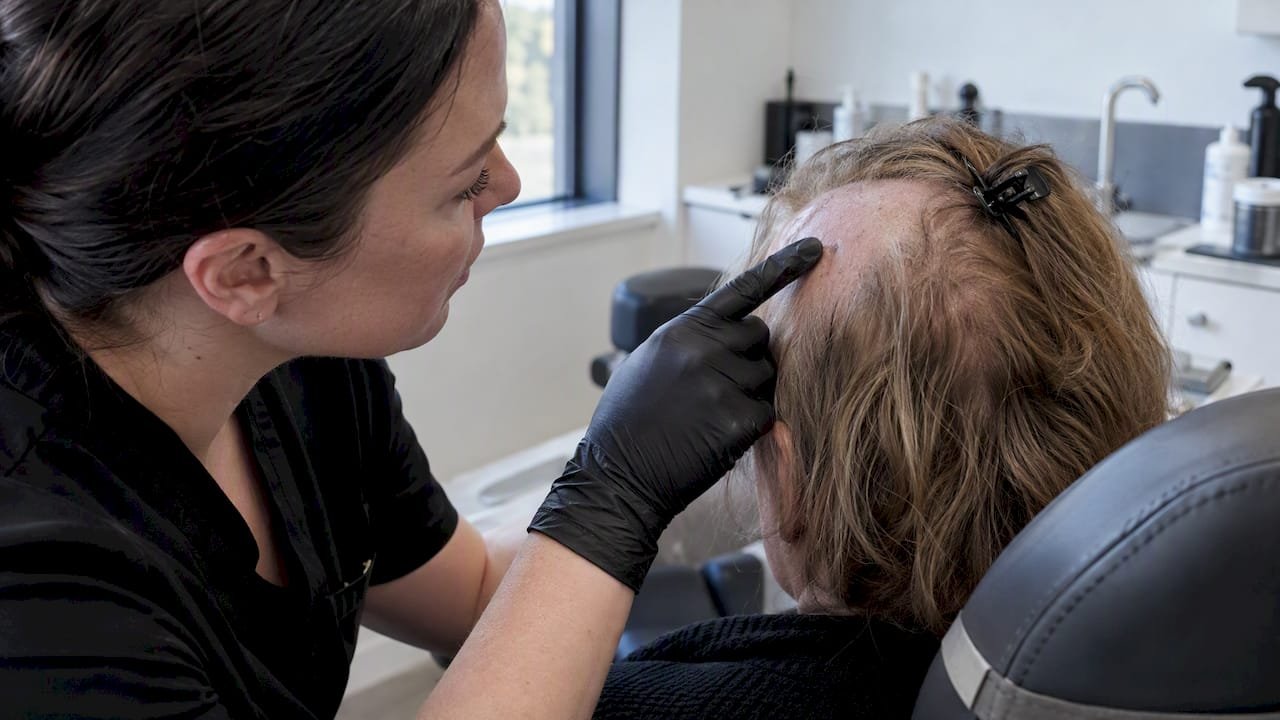
A staged test-spot in the affected zone, reviewed once fully healed, is a standard precaution before committing to full treatment on fibrotic skin. Most FFA cases need several sessions spaced weeks apart to build density safely rather than one long visit.
Pro Tip: Request to see your own test spot fully healed, not just immediately after the needle, since fibrotic skin can shift color weeks later.
Risks, contraindications, aftercare, and managing complications
Short-term effects resemble what you’d expect from a tattoo: mild swelling, crusting, and transient tenderness. The Healthline overview of SMP notes that allergic reaction and infection are possible risks, and choosing an experienced practitioner lowers that likelihood. In fibrotic tissue specifically, pigment can diffuse under the skin or fade unevenly, sometimes requiring a color correction session.
Watch for:
- Spreading redness, warmth, or discharge, which can signal infection rather than normal healing.
- Active itching or scaling returning in the treated area, a possible sign of disease reactivation.
- Uneven fading or a visible color shift months after the initial sessions.
| Aftercare step | What to do |
|---|---|
| First 3-4 days | Avoid washing the scalp and protect it from friction |
| First 2 weeks | Avoid direct sun exposure and sweating-heavy activity |
| Ongoing | Use sunscreen on treated skin once healed |
| Before sessions | Confirm skin is free of active lesions or irritation |
Active inflammation or uncontrolled dermatologic disease is a contraindication until a dermatologist confirms the scalp is ready.
How to choose an SMP practitioner and what to ask at consultation
Experience with scarring alopecia is not universal among SMP providers, so vetting matters more here than for routine hairline work. Ask to see healed photos specifically from frontal fibrosing alopecia cases, not just general density work, and ask how the practice documents test-spot outcomes before full sessions.
- Request healed-case photos from fibrotic or scarring alopecia clients, not immediate post-treatment shots.
- Ask whether a test spot is standard practice before full treatment on previously inflamed skin.
- Confirm the clinic coordinates with or requests documentation from your dermatologist.
- Ask about the clinic’s policy on touch-ups if fading happens faster than expected.
Red flags include a reluctance to show healed work, pressure to skip dermatologist clearance, or any promise that SMP will slow or cure the disease. A resource like Thairapy’s SMP explainer is useful for understanding general density techniques before your consultation.
Pro Tip: A practitioner who asks for your dermatology records before booking a full session is showing you exactly the caution that fibrotic skin requires.
A clinic’s perspective on treating FFA with SMP
We approach frontal fibrosing alopecia the same way every time: conservative hairline design, a staged test-spot before committing to full sessions, and ongoing coordination with each client’s dermatologist. Readers considering this path should review healed cases carefully and set expectations for long-term follow-up rather than a single appointment.
— James Christopher
Booking a consultation for SMP on a stabilized scalp
Once a dermatologist confirms your frontal fibrosing alopecia is stable, we offer a few relevant paths depending on what you need. Scalp Micropigmentation addresses hairline and density work, priced from $3,000 to $4,000 CAD as a one-off treatment. For clients with scarring or fibrotic patches specifically, our Scar Camouflage Treatment is built around the same conservative, test-spot-first approach. Female clients with frontal hairline involvement can review our Female Scalp Micropigmentation service for design considerations specific to that hairline pattern.
Bring dermatology notes confirming disease inactivity, recent photos of the affected area, and a list of any medications you’re currently using, including topical or oral treatments for FFA.
- SMP for alopecia and hairline reconstruction.
- Scar camouflage for fibrotic or scarred patches.
- Corrective SMP for previous poor work or failed transplants.
Review our healed-case gallery before your consultation, then reach out through our treatment page to schedule a conversation about your specific case.
This article is general information, not a substitute for advice from a qualified doctor. Consult a qualified healthcare professional about your own circumstances before acting on anything here.
FAQ
Can frontal fibrosing alopecia be cured?
No, frontal fibrosing alopecia currently has no cure. Medical treatment aims to stabilize the disease and stop further hair loss, and consensus guidance treats the hair loss itself as permanent once it occurs.
What disqualifies you from a hair transplant?
Active, unstable frontal fibrosing alopecia is a common disqualifier, since grafts placed into inflamed or progressing tissue have unpredictable survival. The FFA consensus document recommends confirming disease stabilization before considering any surgical hair restoration.
Can extreme stress cause alopecia?
Stress is linked to some forms of hair loss, such as telogen effluvium, but frontal fibrosing alopecia is driven by an autoimmune process rather than stress alone. If you’re unsure which type of hair loss you have, a dermatologist can confirm the diagnosis before you pursue any cosmetic treatment.
Can vitamin D reverse alopecia?
There is no established evidence that vitamin D reverses frontal fibrosing alopecia or restores hair already lost to scarring. Nutritional support may play a role in general scalp health, but it does not substitute for dermatologist-guided disease management.
Sources
- Efficacy, safety, and patient-reported outcomes of scalp micropigmentation in scarring alopecia – JCAS
- Scalp micropigmentation is an effective treatment for localized alopecia: technical analysis and case reports – PMC

