 Skip to content


Scalp micropigmentation works well on dark skin when the practitioner uses carbon-based grayscale pigments and adjusts dot size, depth, and density for deeper complexions. Healed results typically settle into a soft charcoal tone rather than true black. Longevity depends on pigment quality and sun care. Before booking, insist on a test patch and healed photos from someone with documented dark-skin work.
TL;DR:
- Use carbon-based grayscale pigments and adjust dot size, depth, and density to achieve natural, lasting results on dark skin.
- Expect a healed color that softens to charcoal rather than black, with longevity influenced by pigment quality and sun protection.
- Require a test patch, healed photos, and staged sessions to ensure realistic, natural-looking results tailored for darker complexions.
- Be aware that pigment quality and proper technique are critical, as poor-quality inks and improper depth cause faster fading, color drift, or uneven retention.
- Avoid SMP with contaminated pigments, and choose a practitioner with a solid portfolio of healed, natural results on clients with similar skin tones.
Table of Contents
- How SMP looks on darker skin tones
- Pigment selection and technique adjustments for dark skin
- Longevity, fading patterns, and maintenance for darker skin
- Safety and regulatory cautions for SMP pigments
- How to choose a qualified SMP practitioner for dark skin
- What credible healed documentation looks like in practice
- What this means for your next decision
- Getting started with SMP
- FAQ
- Sources
How SMP looks on darker skin tones
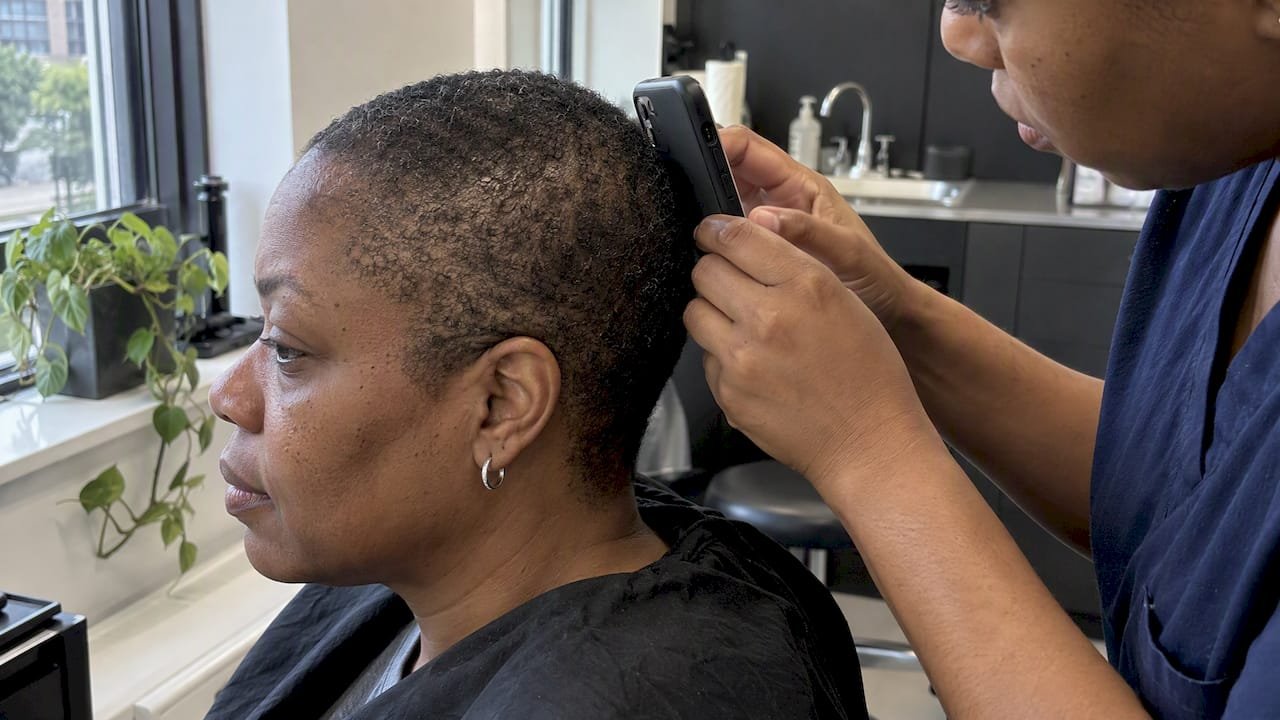
The biggest misconception about scalp micropigmentation on dark skin is that the pigment needs to match skin tone exactly to look convincing. It does not. The goal is to replicate the shadow of a closely shaved follicle, and on deeper skin that shadow reads as a soft charcoal rather than a glossy black dot. Cleveland Clinic’s overview describes SMP as creating the illusion of a shaved head or denser hair, and that illusion depends on contrast, not an exact color match.
Contrast actually works in favor of many dark-skinned clients. Because the natural skin-to-pigment difference is subtler than it is on fair skin, density can look fuller and more natural with less visible dotting. Gray or dyed hair complicates things slightly, since the surrounding hair color needs to stay in sync with the pigment tone for the blend to hold up.
Before choosing a clinic, ask to see:
- Healed close-up photos taken under natural light, not flash
- Multi-angle shots showing the hairline, crown, and temples
- A time-lapse sequence from the first session through full healing
Photos taken right after a session almost always look darker and more uniform than the healed result. Healed documentation is the only honest preview of what you will actually carry long term.
Pigment selection and technique adjustments for dark skin
Pigment choice matters more on dark skin than almost any other variable. ISHRS guidance recommends carbon-based grayscale pigments because they replicate a natural follicle shadow and resist the color drift that warmer or mixed inks tend to show under UV exposure. A pigment with red or brown undertones can shift toward an orange or rust cast as it fades, which is far more noticeable against deeper skin than it would be on lighter tones.
Technicians working on darker complexions generally follow a few core adjustments:
- Start with a conservative pass and build density across sessions rather than going dark immediately.
- Use smaller dot sizes at a shallower depth to limit pigment diffusion while still achieving retention.
- Keep the first-pass hairline soft and slightly less dense, since it is far easier to add than to remove.
- Plan for staged touch-ups that refine density and shading once initial healing is complete.
Needle depth is a genuine trade-off. Too shallow and the pigment fades fast; too deep and it risks spreading under the skin, which blurs the sharp dot pattern that makes SMP look like real stubble.
Pro Tip: Ask your technician to photograph your skin under daylight before the first session so you both have a baseline for judging how the pigment settles once healed.
Longevity, fading patterns, and maintenance for darker skin
SMP is not permanent in the way a traditional tattoo is marketed to be. Cleveland Clinic notes that results typically hold their appearance for several years, though exact timelines vary by pigment quality, skin type, and sun exposure. On darker skin, the most common long-term change is a gradual softening toward a lighter charcoal, which most clients find looks more natural as it settles.
Problems tend to trace back to pigment quality rather than skin tone itself. Poor-quality or mixed inks can shift toward blue or green undertones over time, an effect that becomes more visible as the pigment lightens.
Fading accelerates with:
- Repeated, unprotected sun exposure on the scalp
- Low-quality or non-carbon pigments
- Aggressive laser removal attempts on a previous SMP
Most clients return for a retouch every few years to refresh density and correct any color drift. In scarred or fibrotic tissue, pigment uptake is less predictable, and a 2026 JCAS clinical series found retention in densely fibrotic areas often falls below 50% by six months, which means those cases need more frequent touch-ups.
Safety and regulatory cautions for SMP pigments
SMP carries real, documented risks beyond simple cosmetic disappointment. In 2024, Health Canada recalled Bloodline-brand tattoo pigments over potential microbial contamination, a hazard that can cause skin infection and rashes when contaminated ink is used. A separate recall affected Radiant Colors’ Victor Portugal Lining Black ink after contamination was detected in testing.
Transient side effects are common and usually resolve on their own. Reported data show edema in 66.7% of cases and crusting in 55.6%, with pigment diffusion appearing in 55.6% of cases by six months. These numbers underline why aftercare and pigment sourcing both matter.
A safety checklist before you book:
- Confirm single-use, sterile cartridges for every session
- Ask to see pigment lot numbers and brand documentation
- Review a full written consent and aftercare plan before starting
Our guide to normal versus warning-sign side effects covers what to watch for during healing.
How to choose a qualified SMP practitioner for dark skin
Finding the right practitioner matters more than any single technique decision. Start by reviewing their portfolio specifically for healed, not fresh, results on clients with skin tones similar to yours, and look for progressive timepoints that show the healing arc rather than a single flattering shot.
- Ask what pigment brand they use and why they chose it for darker skin tones.
- Ask how many sessions they typically plan for a client with your hair loss pattern.
- Ask whether a test patch is standard practice before a full session.
- Confirm their sterilization protocol and whether they document pigment lot numbers.
Red flags include a portfolio with no healed photos, reluctance to perform a test patch, or a first-pass hairline that already looks unnaturally dark. ISHRS commentary on standards points out that SMP still lacks universal professional certification, which makes direct vetting your responsibility.
A proper test patch is placed in a discreet area, assessed after full healing (typically several weeks), and documented with daylight photos comparing the patch to the surrounding skin before anyone commits to a full session.
What credible healed documentation looks like in practice
Some clinics build approaches around conservative hairline design and realistic follicle replication, prioritizing how a result looks months after healing rather than how it looks the day it’s applied. Corrective SMP work, including cases involving failed hair transplants, prior poor SMP, and laser removal attempts, demands close attention to how existing scar tissue and pigment residue respond to new work.
A result that still looks natural a year after healing is a better indicator of skill than any fresh, unhealed photo.
Glossy immediate-after photos tell you almost nothing about how pigment will age. A documented, multi-session plan with healed check-ins is the standard worth expecting. Clients with extensive scarring or a history of failed SMP often benefit from a dermatologist consult before any corrective work begins.
What this means for your next decision
If you have realistic expectations about charcoal tones rather than jet black, and no active scarring alopecia or keloid history, you’re likely a strong candidate for SMP. Request healed photos, insist on a test patch, and plan for staged sessions rather than one dramatic transformation. Anyone with active scarring conditions or a keloid tendency should get a dermatologist’s input first.
— James Christopher
Getting started with SMP
A good SMP provider focuses on natural-looking results through conservative hairline design, realistic follicle replication, and corrective work for clients dealing with prior poor SMP or hair transplant scarring. Every consult is a chance to request healed photos from clients with a similar skin tone, ask which pigment brand is used, and confirm a test patch before committing to a full session.
If you’re ready to see what realistic, documented SMP looks like for your skin tone, book a consultation and bring your questions about pigment choice and healing timelines.
This article is general information, not a substitute for advice from a qualified doctor. Consult a qualified healthcare professional about your own circumstances before acting on anything here.
FAQ
Is scalp micropigmentation safe and effective for dark skin?
SMP is generally safe and effective on dark skin when carbon-based grayscale pigments and sterile, single-use equipment are used. Risks mainly come from contaminated pigment batches, which is why Health Canada has recalled specific tattoo ink products in the past over microbial contamination.
How long does it take SMP to lighten?
SMP typically retains its appearance for several years before noticeable softening occurs, according to Cleveland Clinic. The exact timeline depends on pigment quality, sun exposure, and skin type, with darker skin often showing a gradual shift toward a softer charcoal rather than abrupt fading.
How does SMP look after 10 years?
Most clients see pigment soften gradually, with density loss and some color drift being the main long-term changes, which is why periodic retouches are standard practice. Quality carbon pigments tend to fade evenly toward a lighter gray, while lower-quality inks are more prone to unnatural blue or green undertones over time.
How much does SMP scar camouflage cost?
Enhanced Scalp’s standard scalp micropigmentation treatment runs 3,000 to 4,000 CAD as a one-off cost, though scar camouflage pricing is not published and is quoted individually since scope varies by scar size and prior treatment history. A consult is the best way to get an accurate quote for your specific case.
What should I do if I have scarring alopecia or keloid-prone skin?
Scarring alopecia cases show diagnosis-dependent outcomes, with a 2026 JCAS clinical series finding reduced pigment retention in densely fibrotic tissue. Anyone with a keloid history or active scarring alopecia should consult a dermatologist before scheduling SMP.
Sources
- Bloodline brand Tattoo Pigments recalled due to potential microbial contamination – Canada.ca
- Scalp Micropigmentation (SMP): All You Need to Know – ISHRS
- Efficacy, safety, and patient-reported outcomes of scalp micropigmentation in scarring alopecia – JCAS
- Scalp Micropigmentation: Before & After, Benefits, Side Effects – Cleveland Clinic

