 Skip to content

Most SMP blowouts respond to non-laser correction when caught at the mild-to-moderate stage. Realistic fixes include conservative softening, visual rebalancing, targeted color correction, and staged corrective scalp micropigmentation sessions. Deep pigment migration, dense repeated passes, or heavy blue-black shifting usually need partial laser work before anyone touches a needle again.
If you’re staring at a blurry hairline right now, here’s what to do before anything else:
- Photograph the area in natural daylight from three angles
- Do not attempt DIY concealer, at-home microneedling, or self-tattooing over it
- Book a consultation with a practitioner who specializes in corrective SMP, not just fresh applications
Key Takeaways
Mild-to-moderate SMP blowout usually responds to staged, non-laser correction, while severe pigment migration typically requires partial laser treatment before rework can begin.
| Point | Details |
|---|---|
| Identify blowout correctly | Look for blurred, merged dots and color shift, not just even fading, before choosing a repair path. |
| Match severity to method | Mild and moderate cases often respond to blending, softening, and color correction without laser. |
| Avoid rushed single-session fixes | Staged corrective work spaced four to six weeks apart produces safer, more predictable healed results. |
| Vet the practitioner’s corrective history | Ask for healed photos and specific blowout case counts before booking any rework. |
| Consult a corrective specialist | Enhanced Scalp focuses on conservative, staged repair techniques designed around prior SMP damage and blowout cases. |
Table of Contents
- What an SMP Blowout Actually Is
- What Causes SMP Pigment to Spread Under the Skin
- How Do You Know If Your Blowout Is Mild, Moderate, or Severe?
- Non-Laser Techniques That Repair SMP Blowout
- When Does Laser Removal Become Necessary?
- How to Choose a Practitioner for Corrective SMP
- What to Expect During Corrective Healing
- Why Corrective SMP Requires Real Specialization
- The Conventional Advice Gets the Order Backward
- Get a Corrective SMP Consultation That Starts With an Honest Assessment
- Sources
- FAQ
What an SMP Blowout Actually Is
An SMP blowout happens when pigment migrates beneath the skin’s surface, spreading past the original dot and blurring its edges into a smudged patch. It’s a technical failure of depth or pressure control during the procedure, not a natural aging process.
That distinction matters because normal SMP fading looks completely different. Fading is even, gradual, and keeps each follicle impression crisp just lighter in tone. Blowout, by contrast, shows:
- Dots that look smeared, gray, or “bruised” rather than faded
- A halo or blur radius extending beyond where the original dot was placed
- Uneven color, often shifting toward blue or green undertones
- Patches that look worse under bright light or when the scalp is shaved close
Getting this label right determines everything downstream. Fading usually just needs a touch-up. Blowout needs a repair strategy, and treating it like ordinary fading wastes a session and sometimes worsens the spread.
What Causes SMP Pigment to Spread Under the Skin
Blowout is a technique failure, and it almost always traces back to one or more of the following:
- Needle depth and angle errors. Pigment implanted too deep into the dermis, rather than staying in the upper layer, has nowhere to go but sideways.
- Repeated heavy passes over the same area. Overworking a section to “make sure it takes” floods the tissue with more pigment than it can hold in place.
- Poor pigment selection or overloaded pigment volume. Some products are formulated with particle sizes or carriers prone to migration, especially in high concentration.
- Skin-specific vulnerability. Oily skin, very thin skin, scar tissue from a hair transplant, or sun-damaged areas all handle pigment differently, and a technique that works fine on one scalp can blow out on another.
- Practitioner inexperience and rushed aftercare guidance. Inconsistent technique across a session, plus poor client aftercare instructions, compounds the risk during the healing window.
Scalp micropigmentation outcomes depend heavily on technique, pigment choice, and skin type, which is exactly why two clients can get the same “style” of SMP and end up with completely different healed results.
How Do You Know If Your Blowout Is Mild, Moderate, or Severe?
Self-assessment is a starting point, not a diagnosis, but it helps you walk into a consult with useful information instead of just anxiety.
- Mild: Small blur radius around individual dots, still visible as distinct points, color close to original tone
- Moderate: Noticeable smudging across a defined patch, some dots merging into small halos, color shifting slightly
- Severe: Large blurred zones, dots fully merged into solid smudges, strong blue or green cast, visible from a few feet away
Blowout tends to distort the perceived hairline shape and flattens the density illusion SMP is supposed to create, so photos in natural light usually reveal more than a mirror does. Uncertain cases benefit from a staged assessment and a conservative test patch before any full rework begins, since pigment can behave unpredictably depending on the individual’s skin.
Pro Tip: Take your blowout photos under the same lighting you’ll actually be seen in most often, like an overhead bathroom light or outdoor shade, not a ring light. Practitioners assess severity more accurately from real-world lighting than flattering studio shots.
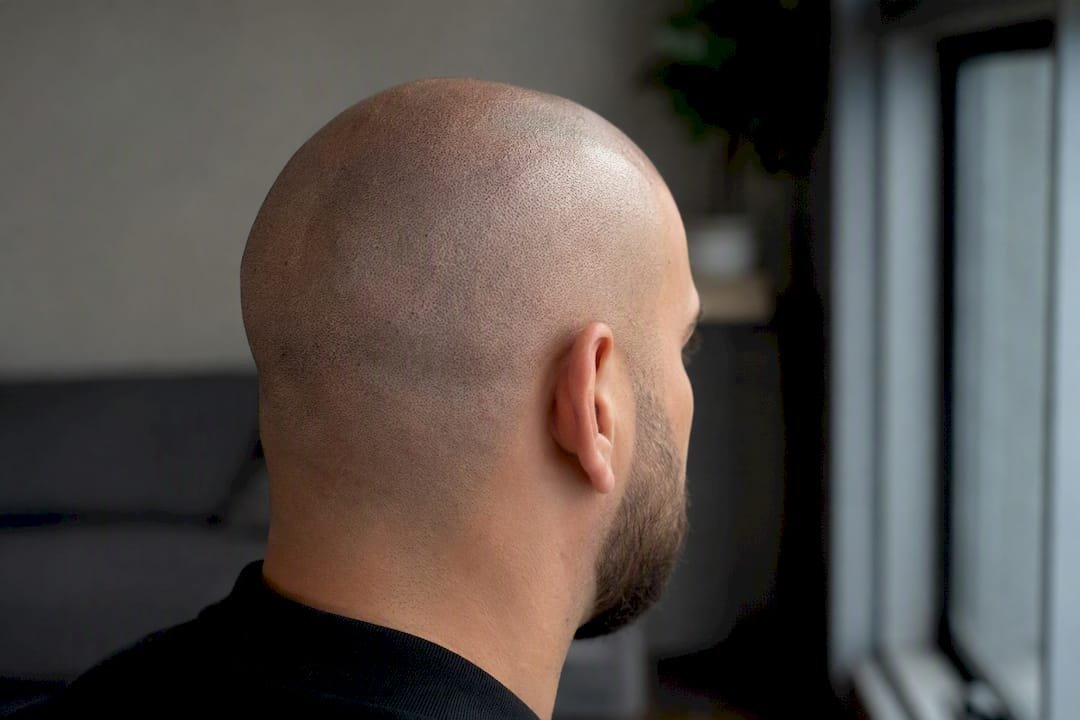
Non-Laser Techniques That Repair SMP Blowout
For mild-to-moderate cases, a skilled corrective practitioner has several tools that don’t involve a laser at all. None of them are instant, and none promise a single-session miracle, but layered correctly, they can substantially improve blown-out areas.
- Blending and visual rebalancing. Fine micro-stippling gets added around the blurred edges to break up the hard halo effect, essentially tricking the eye into reading the area as intentional texture rather than a mistake.
- Softening through lighter micro-dots. New, smaller dots get layered around and among the blown-out ones, reducing their visual weight by shifting the average dot size the eye perceives.
- Density rebalancing. Adjusting the surrounding, unaffected area’s density so contrast between the blowout patch and healthy areas shrinks, making the flaw less noticeable at a glance.
- Color correction and neutralization. Blue or green undertones get counteracted with warm-toned corrective pigments, similar in principle to color theory used in permanent makeup correction.
- Adjunct approaches with real limits. Microneedling sometimes supports pigment settling in future sessions, and staged, conservative partial removal (not full laser) can lighten a small zone before rework. Neither replaces a full removal plan in severe cases, and both require a practitioner experienced enough to know when to stop.
Clinic experience consistently shows many botched SMP cases improve meaningfully through blending, softening, and staged correction, without ever touching a laser. The catch is patience: this is a multi-session process, not a single visit.
Pro Tip: Ask your practitioner to show you a case with a similar severity level to yours, not just their best healed transformation. It’s the honest way to calibrate expectations before you commit to a plan.
When Does Laser Removal Become Necessary?
Laser or partial removal earns its place when the damage is too deep or too dense for camouflage to work. Signs that point toward it include:
- Pigment migration deep enough that it reads as a solid shadow rather than distinct dots
- Heavy color shift toward black, blue, or green across a large area
- A history of multiple aggressive passes that left dense, saturated pigment loads
The common workflow here is staged partial laser to lighten the area, followed by corrective SMP once the skin has healed and the base tone is neutral enough to build on. Expect this route to add both time and cost to the correction, factors worth weighing openly at your consult.
How to Choose a Practitioner for Corrective SMP
Not every SMP artist is equipped to fix someone else’s work. Corrective cases demand a different skill set than fresh applications, and the wrong choice can turn a moderate blowout into a severe one.
Look for these portfolio essentials:
- Healed photos taken months after treatment, not just fresh, swollen “day of” shots
- Close-up images that show dot definition, not just wide flattering angles
- Actual corrective case studies, ideally with before-and-during-and-after documentation
Red flags that should send you elsewhere:
- Promises of a complete, permanent fix in one session
- No healed examples anywhere in their portfolio or social presence
- A default style that leans dark and dense, the same tendency that causes blowout in the first place
At the consultation, ask directly: How many blowout cases have you corrected? Do you use test patches before committing to a full rework? How many sessions do you realistically expect this to take? A practitioner who answers with specifics, not vague reassurance, is the one worth trusting.
What to Expect During Corrective Healing
Corrective work is slower than first-time SMP, and that’s by design. Staged sessions typically run four to six weeks apart, giving the skin time to fully heal and the pigment time to settle so the practitioner can judge true results, not swollen, freshly-treated skin.
Short-term, expect some redness and a slightly darker appearance for the first week or two. Long-term healed results, usually visible around the six-to-eight week mark per session, should show the softened, rebalanced look settling into place.
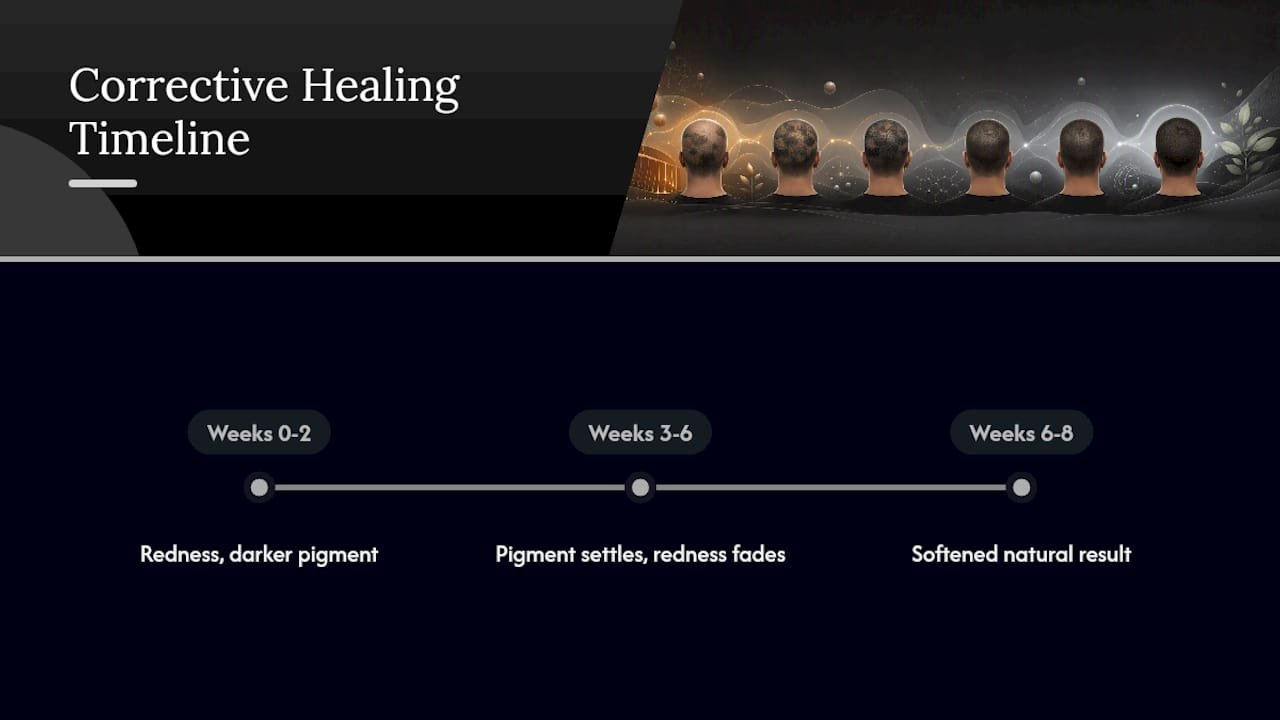
Aftercare basics: keep the area out of direct sun, avoid heavy sweating for the first several days, and skip exfoliating products near the treated zone. Contact your practitioner if you notice unusual raised texture or a color shift beyond what was discussed at consult.
Why Corrective SMP Requires Real Specialization
Fixing someone else’s blowout is a different discipline than starting fresh on clean skin, and it shows in the portfolio of a practitioner who actually does it well. Enhanced Scalp documents its corrective specialization with an emphasis on conservative hairline design and realistic follicle replication, rather than chasing dense, dark coverage that risks compounding the original problem.
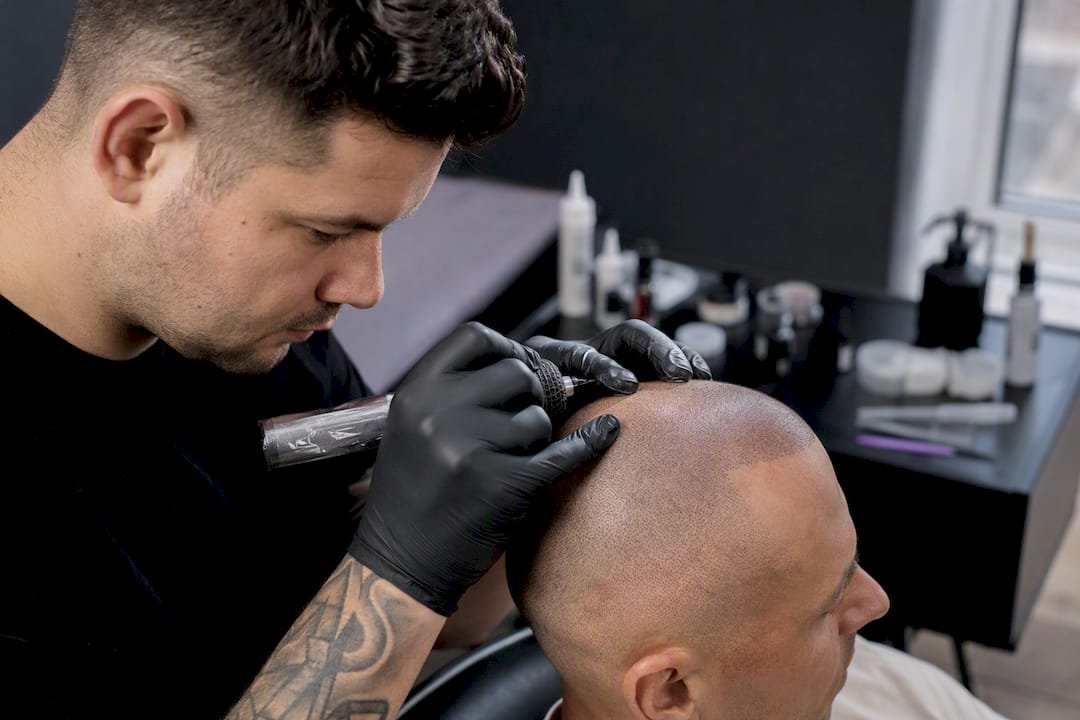
Before booking, gather your original SMP details if you have them (approximate date, clinic name if known, any photos from right after the original session). Bring your own recent photos in daylight. A gallery of healed corrective results is worth reviewing ahead of time so you know what a realistic, staged outcome actually looks like.
The Conventional Advice Gets the Order Backward
Most content on SMP correction jumps straight to laser removal as the default answer, largely because it’s the more dramatic, more bookable service to write about. That’s backward for most blowout cases. Severity should dictate the path, not marketing convenience, and mild-to-moderate blowout responds well to conservative, staged blending in a meaningful share of cases.
The bigger failure I see in how people approach this problem is urgency. A blown-out hairline feels like an emergency, so people book the first “instant fix” they find, often from the same overconfident, dark-heavy style of practitioner who caused the original damage. That’s how a moderate blowout becomes a severe one.
What actually works is slower and less satisfying to hear: photograph it, get an honest severity assessment, ask hard questions about the practitioner’s corrective experience specifically, and accept that staged work over multiple months beats a rushed single session every time. The scalp doesn’t reward impatience, and neither does pigment that’s already sitting in the wrong layer of skin.
— James Christopher
Get a Corrective SMP Consultation That Starts With an Honest Assessment
If your blowout needs more than a generic touch-up, Enhanced Scalp treats corrective work as its own specialty rather than an afterthought tacked onto standard SMP bookings. That distinction matters when the practitioner evaluating your scalp is the same one who decides whether staged blending or partial correction is the right call.
Enhanced Scalp’s approach centers on conservative hairline design and realistic follicle replication, built specifically around clients dealing with prior poor SMP, failed hair transplants, and blowout repair. That conservative philosophy is precisely what mild-to-moderate blowout cases need: a practitioner who builds density gradually instead of overcorrecting in a single aggressive pass. The clinic documents healed results, not just fresh post-treatment photos, so you can see what staged correction actually looks like months later, not hours later.
Start with a consultation and bring your photos. Visit the Enhanced Scalp scalp micropigmentation page to review healed case examples and book an assessment.
FAQ
Can SMP Be Removed If I Don’t Like It?
Yes. Options range from saline or laser removal for full removal to corrective camouflage techniques like blending and softening if the goal is improvement rather than complete removal.
Does SMP Eventually Go Away On Its Own?
SMP fades gradually over several years as pigment particles break down, but it does not disappear completely without removal treatment. Blowout is different: it’s a spreading defect, not gradual fading, and it won’t correct itself over time.
What Are the Disadvantages of SMP Hair Treatment?
The main risks include color shifting over time, potential blowout from poor technique, and results heavily dependent on the practitioner’s skill and pigment choice, which is why technique and skin factors matter so much to outcomes.
How Does SMP Look After 10 Years?
Well-executed SMP typically softens in tone but retains its dot pattern with proper touch-ups every few years; poorly executed SMP is more likely to show visible blowout, color shift, or blurring by that point.
Is It Better to Fix a Blowout With Camouflage or Start Over Completely?
For mild-to-moderate blowout, conservative camouflage and staged correction usually preserve more of the existing work and cost less time overall than starting over, which typically only becomes necessary after laser removal in severe cases.

