Skip to content

Yes, scalp micropigmentation can visually restore a receding hairline for most men, at almost any Norwood stage. It’s a cosmetic tattooing technique that reduces the contrast between scalp and hair, and it works whether you’re dealing with early temple recession or a fully mature hairline. The Cleveland Clinic notes SMP is effective across Norwood stages II through VII, though it camouflages rather than regrows hair. The next move is a consultation: bring photos of your hair loss progression over the last few years, a clear idea of how conservative or aggressive you want the hairline, and questions about how your specific pattern gets designed.
Key Takeaways
SMP restores the visual appearance of a receding hairline through pigment implantation, but it requires conservative design, Norwood-aware planning, and periodic touch-ups to stay natural long term.
| Point | Details |
|---|---|
| SMP is camouflage, not regrowth | It reduces scalp-to-hair contrast but does not stimulate new hair growth. |
| Candidacy follows Norwood stage | Stages II to IV often suit density fill; stage V and beyond often suit a full rebuild or hybrid plan. |
| Sessions run in stages | Expect two to four sessions with healing settling by around day 30. |
| Touch-ups are routine, not a failure | Most men return every three to five years as pigment softens. |
| Enhanced Scalp focuses on conservative design | The clinic documents healed results and specializes in corrective SMP for prior poor work. |
Table of Contents
- How SMP Rebuilds a Receding Hairline
- Are You a Good Candidate for Receding-Hairline SMP?
- Hairline Rebuild vs Density Fill: Choosing Your Style
- What to Expect: Sessions, Healing, and Touch-Ups
- Risks, Fading, and the Limits of SMP
- How to Choose an SMP Practitioner You Can Trust
- Why Enhanced Scalp for Your Hairline Consultation
- Sources
How SMP Rebuilds a Receding Hairline
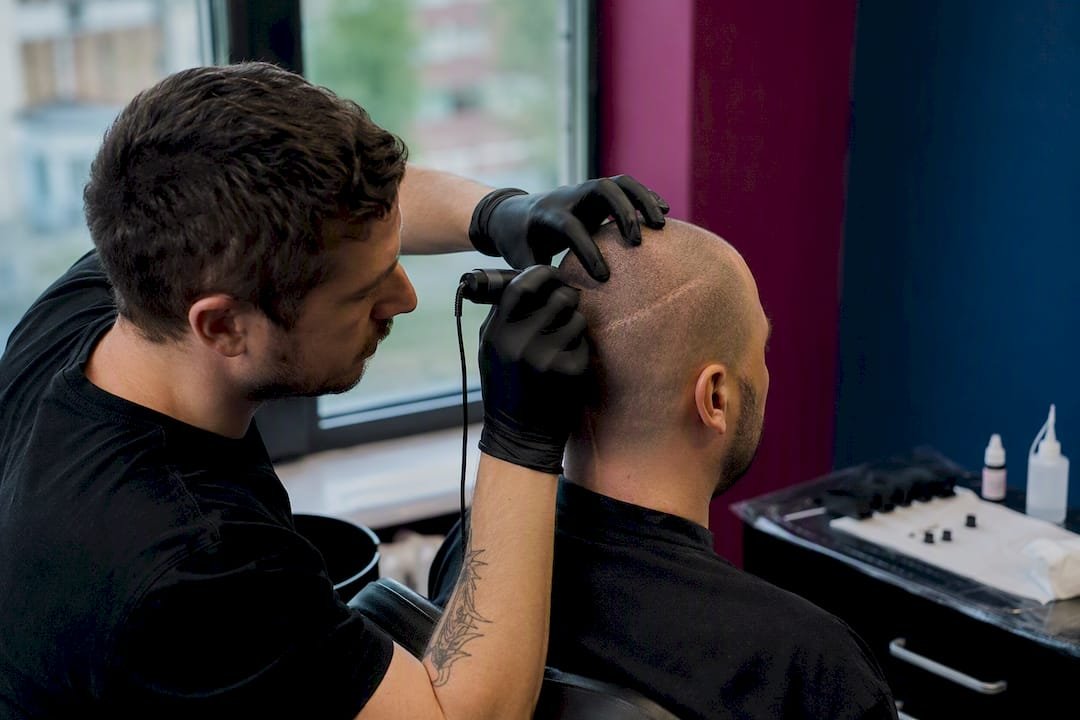
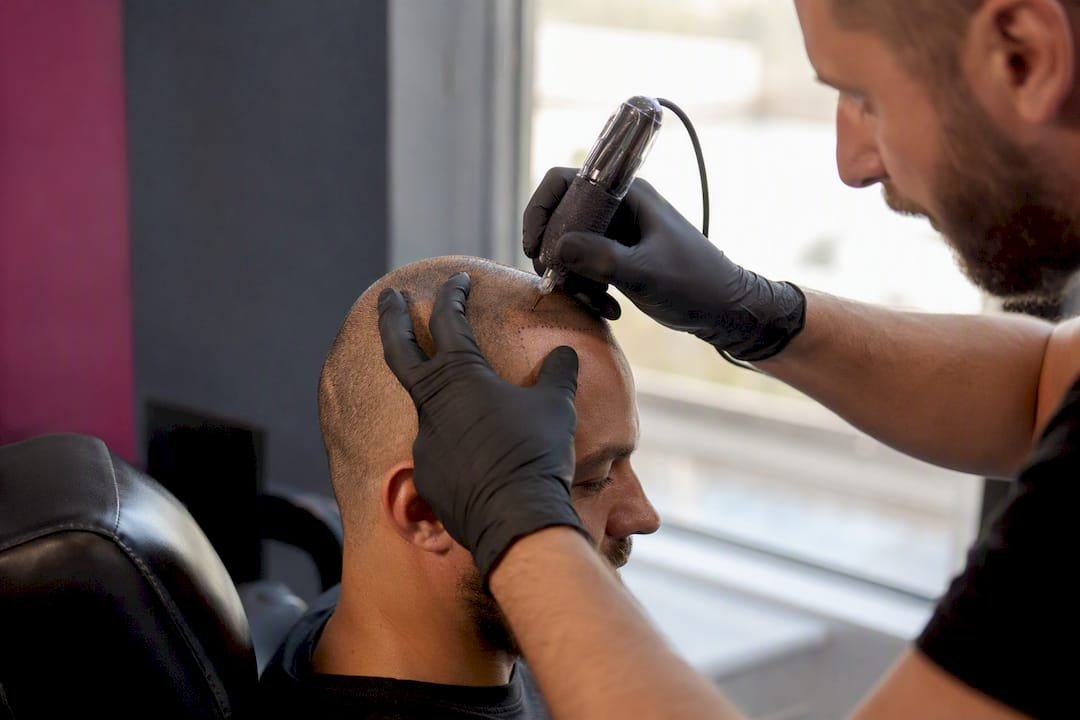
SMP works by depositing pigment into the upper dermis in tiny dots that mimic the look of closely shaved hair follicles. Done well, it tricks the eye at conversational distance, and sometimes even up close. The process typically runs in stages:
- Consultation and mapping. The practitioner assesses your hair loss pattern, skin tone, and goals, then sketches a proposed hairline.
- First session. Base layer of pigment establishes the framework, usually the most time-intensive sitting.
- Build sessions. Additional layers add density and refine the gradient, spaced days to weeks apart.
- Healing and touch-up. Pigment settles into its true color over several weeks, followed by a final adjustment if needed.
Contrast is everything here. A man with dark hair and fair skin needs a different pigment strategy than someone with graying hair, which is part of why full-shave SMP and density fill are treated as genuinely different techniques rather than variations on the same theme.
Are You a Good Candidate for Receding-Hairline SMP?
Most men with Norwood II through IV recession are strong candidates for density-fill SMP, since there’s still enough native hair to blend pigment between existing follicles. Men further along the Norwood scale, at stage V through VII, often do better with a full hairline rebuild or a hybrid plan that pairs SMP with a transplant. The ISHRS points out that SMP tends to look most convincing as a consistent shaved look, but density-fill and hybrid approaches remain viable for men who want to keep some length.
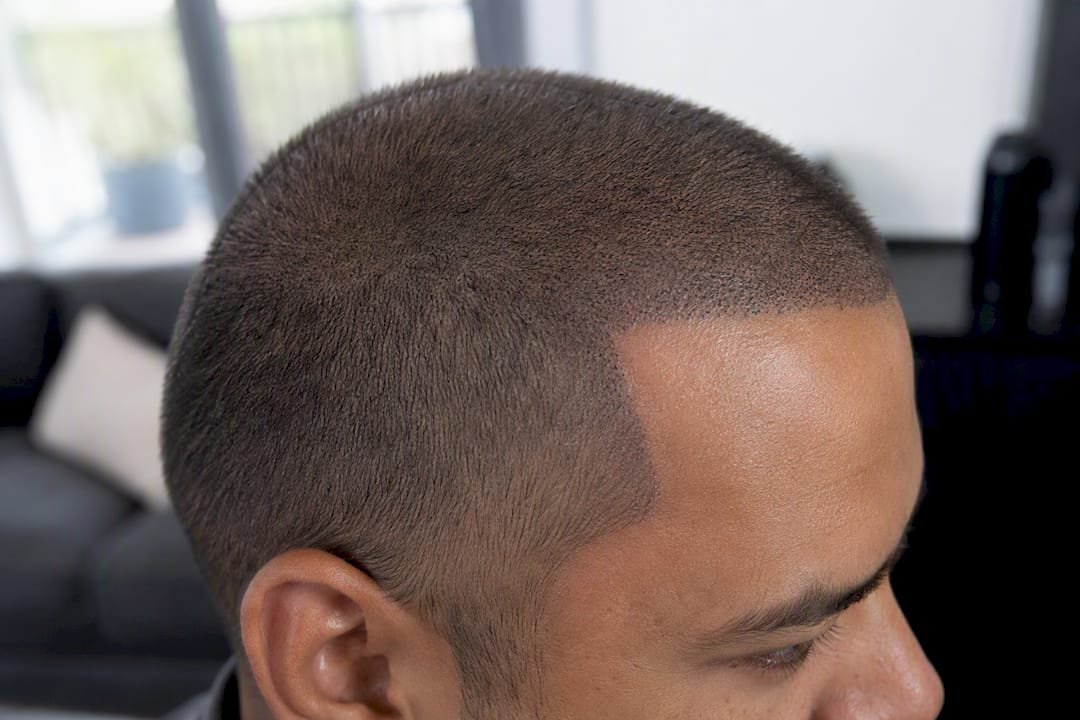
Hold off if you have active scalp conditions like unmanaged psoriasis or folliculitis, or if you’re less than a year out from a hair transplant, since the donor and recipient areas need time to fully settle; learn more about common hair loss causes and non-surgical options. Hair loss that hasn’t stabilized (still progressing rapidly on medication or with no treatment plan) is another reason to wait, since a hairline placed today may look stranded in five years.
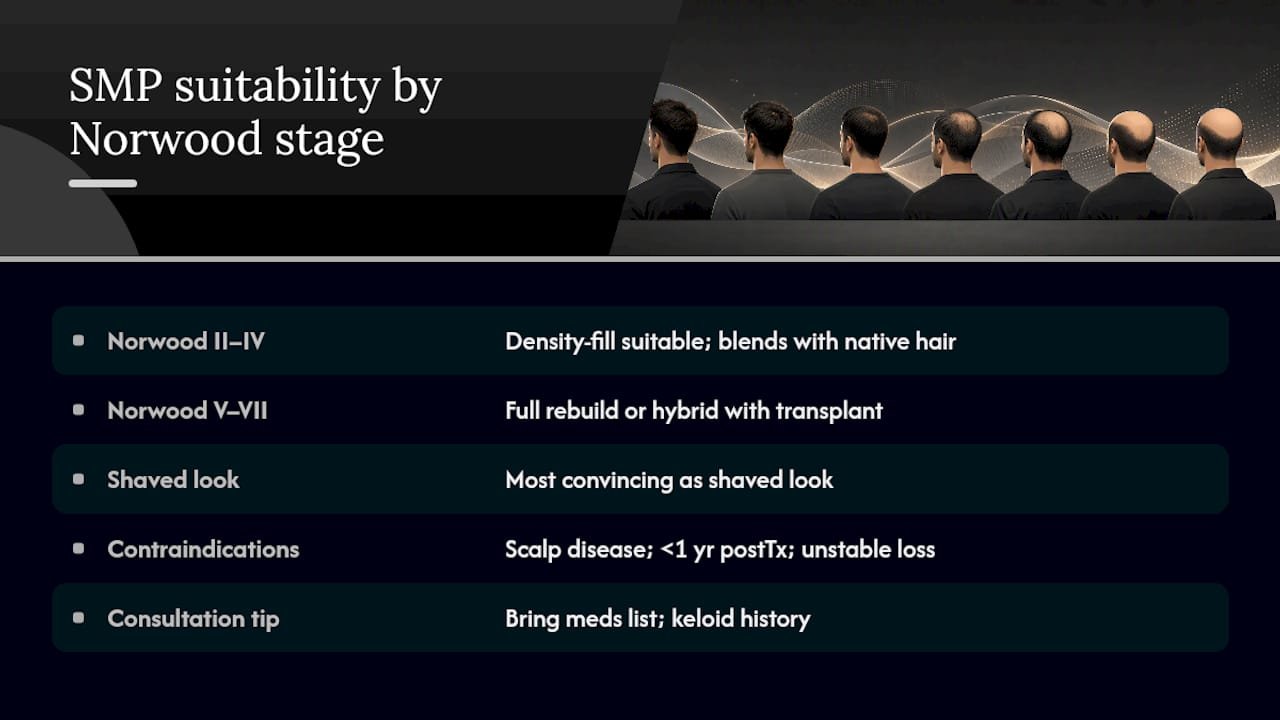
Pro Tip: Bring a list of current medications and any history of keloid scarring to your consultation. Both affect how pigment settles and how the practitioner plans your hairline’s edge density.
Hairline Rebuild vs Density Fill: Choosing Your Style
A full hairline rebuild recreates the front hairline and scalp as if it were closely shaved, which works best for men comfortable maintaining a buzzed look indefinitely. Density fill takes a different approach: pigment goes between your existing follicles to reduce shine and camouflage thinning, so you can keep more length on top.
- Temple reinforcement: subtle density added at the recession points without touching the rest of the hairline.
- Soft faded hairline: an irregular, gradient edge that blends into a low buzz cut.
- Full shaved-effect hairline: complete front-to-back coverage for men who’ve already committed to a shaved head.
Your profession and comfort with a shaved aesthetic usually decide which path fits. A lawyer who wants to keep a conservative, longer style leans toward density fill; a man who’s already shaving his head weekly usually goes straight for the full rebuild.
What to Expect: Sessions, Healing, and Touch-Ups
A density-fill treatment for a receding hairline typically runs two to three sessions, while a full rebuild across a larger area can take three to four. Each sitting runs two to four hours depending on the size of the area.
- Immediately after treatment: the scalp looks slightly darker and redder than the final result, similar to fresh tattoo skin.
- Days 7 to 14: light flaking or scabbing as the top layer of pigment sheds, revealing a softer tone underneath.
- Around day 30: the healed look emerges, showing the true, settled color and density.
- Touch-up window: most practitioners schedule a follow-up between four and eight weeks after the final session to fill any uneven spots.
Pigment fades gradually over years, not months, and most men return for a refresh every three to five years, depending on sun exposure and skin type. Daily SPF on the scalp isn’t just a skincare habit here. It’s the single easiest way to slow pigment fade.
Pro Tip: Skip the sauna, pool, and direct sun for the first 28 days. Pigment is still stabilizing in the dermis during that window, and moisture or UV exposure can pull color unevenly.
Risks, Fading, and the Limits of SMP
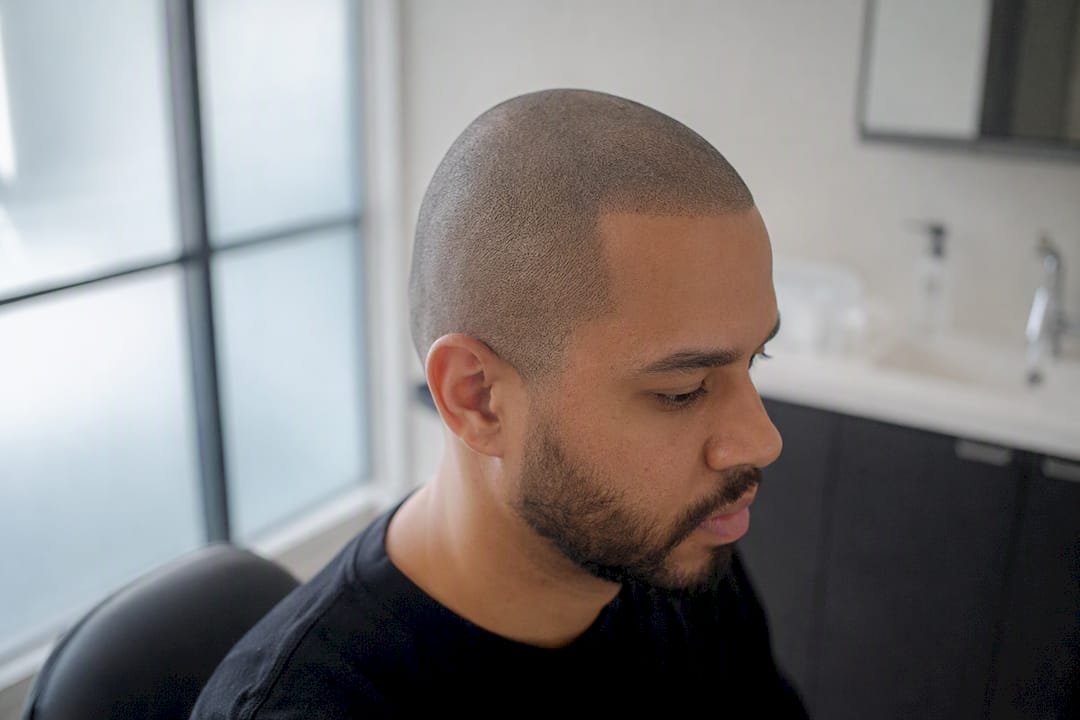
SMP doesn’t grow hair, and it never will. It’s camouflage, not a cure, so expectations matter as much as technique. Short term, expect mild redness and light crusting for a few days after each session, similar to any tattoo. Infection and pigment migration are uncommon but possible, almost always tied to a poorly run studio rather than the procedure itself.
- Scarred or fibrotic scalp tissue absorbs pigment less predictably than healthy skin.
- Overly dark or dense initial sessions are harder to correct than conservative ones built up gradually.
- Pigment softens and can shift in tone years down the line, particularly around the hairline’s edge.
A small clinical series on scarring alopecia found pigment diffusion in 55.6% of patients and color changes in 72.2% by the six-month mark, with touch-ups required in every case. That’s a reminder that scalp condition, not just technique, drives long-term results.
Pro Tip: Ask your practitioner to start conservative on your first session. It’s far easier to add density at a touch-up than to lighten pigment that’s gone in too dark.
How to Choose an SMP Practitioner You Can Trust
The single best predictor of a good outcome is a practitioner’s healed-photo portfolio, not their immediately-after photos. Fresh ink always looks sharp. What it looks like at 30 and 90 days tells you whether the artist understands pigment retention and skin tone matching.
Look for:
- Healed photos, not just fresh session shots, across a range of skin tones similar to yours.
- A mix of hairline styles in the portfolio (soft fades, temple work, full rebuilds), not one repeated template.
- A Norwood-staged approach to hairline design that matches technique to your specific stage of recession.
At the consultation, walk through this checklist:
- Ask to see a custom mockup of your hairline, not a generic stencil.
- Ask how they’d sequence SMP if you’re also considering a transplant later.
- Ask about their touch-up policy and what it costs after the first year.
- Ask how they’d handle correcting a hairline if you don’t like the initial shape.
Red flags include a hairline drawn with a straight stencil, a portfolio with no healed images past two weeks, promises of a “guaranteed” flawless result, or no written aftercare plan handed to you before you leave.
Why Enhanced Scalp for Your Hairline Consultation
Enhanced Scalp builds its reputation on conservative hairline design and documented healed results, not just fresh-session photography. That distinction matters most for receding hairlines, where an aggressive initial line can look unnatural as your natural hair continues thinning around it.
At a consultation, expect:
- A Norwood-stage assessment of your current and likely future recession pattern.
- A custom mockup showing where your hairline will sit, with room to adjust before the first session.
- A conversation about whether a hybrid plan, pairing SMP with a transplant or medication, fits your goals better than SMP alone.
Enhanced Scalp also specializes in corrective work for men with prior poor SMP, laser removal attempts, or transplant scarring, which speaks to a practitioner base that’s seen what goes wrong and designs around it.
A Note From Enhanced Scalp on Realistic Results
We’d rather build a hairline slightly conservative and add density later than start too aggressive and spend a year correcting it. Ask any practitioner for their healed photos and their retouch policy before you commit. That answer tells you more than any before shot ever will.
Your Path to a Natural Hairline With Enhanced Scalp
Enhanced Scalp treats a receding hairline as a design problem first, not just a pigmentation job, which is the gap between a shaved-head illusion that reads as natural and one that reads as a tattoo.
The clinic’s process runs in three stages: an initial Norwood assessment and consultation, a custom hairline mockup you approve before any pigment goes down, and staged sessions built up conservatively rather than maxed out on day one. Bring photos showing how your hairline has changed over the past few years, and come ready to ask about touch-up frequency and how corrective work would proceed if you’ve had prior SMP elsewhere. Review the healed-result gallery to see how pigment settles over time, then book a consultation through the scalp micropigmentation service page to get a personalized hairline plan.
Sources
- Micropigmentation of the scalp — ISHRS
- Scalp micropigmentation (SMP): Benefits, costs, results — Medical News Today
- Efficacy, safety, and patient-reported outcomes of scalp micropigmentation in scarring alopecia — JCAS
- Scalp Micropigmentation for Receding Hairline: The Norwood-Staged Density Blueprint — Hair Doctor NYC
FAQ
Can SMP fix a receding hairline?
Yes, for most men across Norwood stages II through VII, SMP can visually restore a natural-looking hairline by mimicking closely shaved follicles, though it works as camouflage rather than hair regrowth.
How long does an SMP hairline last?
The healed result typically holds its shape and color for three to five years before pigment softens enough to warrant a touch-up, depending on sun exposure and skin type.
How much does hairline SMP cost?
Cost varies by clinic, treatment area, and number of sessions, with practitioners commonly running two to four hour sessions that are priced individually, so a consultation quote is the only reliable way to get your actual cost.
Is SMP good for thinning hair?
Yes, density-fill SMP is specifically designed for thinning hair, depositing pigment between existing follicles to reduce scalp shine and visual thinning without requiring a shaved look.
This article is general information, not a substitute for advice from a qualified doctor. Consult a qualified healthcare professional about your own circumstances before acting on anything here.