 Skip to content

Yes, most scalp micropigmentation color problems can be fixed. Blue casts, gray fading, and patchy tone mismatches respond well to color-neutralization work done in staged sessions by a trained SMP artist, while a smaller number of cases with unstable or foreign pigment require laser removal first. A proper fix starts with a consultation and patch test, not a single quick session.
TL;DR:
- Most color problems in scalp micropigmentation can be fixed with staged corrective sessions, although incomplete or unstable cases may require prior laser removal.
- Corrective work relies on thorough evaluation, including undertone testing, pigment analysis, patch testing, and careful planning to avoid worsening the issue.
- Proper correction techniques focus on neutralizing cool tones with warm pigments and building layers gradually, avoiding rushed fixes that often make problems worse.
- Laser removal might be necessary when pigments are unstable, migrated too deep, or chemically unresponsive, adding time and cost before correction can occur.
- Choosing an experienced corrective SMP artist involves reviewing healed case photos, confirming pigment sourcing, and understanding the staged, healing-focused process to ensure lasting results.
Table of Contents
- What Causes SMP Color Change and How to Spot It
- How Artists Assess Your Scalp Before Building a Correction Plan
- What Techniques Fix SMP Color Problems?
- When Is Laser Removal Necessary Instead of Correction?
- How Long and How Much Does Correction Cost?
- How Do You Choose the Right Corrective SMP Artist?
- How Enhanced Scalp Approaches Corrective SMP
- What Most Guides Get Wrong About Color Correction
- Ready to Fix Your SMP Color Issue?
- Sources
- FAQ
What Causes SMP Color Change and How to Spot It
Blue or gray dots on a shaved head almost always trace back to one of three causes. Technical causes include the wrong pigment formulation, implanting it too deep into the dermis, or inconsistent technique that leaves ink sitting unevenly under the skin. Biological causes involve how a person’s skin chemistry and undertone interact with the pigment over time, plus how scar tissue holds ink differently than healthy skin. Environmental causes come down to sun exposure and skipped aftercare, both of which accelerate the color drift.
Black pigments in particular tend to break down toward blue or gray tones as they age, according to Nuva Colors’s breakdown of color correction in permanent makeup and SMP. Knowing which pattern you’re dealing with matters because each one calls for a different fix:
- Fading: pigment lightens evenly but shifts cooler, often blue or ash gray.
- Migration: dots blur or spread beyond their original placement, usually from depth errors.
- Color shift: the tone changes character entirely, not just intensity, typically from pigment breakdown or undertone conflict.
How Artists Assess Your Scalp Before Building a Correction Plan
A competent SMP artist never guesses at a fix. They run through a defined evaluation before touching a needle to your scalp, and you should expect to see each step happen at your consultation.
- Undertone testing. The artist checks your skin’s natural warm, neutral, or cool undertone against the existing pigment to figure out why the mismatch happened.
- Depth and pigment analysis. They examine healed photos and, where possible, test the pigment’s response to light to estimate how deep it sits and what it’s made of.
- Patch testing. A small test area gets treated with the proposed corrective pigment to confirm it heals the way it’s supposed to and doesn’t trigger a reaction.
- Documentation and planning. Expectations get written down, along with a realistic multi-session timeline, before any corrective work begins.
Pro Tip: Ask to see your own scalp under different lighting, indoor and outdoor, before the first correction session. Blue casts that look subtle under clinic lights often show up much more clearly in daylight, and that changes how aggressive the first pass should be.
What Techniques Fix SMP Color Problems?
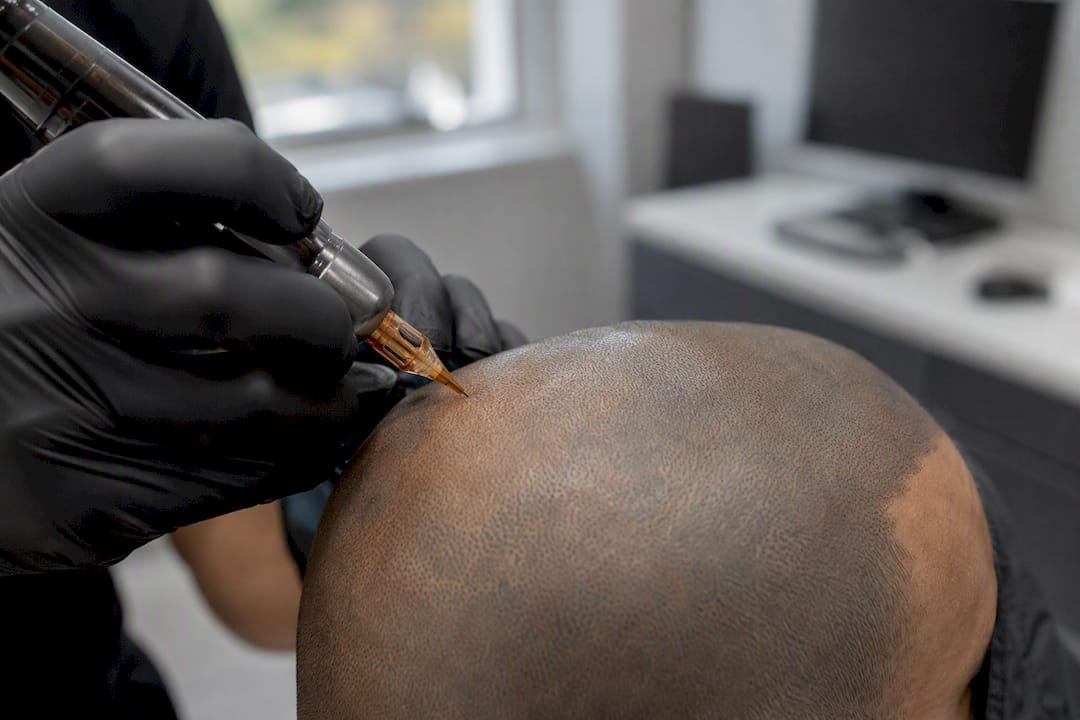
Correcting SMP color runs on the same logic as color theory in painting. Blue and green sit opposite orange and warm brown on the color wheel, so applying a warm modifier over a cool cast neutralizes it rather than layering more dark pigment on top, which only deepens the problem. Nuva Colors’s guidance on advanced color correction techniques documents this approach directly, including case examples where orange and warm brown modifiers pulled blue-faded pigment back toward a natural gray or brown.
The actual work happens in stages, not one sitting. Correction is inherently iterative: an artist applies a light layer of the neutralizing pigment, lets it heal fully, then evaluates the result before deciding whether more is needed. That healing window is not optional. Rush it, and you risk over-saturating the area with warm tones, trading a blue problem for an orange one.
A few techniques define this staged approach:
- Complementary neutralization: warm orange or brown pigments counter cool blue and green tones.
- Single-needle precision: fine, controlled passes blend corrective pigment without adding unnecessary trauma to already-compromised skin.
- Conservative layering: artists build color gradually across sessions rather than chasing full coverage in one visit.
This is also exactly why DIY touch-ups and rushed, inexperienced corrections tend to make things worse. Adding dark pigment over a blue cast without understanding undertone interaction just creates a heavier, harder-to-fix version of the original problem. No published statistic tracks how often self-correction backfires, but the pattern shows up consistently enough in clinic case histories that most experienced artists treat it as a hard rule: never neutralize a color problem with more of the same pigment that caused it.
When Is Laser Removal Necessary Instead of Correction?
Correction has limits. Some pigment situations are too unstable, too foreign, or too deep for neutralization to work safely, and pushing forward with correction anyway usually wastes money and time.
Removal tends to be the better route when:
- The original ink is a foreign or unknown formulation that doesn’t respond predictably to corrective pigment.
- Pigment has migrated deep into the dermis, beyond where surface-level neutralization can reach.
- The scalp shows signs of an allergic reaction to the existing ink.
- The pigment is chemically unstable and likely to keep shifting color even after correction.
Removability varies by pigment type, and some ink formulations respond poorly to laser treatment, sometimes requiring multiple removal sessions before any corrective SMP can start, according to Healthline’s overview of scalp micropigmentation. That sequencing adds real time and cost to the process, and it can leave temporary redness or texture changes during healing. Anyone facing this route should treat removal and correction as two separate phases, budgeted and scheduled separately, not a single combined appointment.
How Long and How Much Does Correction Cost?
Most SMP color corrections take multiple sessions, spaced several weeks apart so each round of healing can be judged accurately before the next pass. Skipping that healing window is one of the most common reasons corrections drag on longer than they should.
Cost depends on a handful of concrete factors:
- Area size: a small patch of discoloration costs far less to fix than a full crown or hairline.
- Severity: heavy migration or deep pigment requires more sessions than surface fading.
- Removal need: if laser removal is required first, that adds separate cost and time.
- Artist seniority: technicians with specific corrective experience typically charge more, and for good reason.
Ask for an itemized treatment plan and a written quote before committing. A vague flat price for “correction” without a session breakdown is a sign the artist hasn’t actually assessed your scalp yet.
How Do You Choose the Right Corrective SMP Artist?
Corrective work is a different skill set from a first-time SMP application, and not every technician who does the latter is equipped for the former. Vetting matters more here than almost anywhere else in cosmetic tattooing.
- Ask for healed, corrective-specific photos. Request before-and-after documentation from other correction cases, not just standard SMP work, and ask for references if possible.
- Confirm the pigment brand and patch-test protocol. TeamMicro’s guide to choosing a technician recommends verifying exactly which pigments an artist uses and how they handle testing before full sessions.
- Get the staged plan in writing. Expected session count, spacing, and any guarantees should be spelled out, not promised verbally.
- Ask about aftercare specifics. Sun exposure and product use directly affect how corrective pigment settles during healing.
Pro Tip: If an artist promises a full fix in a single session, walk away. Real correction work respects the healing timeline, and anyone skipping that step is optimizing for a fast sale, not a stable result.
Red flags to watch for: no healed documentation available, pressure to book immediately, or vague answers about pigment sourcing.
How Enhanced Scalp Approaches Corrective SMP
Enhanced Scalp treats corrective work as its own specialty, not an add-on to standard SMP. That distinction shapes every decision made during a corrective consultation.
- Conservative hairline design that avoids repeating the density or placement errors that often caused the original color problem.
- Realistic follicle replication using pigment selected specifically for the client’s undertone, rather than a single default shade.
- Direct experience correcting prior poor SMP work, failed hair transplant scarring, and cases involving previous laser removal.
- Documented healed results in the gallery, so prospective clients can see corrective outcomes rather than just marketing renders.
The practice leans on staged sessions and full healing intervals between each one, consistent with how the SMP treatment guide outlines healing expectations for any SMP work, corrective or not.
What Most Guides Get Wrong About Color Correction

The advice floating around online tends to oversell speed and undersell patience. Plenty of clinics market corrective SMP like it’s a single confident session away from perfect, and that framing sets clients up to panic when the first pass looks incomplete. It’s supposed to look incomplete. Neutralization pigment needs a full healing cycle to reveal its true settled tone, and judging it at week two instead of week eight is how people end up chasing a fix that was already working.
The bigger blind spot is undertone. Most people fixate on the SMP artist’s needle skill and completely ignore whether the artist actually assessed their skin’s warm or cool bias before choosing a corrective pigment. Skip that step, and even a technically flawless application can still drift the wrong direction. If there’s one question worth asking before anything else at a consultation, it’s not “how many sessions will this take.” It’s “what undertone did you identify, and why does that pigment counter it?” An artist who can’t answer that clearly probably shouldn’t be doing corrective work yet.
— James Christopher
Ready to Fix Your SMP Color Issue?
Enhanced Scalp treats corrective SMP as a distinct specialty, built around conservative pigment selection and staged sessions rather than a rushed single-visit fix. A consultation starts with an undertone and pigment assessment, a patch test, and a written multi-session plan tailored to whether your scalp needs neutralization, laser removal, or both.
You can review healed correction cases in the results gallery before booking, and see the full range of corrective and standard treatments on the scalp micropigmentation service page. If you’re dealing with a prior poor SMP job or transplant scarring specifically, that page outlines what a corrective consultation covers so you know exactly what to expect at your first visit.
Sources
- Advanced color correction techniques in PMU and SMP – Nuva Colors
- Choosing the best technician – TeamMicro
- Scalp micropigmentation overview – Healthline
FAQ
What Are the Disadvantages of SMP Color Correction?
Correction requires patience: multiple sessions, healing gaps of six to twelve weeks, and the possibility that severe cases need laser removal before any corrective work can start.
How Much Does SMP Color Correction Usually Cost?
Price depends on area size, severity, whether removal is needed first, and the artist’s corrective experience, so an itemized written quote after assessment is the only reliable figure.
How Long Does It Take for SMP to Lighten?
Fading happens gradually over months to years depending on pigment quality and sun exposure, and corrective lightening through neutralization or removal typically unfolds across several sessions with healing time between each.
Can SMP Be Removed if I Don’t Like the Color?
Yes, though removability varies by pigment type, and some formulations respond poorly to lasers, sometimes requiring multiple removal sessions before corrective SMP can begin.

