 Skip to content


You can usually return to gentle exercise about several days after scalp micropigmentation, but heavy sweating and intense workouts need to wait longer, depending on how your scalp heals. The main job during that window is simple: keep the scalp dry, avoid rubbing it, and clean it right away if sweat does reach it. Our team can give you a timeline tailored to your specific healing pattern.
TL;DR:
- Light activities like walking and gentle yoga are generally safe within a few days post-procedure, but heavy sweating activities should be avoided for at least 8 to 14 days.
- Sweat, friction, and bacteria pose risks during the early healing stages, especially before day 8 when the pigment fully stabilizes and the scalp’s micro-wounds close.
- Post-workout routines should focus on patting the scalp dry, gentle cleansing, and keeping contact points clean to prevent infection and pigment disruption.
- Activities involving helmets, headbands, or tight gear increase friction and should be delayed even longer than general guidelines suggest.
- Clues such as spreading redness, pus, fever, or pigment loss signal complications requiring immediate medical consultation.
Table of Contents
- Why Healing Phases Determine When You Can Work Out
- Which Workouts Are Safe, and When
- Your Post-Workout Scalp Routine
- Warning Signs That Mean You Should Call Your Clinic
- When Scarring or Sensitive Skin Changes the Timeline
- How We Support Your Recovery and Follow-Up
- A Practitioner’s Take on Patience and Pigment
- Ready for a Check-Up or Touch-Up?
- FAQ
- Sources
Why Healing Phases Determine When You Can Work Out
Fresh SMP pigment sits in tiny channels in the skin, and those channels need time to close before sweat, friction, or bacteria can safely touch them. Skin healing after a procedure like this generally moves through three overlapping stages, and each one changes what your scalp can tolerate.
In the first 2 to 3 days, the scalp is inflamed and the pigment dots are essentially open micro-wounds. Moisture and friction at this stage raise the risk of pigment pulling out or blurring, which is why most clinics ask you to avoid any activity that causes sweating during this window.
By day 4 to 7, you’re in the proliferative phase. The surface starts to calm down, but the pigment is still settling into place and remains sensitive to sweat chemistry. Sweat carries salt and lactic acid, and public health guidance on tattoo aftercare notes that this kind of residue can interfere with fresh pigment if it’s left sitting on the skin during early healing, raising the odds of fading or blotchy patches sweat and residue can affect fresh pigment.
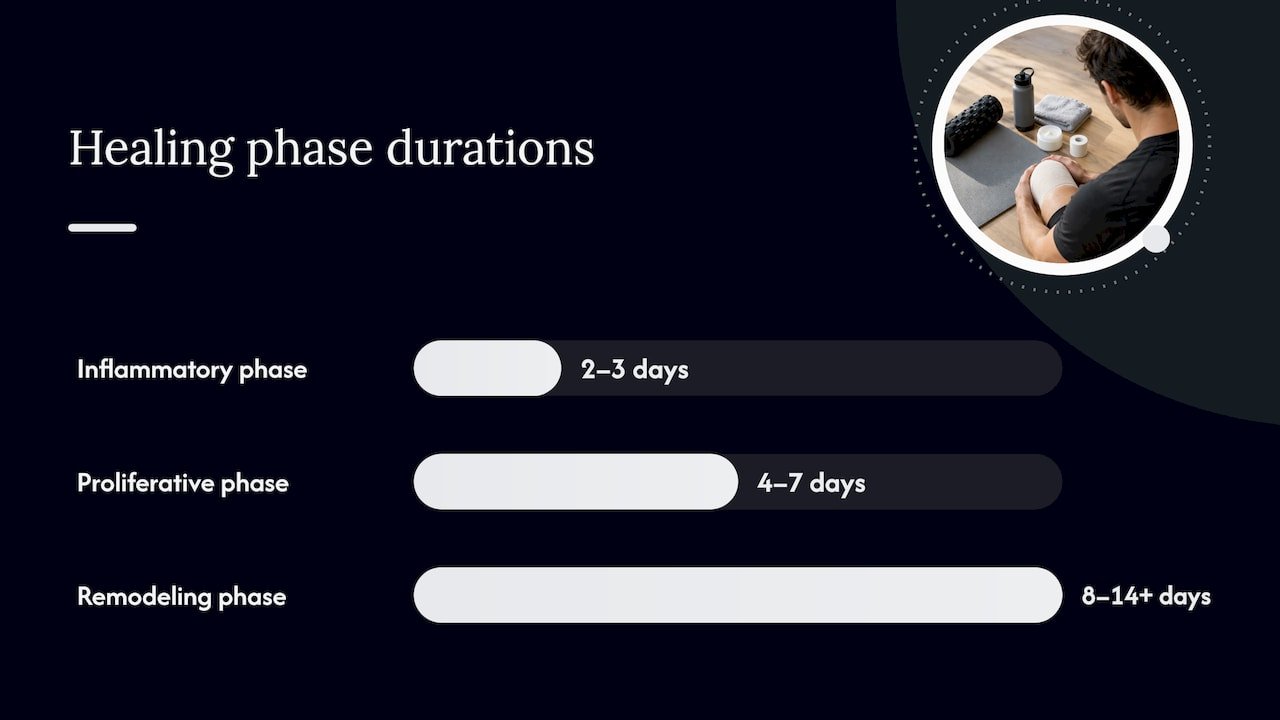
From roughly day 8 to 14 and beyond, the scalp enters remodeling. Surface crusts and flaking typically resolve, and the pigment becomes more stable, which is usually when clinics clear clients for heavier sweat activity.
Clinic guidance varies because skin type, scarring, and how intense a given session was all affect timing:
- Lighter, single-pass sessions on healthy skin often heal faster than dense, multi-pass work.
- Scarred or previously treated scalps tend to need more conservative timelines.
- Each session in a multi-session plan resets the clock, so later sessions still need their own careful week.
Which Workouts Are Safe, and When
Not every activity carries the same risk. Grouping workouts by sweat and friction level makes it easier to plan your week without guessing.
- Low risk, often fine within a few days: Walking and gentle yoga produce minimal sweat and no scalp contact, so many people resume these once initial redness settles.
- Medium risk, generally after several days with precautions: Steady cycling or moderate weightlifting can proceed once you’re past the first few days, as long as you clean the scalp promptly if any sweat reaches it.
- High risk, usually held off for 10 to 14 days or more: Running, HIIT, swimming, sauna sessions, and contact sports produce heavy sweating or direct scalp contact and are the activities most linked to early pigment disruption.
Helmets, tight caps, and headbands add friction on top of sweat, so if your sport requires gear that presses against the scalp, it’s worth pushing that activity back further than the general guideline suggests.
Your Post-Workout Scalp Routine
A short routine right after exercise does more to protect your results than any product you apply later. Once your clinic has cleared you for a given activity level, build this habit into your post-workout scalp routine and gym bag routine.
- Immediately after: Pat the scalp dry with a clean towel instead of rubbing, and remove any cap, helmet liner, or headband as soon as you’re done.
- Cleanse gently: Use a sulfate-free, pH-balanced wash, work it in with light fingertip pressure, and rinse with cool to lukewarm water rather than a strong direct spray.
- Dry and protect: Air-dry for a few minutes or pat dry again, and hold off on moisturizers or styling products until your clinic confirms they’re appropriate for your healing stage.
- Keep contact points clean: Wipe down gym equipment before use and wash your hands before touching your scalp, since bacteria transfer is a real infection risk on healing skin.
Pro Tip: Keep a small aftercare kit in your gym bag: a clean towel, a travel-size gentle cleanser, and a few sterile gauze pads for any unexpected sweat or scratch.
Warning Signs That Mean You Should Call Your Clinic
Mild crusting and slight color shifts in the first couple of weeks are normal parts of healing. A different set of signs means something has gone wrong and needs attention sooner rather than later.
- Spreading redness beyond the treated area or redness that worsens instead of fading.
- Pus, heavy discharge, or a foul odor coming from the scalp.
- Fever, escalating pain, or heavy bleeding at any point after treatment.
- Sudden pigment loss or unusual color changes that weren’t part of the expected fading pattern.
Municipal tattoo safety guidance advises contacting a health professional if a treated site becomes red, swollen, tender, or pus-filled, and the same standard applies to SMP aftercare see a health professional. If you notice any of these, stop your workout, photograph the area, and reach out to your clinic or seek urgent care if you have fever or spreading symptoms.
When Scarring or Sensitive Skin Changes the Timeline
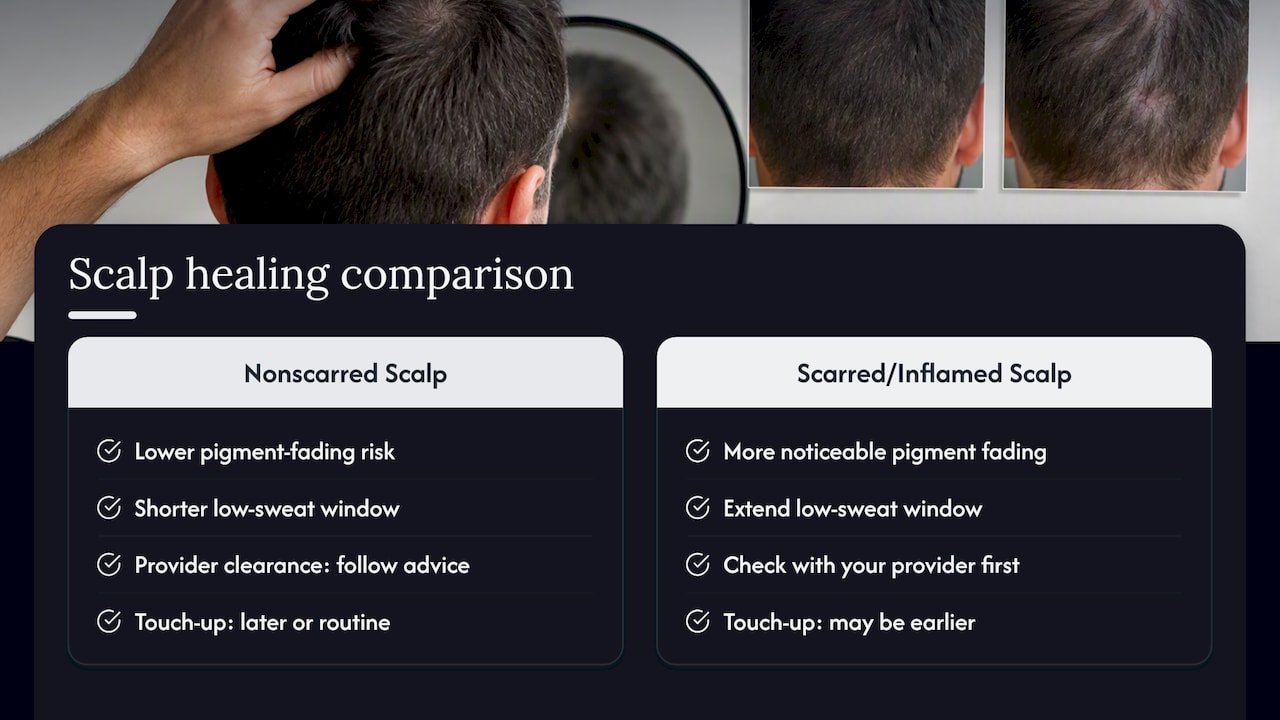
Not every scalp heals the same way. Case series on SMP outcomes have found that scarred or fibrotic tissue can show more noticeable pigment fading than nonscarred scalp, which means a more conservative return-to-sweat schedule and sometimes an earlier touch-up scarred scalps can show more pigment fading. If you’re healing over a hair transplant scar or a patch affected by an inflammatory skin condition such as psoriasis, extend your low-sweat window, and check with your provider before resuming anything intense.
Multi-session SMP plans add another layer: each session is its own healing event, so treat the timeline around your most recent appointment, not your first one, when deciding what your scalp can handle this week.
How We Support Your Recovery and Follow-Up
We document healed results and build conservative hairline designs so pigment ages well, which is also why we give clients clear wait windows before they return to heavy training. If anything looks off during healing, reaching out early makes touch-ups simpler, and most corrections are completed in one to three sessions through our SMP editing process.
At your appointment, confirm three things before you leave:
- Which cleanser is approved for your specific skin and healing stage.
- Your personal exercise timeline, since scarring, session depth, and skin type all shift it.
- How to reach your clinic if you notice redness, pain, or pigment changes after hours.
A Practitioner’s Take on Patience and Pigment
Clients often want to rush back to their training routine, but the scalps that heal best are the ones treated with a little extra patience in the first two weeks. Conservative timing protects the investment you made in your results, and if anything needs adjusting later, touch-ups remain an option. Follow the schedule your own clinic gives you over any generic rule you read online.
— James Christopher
Ready for a Check-Up or Touch-Up?
If you’re past your healing window and want a professional look at how your pigment settled, or you’re noticing fading in a scarred area, we offer follow-up visits and corrective sessions built around how your scalp actually healed, not a generic template.
We offer full scalp micropigmentation services, dedicated scar camouflage treatment for transplant or injury scarring, and training for practitioners who want to learn the technique themselves.
- Touch-ups and corrections for fading or uneven retention after your first session.
- Scar-specific protocols for clients whose healing pattern differs from standard SMP.
- A conservative design philosophy aimed at results that hold up years later, not just in the first month.
Book a consultation through our treatment page to get a timeline specific to your scalp and training schedule.
This article is general information, not a substitute for advice from a qualified doctor. Consult a qualified healthcare professional about your own circumstances before acting on anything here.
FAQ
What not to do after SMP?
Avoid heavy sweating, direct water pressure on the scalp, scrubbing or picking at crusting, and tight headgear during the first 10 to 14 days. Public health tattoo aftercare guidance also recommends keeping the area clean and free of chemical irritants during this period keeping the site clean and dry.
Can I sweat 5 days after SMP?
Light sweating from gentle activity is often tolerated by day 5 if you clean the scalp promptly afterward, but heavy sweating from running, HIIT, or saunas is usually still too early. Case series on SMP healing describe the proliferative phase extending through roughly the first week, which is why many clinics hold off on intense sweat activity until it closes pigment is still settling during early healing.
How long does it take to heal after SMP?
Visible surface healing, including crusting and flaking, typically resolves within about 2 to 4 weeks, with clinical follow-ups commonly scheduled at 1 week, 2 weeks, and 1 month to track progress follow-up schedules at 1 week, 2 weeks and 1 month. Deeper pigment stabilization continues for longer, which is why some fading can still show up at the one-month mark.
Does SMP fade after a few days?
Some initial softening of color is normal as surface pigment and ink from the very top layer of skin sheds during the first week, but this isn’t the same as true long-term fading. Case reports note that measurable pigment fading is more associated with scarred or fibrotic scalp tissue over longer periods, not the first few days variable retention depending on scalp condition.
Sources
- Scalp Micropigmentation Is an Effective Treatment for Localized Alopecia: Technical Analysis and a Series of Ten Case Reports — PMC
- Efficacy, safety and patient-reported outcomes of scalp micropigmentation in scarring alopecia — JCAS
- Tattooing – City of Toronto – BodySafe

