 Skip to content


Sun is the biggest everyday threat to scalp micropigmentation (SMP), both while it heals and for years afterward. Keep a freshly treated scalp out of direct sun during healing. Once it has healed, cover it with a broad-spectrum SPF 30+ sunscreen or a wide-brimmed hat whenever you are outside. Your technician’s written aftercare sheet always overrules any general guide, including this one.
Below you will find the healing-phase timeline, what UV light does to pigment, how to choose and apply sunscreen on a shaved head, and what to do on a Canadian summer day when you have to be outdoors.
TL;DR
- During healing, avoid direct sun on the scalp completely. Published guidance suggests at least 4 days after each session and 28 days after your final one.
- Once healed, use broad-spectrum SPF 30+ sunscreen, applied about 15 minutes before going out and reapplied every 2 hours, or sooner if you sweat or swim.
- Sun does not erase SMP overnight, but it speeds up gradual fading and color shifts, so it shortens the time between touch-ups.
- A bald or shaved scalp burns easily and carries real skin cancer risk. Protection is a health habit as much as a cosmetic one.
- A hat is the easiest layer: wide brim, tightly woven fabric, worn during the 10 a.m. to 3 p.m. window in summer.
Table of Contents
- Why sun matters so much for SMP
- The healing phase: when to stay out of the sun
- After healing: a daily routine that works
- Year-round, not just July
- What sun damage to SMP looks like
- Does SMP look different in sunlight?
- Our perspective: protection is part of the design
- Special cases
- Planning SMP with Enhanced Scalp
- FAQ
- Sources
Why sun matters so much for SMP
SMP places tiny deposits of pigment in the dermis, the layer of skin below the surface, to imitate the look of hair follicles. A clinical analysis of SMP in localized alopecia describes pigment being held in dermal macrophages and still fading gradually over time, through processes such as migration of pigment and enzymatic activity. The same analysis points to sunlight as something that significantly speeds these changes up.
Two things happen in practice:
- Fading. Dots that were crisp and dark soften and lighten. On a shaved head, the density you paid for starts to look thinner.
- Color shift. Pigment can drift toward a warmer or bluer cast as it ages. UV exposure is one of the factors that can push this along, which is why we treat sun protection as part of the treatment, not an optional extra.
There is also the plain biology of a scalp without hair. Hair gives some shade. When you have thinning hair, alopecia or a shaved head, the skin underneath is exposed. The American Academy of Dermatology says that people with hair loss should protect the exposed scalp from sunburn, because losing hair makes the scalp more vulnerable to UV damage.
The healing phase: when to stay out of the sun
Healing is when the skin is most fragile and the pigment is least settled. The research we reviewed gives these benchmarks, drawn from Healthline’s overview of SMP aftercare:
| Stage | Sun guidance |
|---|---|
| First days after each session | No direct sun on the scalp. At least 4 days is the figure given. |
| Between sessions | Keep the area covered or in shade if you must go out. |
| After your final session | Keep the treated area out of direct sun for 28 days. |
| Fully healed | Daily broad-spectrum SPF 30+ sunscreen or a hat. |
The same source lists swimming, saunas and steam rooms as things to avoid in that early window, alongside sun. If you are planning a summer treatment, our guide on SMP and swimming covers the water side of aftercare.
Sessions are also spread out. Healthline notes most people need 3 to 4 treatments a few weeks apart, while the PMC case-series analysis describes 3 to 5 sessions. That means your “healing phase” is not one week: it can stretch across a couple of months of careful sun habits. Our session-by-session walkthrough shows what each visit involves.
What “avoid the sun” actually means
It does not mean sitting in a dark room. It means no direct sunlight landing on the treated skin. In practice:
- Wear a loose, clean, breathable cap or hat outdoors. Tight, sweaty headwear is a bad idea on healing skin, so choose something loose and change it if it gets damp.
- Do not apply sunscreen to a scalp that is still scabbing or flaking unless your technician says to. Many clinics ask you to use only fabric cover at this stage, because creams can irritate healing skin. Ask yours which product, if any, is approved.
- Skip tanning beds entirely. They are a concentrated UV source with no upside for your scalp.
- Plan the work around your calendar. Booking before a beach trip or a long golf weekend is the most common way people end up compromising their first month.
After healing: a daily routine that works
Once your technician confirms the scalp is healed, the goal shifts from protecting a wound to protecting an investment. The routine is short.
Choose the right sunscreen
Health Canada explains that sunscreen should be broad-spectrum, SPF 30 or higher, and water-resistant when you will be sweating or swimming. Broad-spectrum matters because it covers both UVA and UVB. Beyond that, the form is a matter of what you will actually use:
- Lotion or cream: often better for even coverage across a large bald area.
- Spray: easier to apply on a shaved head, according to the AAD’s guidance for hair loss, though you need to apply enough and rub it in to avoid gaps.
- Stick: handy for hairlines, ears and the back of the neck, the places people miss.
If you have sensitive skin, try a new product on a small patch first and avoid heavily fragranced formulas.
Apply it properly
The habit that matters most is consistency. Dermatologists quoted by the AAD say reapplying every two hours is the single most important factor once you are protecting a bald scalp. A workable pattern:
- Apply about 15 minutes before you go outside.
- Cover the whole scalp, including the hairline, temples, the tops of the ears and the nape.
- Reapply every 2 hours, and right after heavy sweating or swimming.
- Treat cloudy days as sun days. UV gets through cloud.
Add shade and clothing
The Canadian Dermatology Association’s sun protection position statement recommends limiting time outdoors between 10 a.m. and 3 p.m. in summer, and combining shade, sun-protective clothing and sunscreen rather than relying on one. For your head, that means a wide-brimmed hat. The AAD also recommends a wide-brimmed hat and avoiding peak hours as much as possible.
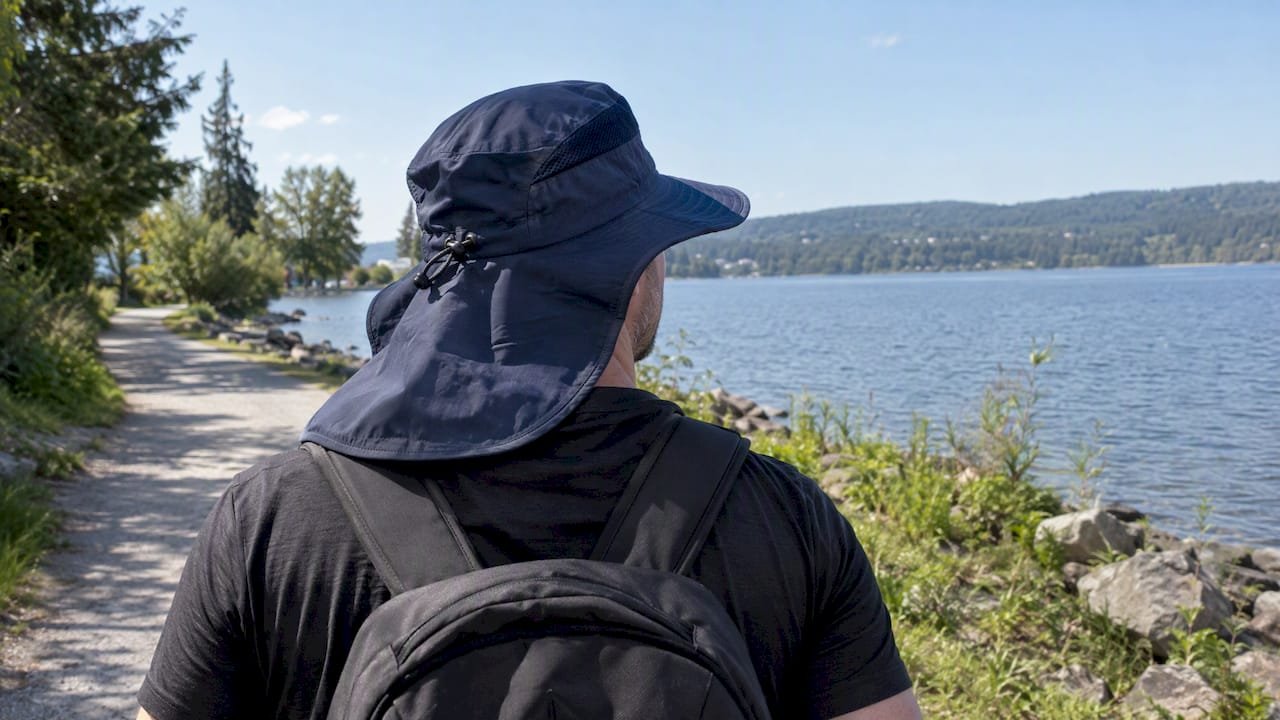
A baseball cap protects the top but leaves your ears and neck exposed. If you spend hours outdoors, a brimmed hat with a neck flap, or a UPF-rated fabric, does more work than a cap.
Know your UV index
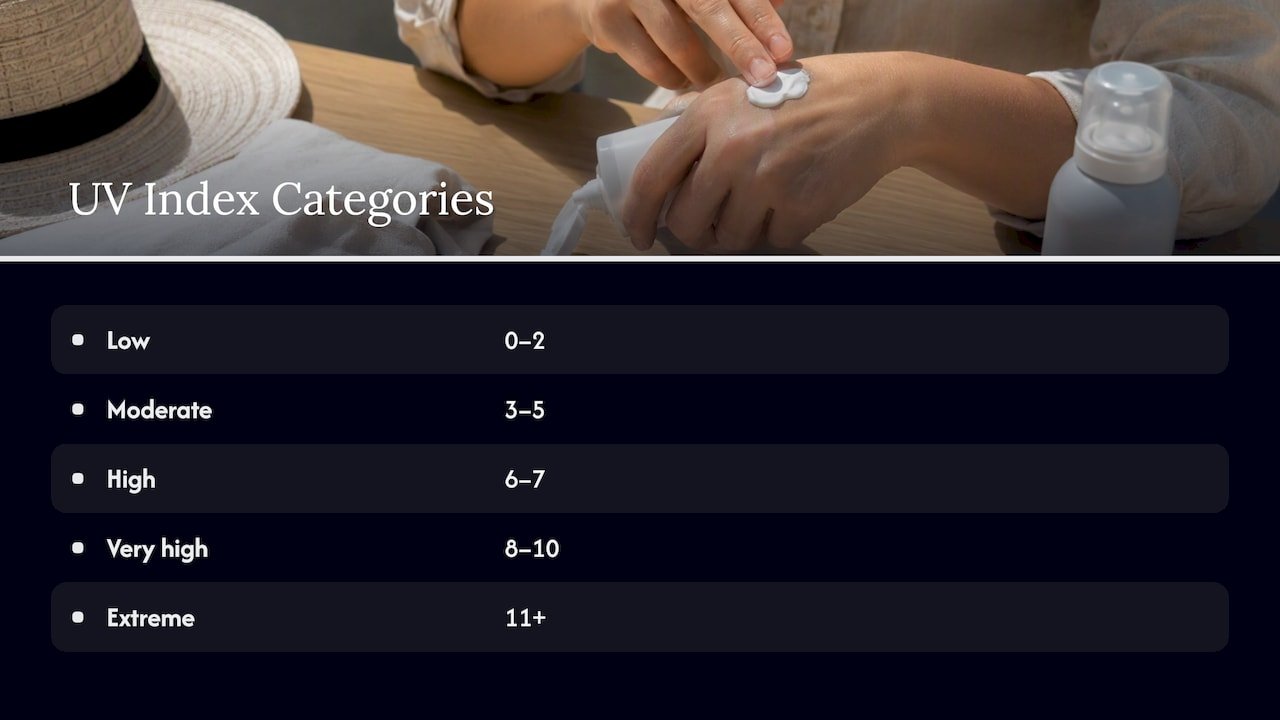
In Canada, Environment and Climate Change Canada groups the UV index into low (0 to 2), moderate (3 to 5), high (6 to 7), very high (8 to 10) and extreme (11+). It is highest in spring and summer. Checking the forecast for your city takes a few seconds and tells you whether today needs the full routine.
Year-round, not just July
Many people in Ontario switch off in autumn. That is a mistake in two directions. Reflected light off snow can still reach a bare scalp in winter, and the first warm days of spring often have a surprisingly high UV index before anyone has put a hat back on. Since UV is higher in spring and summer, keep a stick or small bottle in your bag from April and the habit will carry you through.
If you travel somewhere sunnier, such as a southern winter holiday, treat the trip as a peak-exposure event: brimmed hat, water-resistant SPF 30+, reapplication on schedule.
Good evening skin care helps too. Once everything has healed, a gentle routine keeps the scalp comfortable after a day outside. A plain scalp massage oil can be part of that, but only after your technician has cleared you to put products on the scalp, and it is not a substitute for sunscreen. If your scalp is red or tender after too much sun, the AAD has guidance on treating sunburn; see a doctor for blistering, fever or severe pain.
What sun damage to SMP looks like
Watch for these signs, and photograph your scalp in the same light every few months so you can compare honestly:
- Dots that look lighter or grayer than at your last session.
- A hairline that appears softer or less defined.
- Patchy areas where the scalp was more exposed than the rest, such as the crown.
- A slight warm or blue tint compared with your natural stubble.
Some change over the years is normal, because SMP is not a one-time permanent result. The research notes clients should expect touch-ups every few years, especially people with scarring alopecia. Good sun habits stretch that interval. Our article on maintenance and when to refresh explains how to tell fading from normal healing, and healed vs fresh SMP shows why the first weeks look darker than the final result.
Does SMP look different in sunlight?
This is the other half of the “SMP sun exposure” question, and it is about looks rather than damage. Studio lighting is flattering for any treatment, so it is fair to ask what the result looks like outside. Reasonable expectations: in strong daylight, well-done SMP reads like short, dense stubble, which is also what it is designed to imitate. A shaved head with natural stubble in sun looks different from a head in a photographer’s softbox, and good SMP should match that, not stand out from it.
That is also why we care about healed photos rather than fresh ones. Fresh work is darker and sharper than the final result, and edited images can hide the difference. If you are comparing clinics, our checklist for spotting AI-edited SMP results explains why to ask for healed photographs in natural light. Our piece on scalp shine also covers how SMP changes the way a bald scalp catches light.
Our perspective: protection is part of the design
We approach sun exposure the same way we approach hairline design: conservatively and with the long term in mind. Our focus is natural, realistic, healed results, and sun is the variable we can influence least once you leave the chair. That is why we choose pigment carefully for each client and talk about aftercare before the first session, not after the last.
Here is what we tell clients:
- Treat the first month as part of the procedure. The weeks after your final session are the window the research flags as most important for retention. Schedule around them.
- Do not judge the result in the first days. Fresh work looks different from healed work. Judge in healed light, and photograph under consistent conditions.
- Make the hat a habit before you need it. People who already wear one at the cottage or on the course rarely have problems.
- Ask us. If you have a trip, an outdoor job or a competition coming up, tell us before we book your sessions. We would rather plan around it.
The pigment is not the only thing at stake. Your scalp skin is, and after hair loss it deserves the protection hair used to give it.
— James Christopher
Special cases
Alopecia or scarring. Scar tissue and areas of alopecia can behave differently, and sun protection matters more on skin that is already compromised. If you are treating scars, our scar camouflage service and article on SMP for alopecia go deeper.
Hair transplant scars. Strip and other transplant scars can lighten differently from surrounding skin in the sun. Read how we think about hair transplant scar camouflage before booking.
Shaving habits. Frequent shaving of a sun-exposed scalp is fine once healed, but the first days matter. See shaving with SMP for the timeline.
Women with thinning hair. Hair gives partial cover, but the scalp along a part line burns easily. Our female SMP page explains how treatment works for women.
Planning SMP with Enhanced Scalp
We are a scalp micropigmentation clinic in Vaughan, Ontario, serving Toronto, the GTA, the rest of Canada, the United States and international clients. Our work is built around conservative hairlines, realistic follicle replication and healed results. Scalp micropigmentation is listed on our site at 3,000 to 4,000 CAD as a one-off price. If you want to talk through timing around summer plans, see our scalp micropigmentation treatment page or start from the SMP overview.
FAQ
How long after SMP can I go in the sun?
The guidance we found calls for no direct sun on the scalp for at least 4 days after each session and for 28 days after your final one. Use a loose hat in the meantime. Your technician’s instructions come first, since timing can differ with the scalp and the work done.
Does sun exposure fade SMP?
Yes, gradually. Pigment fades with time anyway, and sunlight significantly accelerates that process, according to a clinical analysis in PMC. Consistent SPF 30+ and a hat slow it down, though touch-ups every few years are still normal.
Can I use sunscreen on my SMP?
Once your scalp has healed, yes, and you should. Choose broad-spectrum, water-resistant SPF 30 or higher and reapply every 2 hours. During healing, ask your technician before putting any product on the scalp.
Does hair grow over SMP?
SMP does not stimulate regrowth, and existing hair does not alter the treatment. The pigment sits in the dermis and stays visible whether hair grows or is shaved, according to the AAD guidance we reviewed. Sun protection still matters for any exposed scalp.
Is a tan a problem for SMP?
A tan changes the contrast between pigment and skin, so a healed scalp can look different after a lot of sun. More importantly, tanning is UV damage. If you plan a lot of outdoor time, tell your technician so pigment choices and touch-up timing can be discussed.
Sources
- Scalp Micropigmentation Is an Effective Treatment for Localized Alopecia (PMC)
- Scalp Micropigmentation: Benefits, Side Effects (Healthline)
- Alopecia areata self-care (American Academy of Dermatology)
- Sunscreens (Health Canada)
- Sun Protection and Sunscreen Use (Canadian Dermatology Association)
- Must-try summer hair care (AAD)
- Ultraviolet (UV) index and sun safety (Canada.ca)
- How to treat sunburn (AAD)

