Skip to content

Yes, most botched or faded scalp micropigmentation can be repaired. A 2024 retrospective study found 89.2% of unsatisfactory SMP outcomes originated at tattoo or cosmetic facilities rather than dedicated SMP clinics, and most of those cases reached satisfactory results through revision. Laser removal only becomes necessary when pigment is oversaturated or carries a color polarity that cannot be neutralized. Book a corrective assessment with an experienced practitioner before assuming laser is your only option.
TL;DR:
- Most unsatisfactory SMP outcomes are linked to tattoo or cosmetic facilities rather than specialist clinics, with laser removal needed only if pigment is oversaturated or has an unneutralizable color.
- Corrective SMP involves fixing issues like color shifts, density problems, or unnatural hairlines typically through staged reworks, pigment corrections, or scar camouflage, rather than immediate laser removal.
- Proper assessment includes photographic documentation, scalp mapping, and pigment-depth testing, with treatment plans spaced over several healing periods to ensure results stabilize.
- Choose a provider with proven healed corrective case photos, SMP-specific training, and clear, staged treatment plans, avoiding providers who promise quick fixes or lack corrective experience.
- Corrective procedures usually require two to four sessions, with costs increasing based on correction complexity, practitioner experience, and whether laser removal is involved, making staged correction more effective than quick, aggressive fixes.
Table of Contents
- What Is Corrective SMP and When Do You Need It?
- Diagnosis Checklist: Common Problems Corrective SMP Fixes
- Correction Options: From Conservative Rework to Laser Removal
- What Happens During a Corrective SMP Assessment?
- How Do You Choose a Corrective SMP Provider?
- How Enhanced Scalp Approaches Corrective SMP
- What Does Corrective SMP Cost and How Long Does It Take?
- Why Conservative Correction Beats the Quick Fix
- Get a Corrective SMP Consultation With Enhanced Scalp
- Sources
- FAQ
What Is Corrective SMP and When Do You Need It?
Corrective SMP is the process of fixing an existing scalp micropigmentation treatment that healed poorly, faded unevenly, or was applied with the wrong technique from the start. It differs from a standard touch-up, which simply refreshes color density on work that already healed correctly. A routine refresh adds pigment to a good foundation. Corrective work rebuilds or reshapes a foundation that was flawed to begin with.
Signs you likely need correction rather than a refresh include:
- Dots that have turned blue, gray, or greenish instead of staying a natural dark brown or black
- A hairline that looks too straight, too low, or oddly shaped for your face
- Dense, boxy patches with no natural taper toward the edges
- Blurry or blown-out dots that look more like smudges than individual follicles
The usual technical causes trace back to equipment choice, wrong pigment formula, incorrect needle depth, or an operator without SMP-specific training, as SkinArt Training’s practitioner guide details.
Diagnosis Checklist: Common Problems Corrective SMP Fixes
Bring this list to your consultation. It helps a practitioner narrow down which corrective path fits your case before any needle touches your scalp.
- Color shift toward blue or green. This usually means the original pigment had an unstable base or the wrong carbon-to-iron-oxide ratio, and it fades chromatically rather than staying gray-brown.
- Overdensity with hard, boxed edges. Dots packed too closely together with no gradient at the hairline or crown edges create a helmet-like look instead of a natural growth pattern.
- Blowouts and blurred dots. Needle depth set too deep, or a machine not designed for SMP work, pushes pigment into the dermis where it spreads under the skin.
- Unnatural hairline placement. A hairline set too low, too straight, or asymmetrical to your face shape is one of the most common reasons clients seek correction.
- Scarring or texture mismatch. Transplant scars, keloid tissue, or FUE dot scarring absorb pigment differently than undamaged scalp skin, which can leave patchy or inconsistent results.
Writing down which of these apply to you before your consult saves time and helps the practitioner plan the right sequence of corrective sessions.
Correction Options: From Conservative Rework to Laser Removal
Not every corrective case needs the same fix, and the biggest mistake clients make is assuming laser removal is the default. In most cases it isn’t.
Conservative staged rework addresses overdensity and poor hairline design by feathering edges and tapering density gradually across two or three sessions rather than one aggressive pass. This is the most common corrective path and works well when the underlying pigment color is still acceptable.
Color correction targets blue or green shifts using complementary pigments, often warm orange-based modifiers, applied in small patch tests before full application. Nuva Colors’ technique guide notes that stubborn shifts typically need two to three staged sessions, and the correct modifier depends on your skin undertone and the original pigment’s polarity.
Camouflage for scars and uneven texture uses targeted microstrokes rather than uniform dot patterns to blend transplant scarring or patchy density into surrounding hair.
Laser removal or lightening is reserved for pigment that’s excessively saturated or chemically resistant to neutralization. It’s usually paired with corrective SMP afterward rather than used alone, since laser and repeat SMP combined produce better outcomes than either method solo in most documented cases.
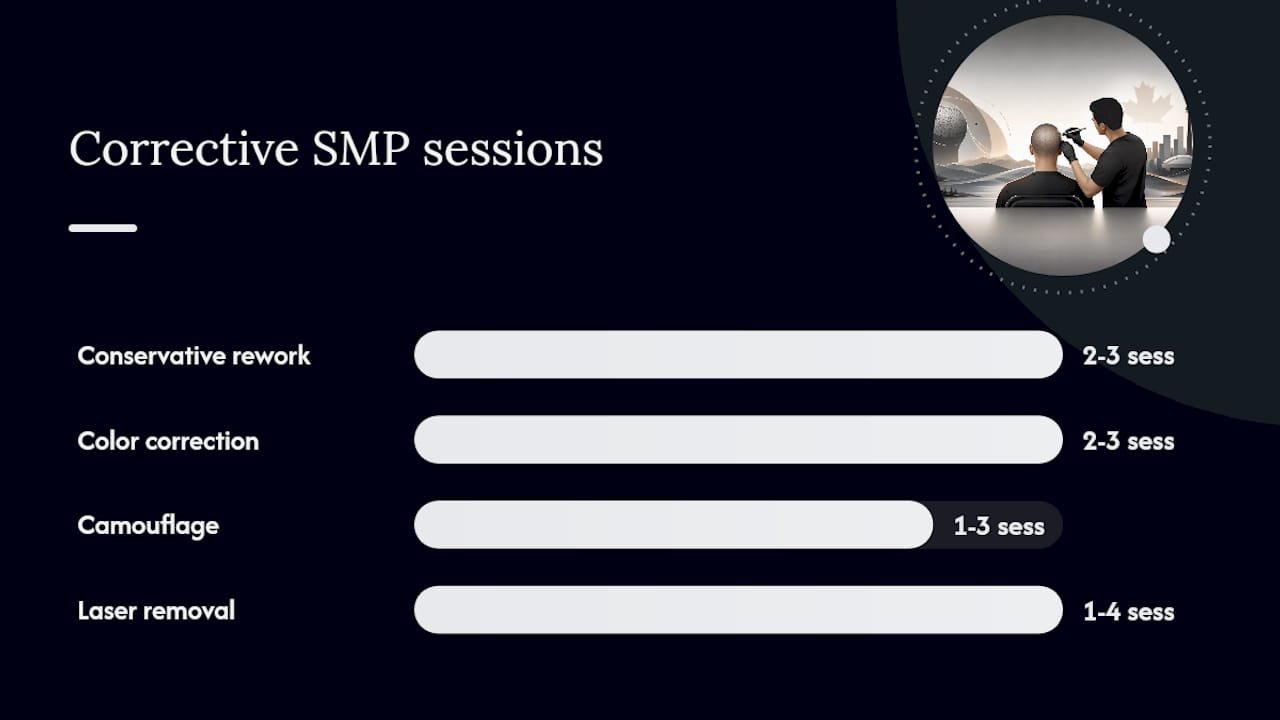
- Conservative rework: 2 to 3 sessions, no downtime beyond normal healing, best for density and hairline issues
- Color correction: 2 to 3 sessions with patch testing, best for chromatic shifts
- Camouflage: 1 to 3 sessions depending on scar size and texture
- Laser removal: 1 to 4 sessions before corrective SMP begins, adds months to total timeline
Pro Tip: Ask your practitioner to patch-test any corrective pigment on a small, hidden area first and wait for it to heal fully before committing to full-scalp correction. Skipping this step is how overcorrection happens.
What Happens During a Corrective SMP Assessment?
A proper assessment starts with photographic documentation and scalp mapping, comparing your current healed result against reference photos of what natural SMP should look like at your hair color and skin tone. This baseline matters because pigment that looks fine under studio lighting can shift noticeably outdoors.
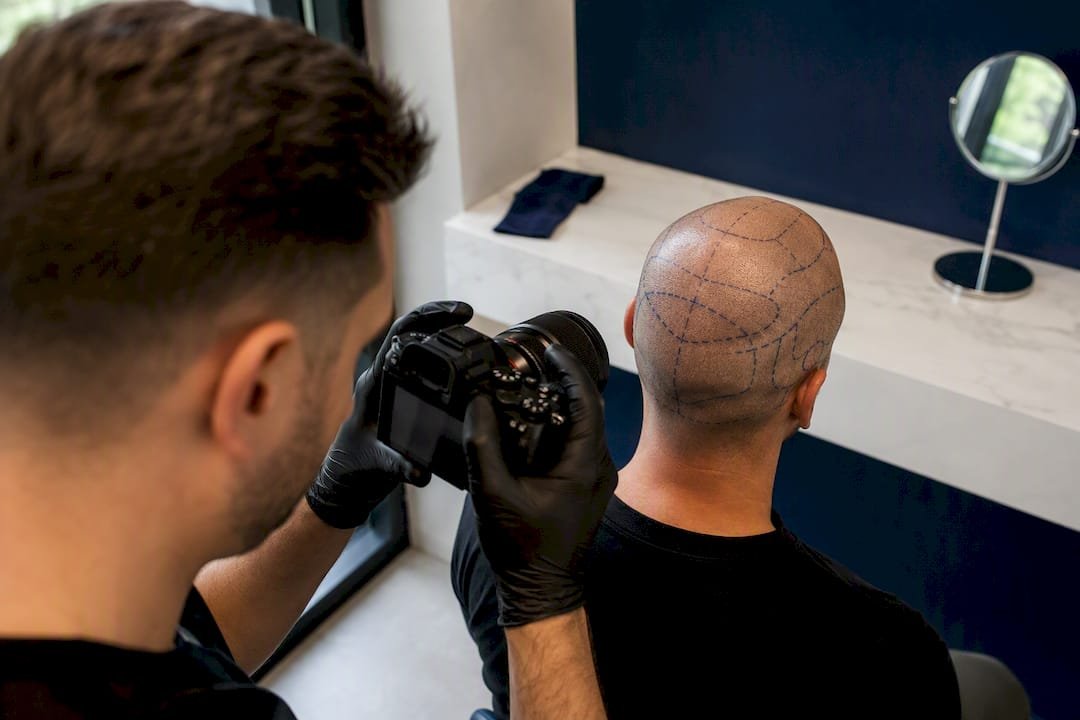
Next comes pigment-depth evaluation, often through a small test patch, to see how your skin responds and to predict how corrective pigment will heal over the existing work.
From there, most practitioners build a staging plan:
- Sessions spaced roughly 4 to 8 weeks apart so each pass heals fully before the next
- Conservative density on the first corrective pass, adding more only after reassessing healed results
- A written plan showing what each session addresses and why
Aftercare during this stretch matters as much as the procedure itself. Avoid picking at scabs, keep the scalp out of direct sun, and stay away from chlorinated pools until each session heals completely, since UV exposure and chlorine both accelerate unwanted fading and can distort corrective pigment before it settles.
How Do You Choose a Corrective SMP Provider?
Vetting a practitioner for corrective work is different from vetting someone for a first-time SMP treatment. You’re now looking for someone who understands why the original work failed, not just someone who can apply dots.
Start every consultation with these questions:
- Can you show me healed photos of corrective cases, not just fresh work right after the procedure?
- What is your specific training in corrective color theory and pigment neutralization?
- Do you use SMP-specific devices, or tattoo machines adapted for scalp work?
- Which pigment brands do you use, and why for corrective cases specifically?
- Will you give me a written treatment plan with session estimates before we start?
- What is your patch-test policy before full corrective sessions?
Watch for red flags that suggest inexperience. A provider who has no healed corrective photos, who promises a full fix for heavy oversaturation in a single session, or who pressures you into starting immediately without a written plan is one to avoid. Training resources for the field explicitly warn against attempting complex corrections without mentorship, because a poorly executed correction can make the original problem worse.
Pro Tip: If a provider can’t explain, in plain language, why your pigment shifted color or why your hairline looks off, they likely don’t have the color theory background needed for corrective work. Move on.
How Enhanced Scalp Approaches Corrective SMP
Enhanced Scalp treats corrective cases as a distinct discipline from first-time SMP, built around conservative hairline design, realistic follicle replication, and staged sessions rather than one aggressive pass. The practice documents healed case studies rather than relying only on fresh, just-finished photos, since healed results are what actually reveal whether corrective pigment settled correctly. Patch testing precedes full color-correction work, and laser removal is used selectively for cases where saturation or pigment polarity can’t be neutralized through pigment layering alone. If you’re evaluating providers, ask to see detailed corrective case documentation and compare that transparency against any provider you’re considering.
What Does Corrective SMP Cost and How Long Does It Take?
Minor refresh corrections, like adjusting a slightly uneven hairline, often need just one to two sessions. Larger corrections involving color shift, dense overwork, or scar camouflage typically run one to four sessions spaced four to eight weeks apart to allow proper healing between passes.
Several factors push cost higher:
- Whether laser removal is needed before corrective pigment work can start
- The overall extent of correction, hairline-only versus full-scalp
- Practitioner experience level, since senior corrective specialists charge more than entry-level technicians
- Number of patch tests and staged sessions required to reach a stable result
A suspiciously low quote for corrective work is often a warning sign, not a bargain. Underpriced correction frequently leads to a second round of corrective costs down the line when the fix doesn’t hold. Always get a written estimate that names the scope of work, the number of planned sessions, and what happens if additional sessions are needed.
Why Conservative Correction Beats the Quick Fix
Most people searching for corrective SMP want the same thing: a fast, complete fix. That instinct is understandable and usually wrong. The clinical data on this is fairly blunt. Nearly nine in ten unsatisfactory cases came from facilities without SMP-specific training, and the fix that worked was rarely a single dramatic session. It was staged, patient, and reassessed after healing.
The conventional advice floating around forums tends to overweight laser removal, treating it as the default reset button. It isn’t. Laser has its place for pigment that’s chemically stubborn, but pairing it unnecessarily with every correction adds months and cost for no real benefit. The color theory approach, warm modifiers against blue-green shifts, conservative density on the first pass, gets better results for less money in most cases I’ve seen described in the clinical literature.
If you’re starting this process, prioritize documentation over promises. A practitioner willing to show you healed corrective photos, walk through their pigment logic, and commit to a staged written plan is worth more than one offering a same-day miracle.
— James Christopher
Get a Corrective SMP Consultation With Enhanced Scalp
If your existing scalp micropigmentation has shifted color, healed too dense, or left you with an unnatural hairline, Enhanced Scalp specializes specifically in corrective cases, including prior poor SMP, failed hair transplants, and post-laser rework. That focus matters: correction is a different skill set than first-time treatment, and it’s where conservative hairline design and color theory experience actually pay off.
Enhanced Scalp builds every corrective plan around a real consultation first, evaluating your specific pigment shift, density issue, or scarring before recommending a path, rather than quoting a one-size fix over the phone. The practice serves local and international clients traveling in for corrective work. If your case involves scarring from a failed transplant, the scar camouflage service addresses that specifically. For everything else, start with a scalp micropigmentation consultation to get an honest assessment of what your correction actually needs.
Sources
- Revision for unsatisfactory outcomes of scalp micropigmentation
- Common SMP Mistakes Beginners Make — SkinArt Training
- Advanced Color Correction Techniques in PMU and SMP – Nuva Colors
FAQ
What are the disadvantages of SMP hair treatment?
Poorly executed SMP can fade unevenly, shift color toward blue or green tones, or heal with an unnatural hairline and overly dense patches. This is why practitioner experience and correct aftercare matter as much as the initial procedure.
How long does an SMP usually last?
Well-executed SMP typically lasts several years before needing a refresh, though pigment quality, sun exposure, and skin type all affect how long color stays true.
Can SMP be removed if I don’t like it?
Yes, laser removal can lighten or remove SMP pigment, though it’s typically reserved for cases with oversaturated or chemically resistant pigment rather than the first option for most corrective cases.
Is SMP better than a hair transplant?
SMP and hair transplants solve different problems. SMP creates the appearance of density or a shaved look without surgery, while a transplant physically relocates hair follicles, and many clients use SMP to camouflage transplant scars rather than choosing one over the other.