 Skip to content

Yes, laser treatment can fade or sometimes fully remove scalp micropigmentation, but full clearance is not guaranteed and depends on pigment depth, ink color, and density. Most people need several sessions spaced weeks apart. The bigger risk isn’t the laser itself. It’s finding a practitioner who treats the scalp differently from a forearm tattoo and protects the hair follicles underneath.
TL;DR:
- Multiple laser sessions are usually necessary, with two to six treatments spaced four to twelve weeks apart, depending on pigment density and ink color.
- Picosecond lasers like PicoWay outperform older nanosecond devices by fragmenting pigment more efficiently with less collateral follicle damage.
- Full removal is more aggressive and requires more sessions than fading, which often suffices for correction or lighter results and minimizes risks.
- Treatments carry risks such as scarring, patchy fading, color shifts, and follicle damage, making specialist clinics essential for safe and effective removal.
- Costs vary by clinic, area size, and pigment factors, with packages and custom quotes common; full removal is rarely covered by insurance and may require financing.
Table of Contents
- What Is SMP Laser Removal and Which Technology Actually Works?
- How Many Sessions Does SMP Laser Removal Take?
- What Are the Risks of Laser SMP Removal?
- How Much Does SMP Laser Removal Cost?
- Do You Need Full Removal, or Just Fading?
- What Should You Ask a Clinic Before Booking Removal?
- Why We Push Fading Over Full Removal Whenever Possible
- Ready to Talk Through Your Options?
- Sources
- FAQ
What Is SMP Laser Removal and Which Technology Actually Works?
SMP laser removal uses focused light pulses to shatter pigment particles into fragments small enough for the body to clear away naturally, the same basic principle behind laser hair removal devices and tattoo removal, just aimed at much finer dots instead of solid ink lines. The device matters more than most people expect. Picosecond lasers like PicoWay deliver pulses measured in trillionths of a second, which fragments pigment more efficiently than older nanosecond lasers while generating less heat. Less heat means less collateral damage to the follicles sitting just beneath the treated dots.
There’s a distinction worth understanding before you book anything: fading and full removal are not the same service, even though clinics sometimes market them under one banner.
- Fading intentionally lightens pigment enough to allow corrective SMP work over it, without chasing every last speck of ink.
- Full removal aims for complete clearance, which typically demands more sessions and more aggressive settings.
SMP dots sit more superficially in the skin than many body tattoos, which often means faster visible fading. But that same shallow placement, combined with the scalp’s dense follicle structure, means a practitioner has to dial back power and stay disciplined about spacing between passes. A technician used to treating a forearm tattoo sleeve can go too aggressive on a scalp and leave patchy, uneven results instead of a clean fade.
How Many Sessions Does SMP Laser Removal Take?
Nobody clears scalp pigment in one visit. Here’s roughly what the process looks like from first consultation to final result.
- Initial session and assessment. The practitioner test-treats a small area to see how your specific pigment responds, since ink formulas vary and some organic inks behave unpredictably under laser.
- Sessions two through four. Most clients need two to six sessions for meaningful fading, though denser or older SMP can push that number higher.
- Spacing between visits. Clinics generally space sessions four to twelve weeks apart, giving the body time to clear fragmented pigment through the lymphatic system before the next pass.
- Progress check-ins. Many clients notice visible lightening after the very first session, though the fade builds gradually rather than dramatically.
- Final evaluation. Once fading reaches your goal, either full clearance or a base light enough for corrective work, you and the practitioner decide whether to stop or continue.
A single session usually runs somewhere between fifteen and forty minutes, depending on treatment area. Sensation is commonly described as a series of quick, warm snaps, similar to what people report from laser hair removal, though the scalp’s proximity to bone can make some spots feel sharper than others. Don’t expect a straight line of progress. Pigment clears in stages, and it’s normal for a treated area to look uneven between sessions before it evens out.
What Are the Risks of Laser SMP Removal?
The short-term side effects are predictable and usually mild: redness, minor swelling, and light crusting in the days following treatment, most of which resolves within a week to ten days. That part rarely worries anyone.
The bigger risks show up when the technique or the technician isn’t suited to scalp work specifically.
- Scarring from overly aggressive settings or too many passes in one session.
- Patchy, uneven fading that leaves some dots lighter than others.
- Unintended color shifts, where certain pigments oxidize into unexpected gray or blue tones under laser energy instead of breaking down cleanly.
- Follicle damage from excessive heat, which can affect future hair growth in the treated area.
SMP-specific removal requires genuine expertise because generic tattoo removal protocols can be too aggressive for the scalp’s anatomy. Practitioners who specialize in this work use conservative settings, treat smaller areas per session rather than rushing the whole scalp at once, and often work under physician oversight for quality control.
Pro Tip: Take a photo of the treated area before every session. Subtle patchiness is much easier to catch in side-by-side comparisons than by memory alone, and it gives your practitioner concrete feedback to adjust the next pass.
Watch for warning signs that go beyond normal healing: pus, spreading redness, fever, or pain that worsens instead of improving after 48 hours. Any of those warrants a call to the treating clinic or a doctor, not a wait-and-see approach. Standard aftercare, including avoiding direct sun exposure on the treated scalp and skipping harsh topical products for a few days, cuts down on complications significantly.
How Much Does SMP Laser Removal Cost?
Pricing shows up in a few different shapes depending on the clinic, and none of them are universal.
- Per-session pricing charges a flat rate for each visit, which works well if you’re only fading a small area or a single mistake.
- Package pricing bundles several sessions upfront, often at a discount, aimed at clients planning full or near-full removal.
- Full-scalp custom quotes apply when density and coverage are extensive enough that a clinic needs to assess the area in person before naming a number.
Cost climbs with treatment area, pigment density, and ink color. Darker, denser SMP work simply takes more energy and more passes to fade than a light, sparse application. Clinics using picosecond technology sometimes charge a premium over older laser platforms, though the reduced follicle risk often justifies it.
Before committing, ask for a written estimate that spells out whether follow-up sessions or touch-ups are included in the package price, or billed separately. Cosmetic laser removal is almost never covered by health insurance, since it falls under elective cosmetic correction rather than medical necessity, so financing plans offered directly by the clinic are usually the only way to spread out the cost.
Do You Need Full Removal, or Just Fading?
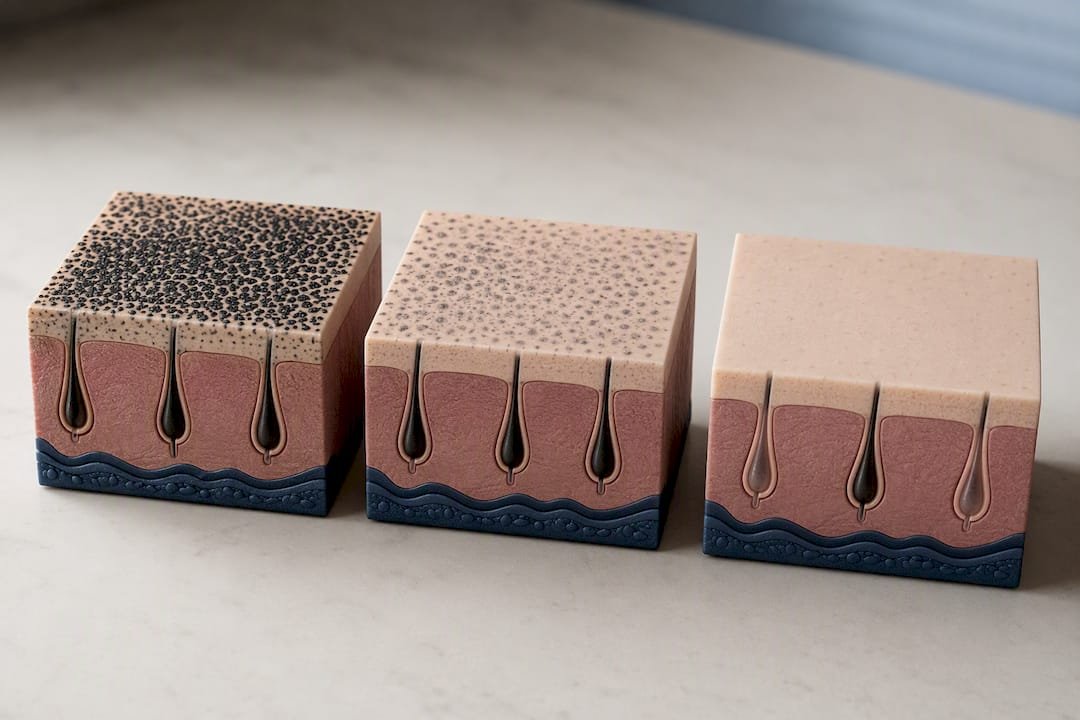
Most people chasing “how to remove scalp micropigmentation” don’t actually need it gone completely. They need it lighter, cleaner, or ready for a redo. Many clients seek fading rather than full clearance because softening a hairline or reducing density solves the actual problem faster and cheaper than chasing every trace of pigment.
A few paths exist beyond the standard laser course:
- Fading stops short of full clearance, leaving a light base that a skilled practitioner can rework into a natural-looking result.
- Saline removal draws pigment out through an osmotic reaction, but it works best on fresh SMP within the first few weeks and loses effectiveness on older, settled ink.
- Surgical excision removes affected skin entirely, an option reserved for severe cases like extensive scarring, though it carries its own scarring risk and is rarely the first choice for cosmetic correction.
- Corrective SMP rebuilds the hairline and density after fading brings the old work down to a workable base, which is where most clients actually end up.
A staged approach, fade first, assess the result, then decide whether to continue fading or move into corrective SMP, keeps you from over-treating skin that only needed a partial reset.
What Should You Ask a Clinic Before Booking Removal?
A consultation is where you separate a practitioner who understands scalp anatomy from one who’s applying body-tattoo protocols to a job that doesn’t forgive that approach. Bring this checklist.
- Ask to see healed SMP-specific removal results, ideally on skin tones and pigment types similar to yours, not just generic tattoo removal photos.
- Find out who operates the laser. A physician-supervised practice with a picosecond device tends to offer more precision and accountability than a walk-in shop running older equipment.
- Confirm the waiting period policy. Reputable clinics recommend at least 12 weeks after your last SMP session before starting laser removal, and another 12-week minimum after your final laser session before any new SMP work begins.
- Get a written treatment plan with a realistic session range, not a fixed promise, since pigment response varies too much for anyone to guarantee an exact number upfront.
- Ask about aftercare instructions in writing, including sun protection guidance and product restrictions for the days following each session.
Pro Tip: If a clinic won’t commit to a minimum waiting period between procedures, treat that as a red flag. The 12-week window exists to protect follicle recovery, and skipping it to rush your timeline raises your risk of complications considerably.
If you’re evaluating a technician’s background, ask directly about their training in SMP-specific technique versus general laser tattoo removal certification. Those are not interchangeable credentials.
Why We Push Fading Over Full Removal Whenever Possible
Full removal sounds like the clean solution, but in practice it’s often the slower, more expensive path to a result that fading plus corrective work reaches faster. Some clinics lean toward a conservative fading strategy first, because chasing complete clearance on dense or old SMP can mean six or more laser sessions before you’re anywhere near ready for new pigment, and every one of those sessions is another chance for heat to reach a follicle it shouldn’t.
Corrective SMP after a partial fade is usually faster, more predictable, and easier on the scalp than waiting for total clearance. During a consult, we review healed photos of the existing work, talk through realistic timing between any laser sessions and reapplication, and build a plan around what the skin can actually support rather than what looks tidiest on paper. The goal isn’t erasing the past work. It’s building a natural result on top of it without damaging what’s underneath.
— James Christopher
Ready to Talk Through Your Options?
If you’re weighing laser sessions, saline, or a full excision, there’s a shorter path worth considering first: a conservative fade paired with corrective work built to cover what’s left. Some providers specialize in exactly that combination, reviewing your existing pigment in person and mapping out whether fading alone, corrective SMP, or a referral to an SMP-aware laser provider gets you to a natural result with the fewest procedures.
Every consultation starts with an honest look at your scalp, not a sales script. We’ll review your current SMP against healed results in our gallery, talk through what corrective work typically involves, and give you a written plan with realistic timing rather than vague promises. If you’re dealing with a botched hairline, patchy density, or ink that’s aged into an unnatural tone, start with a consultation through our scalp micropigmentation services page to find out which path actually fits your situation.
This article is general information, not a substitute for advice from a qualified doctor. Consult a qualified healthcare professional about your own circumstances before acting on anything here.
Sources
- Can Scalp Micropigmentation Be Removed? | SMP Removal
- Scalp Micropigmentation (SMP) Removal & Fading | PicoWay
- Laser SMP Removal | Scalp Micropigmentation Removal | Studio Kiku
FAQ
Can SMP Be Removed if I Don’t Like It?
Yes. Laser treatment can fade or, in many cases, fully clear scalp micropigmentation, though results depend on pigment depth, color, and how the skin responds to treatment.
Does SMP Eventually Fade or Go Away on Its Own?
SMP pigment can lighten gradually over many years due to sun exposure and natural skin turnover, but it does not disappear on its own the way a temporary tattoo would. Deliberate fading through laser treatment is far faster than waiting on natural fading.
Is SMP Laser Removal Worth It?
For most people, full laser removal is worth pursuing only when the goal is complete clearance. If you’re unhappy with a hairline or density issue rather than the SMP itself, fading followed by corrective SMP usually gets to a natural result faster and at lower cost.
What Happens to SMP After Five Years?
Healed SMP typically holds its color well for several years, though some fading and slight warming of tone is normal as pigment settles and skin renews. Touch-ups every few years are common to maintain a crisp look, and any pigment that has shifted or faded unevenly can still be addressed through laser fading or corrective work.

