 Skip to content

Scalp micropigmentation is generally advisable for people with seborrheic dermatitis once the condition is medically stable, not while it is actively flaring. The single condition that matters most is remission or good control under a dermatologist’s care, confirmed before booking. If you have active scaling, redness or oozing right now, the next move is a dermatology visit followed by a test patch once your scalp calms down.
TL;DR:
- Scalp micropigmentation should only be performed after seborrheic dermatitis has been confirmed to be stable and free of active symptoms by a dermatologist.
- Topical antifungal treatments like ketoconazole, zinc pyrithione, or selenium sulfide are recommended to achieve and maintain remission before considering SMP.
- Inflammation, scaling, or broken skin on the scalp increases the risk of uneven pigment retention and may delay healing or cause pigment diffusion.
- A test patch near the treatment area, observed over several weeks, is crucial to ensure skin tolerates the procedure before full SMP.
- Post-treatment, it is essential to wait until skin fully heals and to coordinate antifungal and anti-inflammatory treatments with medical professionals to preserve pigment quality.
Table of Contents
- What seborrheic dermatitis is and why active disease affects scalp procedures
- Dermatology-recommended treatments and how to reach stability before SMP
- How seborrheic dermatitis status changes SMP risks and outcomes
- Pre-treatment checklist and the test patch process
- Technique considerations for scalps with prior inflammation or scarring
- Aftercare and long-term maintenance after SMP with seborrheic dermatitis
- When to postpone SMP and red flags for dermatology
- A practitioner’s view on balancing safety and cosmetic goals
- How Enhanced Scalp supports clients with inflammatory scalp conditions
- Sources
- FAQ
What seborrheic dermatitis is and why active disease affects scalp procedures
Seborrheic dermatitis is a chronic, relapsing skin condition that shows up on oil-rich areas like the scalp, and it tends to come and go rather than clear permanently. According to the Cleveland Clinic, it usually involves an overgrowth of Malassezia yeast on the skin, and flares are commonly triggered by stress, cold weather and certain medications.
The visible signs are what make it relevant to any scalp procedure:
- Flaking or scaling, sometimes greasy and yellowish rather than dry
- Redness (erythema) across patches of the scalp
- Crusting or oily buildup near the hairline and in denser hair-bearing areas
- Itching that tends to intensify during flares
Active inflammation changes how skin behaves under a needle. Scaling and crusted skin do not hold pigment the way clear, calm skin does, and swollen or broken skin heals unpredictably. That mismatch between skin condition and pigment deposition is the practical reason timing matters so much for scalp micropigmentation, not just a general precaution.
Dermatology-recommended treatments and how to reach stability before SMP
Getting to a stable baseline usually starts with topical antifungals rather than anything more aggressive. The American Family Physician review lists ketoconazole 1 to 2%, zinc pyrithione, and selenium sulfide shampoos as first-line options for scalp seborrheic dermatitis.
- Apply the medicated shampoo and leave it on the scalp for about 5 minutes before rinsing, per clinical guidance
- Use it twice weekly during the initial treatment phase, then taper to a maintenance schedule as symptoms clear
- Add a short course of a topical corticosteroid or a calcineurin inhibitor during stubborn flares, reserving potent steroids for brief periods to avoid skin thinning
- Consider systemic therapy only for cases that do not respond to topical treatment, typically after dermatology referral
One clinical trial finding reported a number needed to treat of 5 for symptom clearance when ketoconazole was compared with placebo in scalp seborrheic dermatitis trials, according to the AAFP review. That means roughly one in five treated patients clears who would not have cleared on placebo, a modest but real effect that explains why antifungals remain the default starting point.
Long-term control rarely comes from one product used forever. An international expert consensus recommends rotating antifungal agents and pairing them with anti-inflammatory approaches, since relying on a single shampoo often loses effectiveness over months. Reaching a stable, flare-free stretch is what a dermatologist looks for before clearing someone for a cosmetic procedure like SMP.
How seborrheic dermatitis status changes SMP risks and outcomes
The condition of your scalp on treatment day directly affects how pigment behaves and how the skin heals afterward. Active disease and controlled disease are functionally two different starting points for a technician.
- Inflamed or scaling skin can cause inconsistent dot retention, with pigment settling unevenly across treated areas
- Broken or oozing skin raises the chance of pigment diffusion, where dots blur rather than staying crisp
- Compromised skin barriers heal more slowly and are more prone to infection during the healing window
- Delayed hypersensitivity or granulomatous reactions to pigment are uncommon but documented, and can surface weeks to months after the procedure, not just in the first days
Dermatology and tattooing literature converge on one point: seborrheic dermatitis that is under control is not automatically a reason to refuse SMP. The EADV patient leaflet states that inflammatory skin disease is not a categorical contraindication to tattooing or micropigmentation when the condition is well managed, though procedures should be delayed during active flares.
Pro Tip: Ask any technician whether they routinely offer a test patch for clients with a history of inflammatory scalp conditions. A clinic that hesitates to do one is not treating your scalp as the individual case it is.
Pre-treatment checklist and the test patch process
Before booking, work through a short sequence that protects both the cosmetic result and your skin.
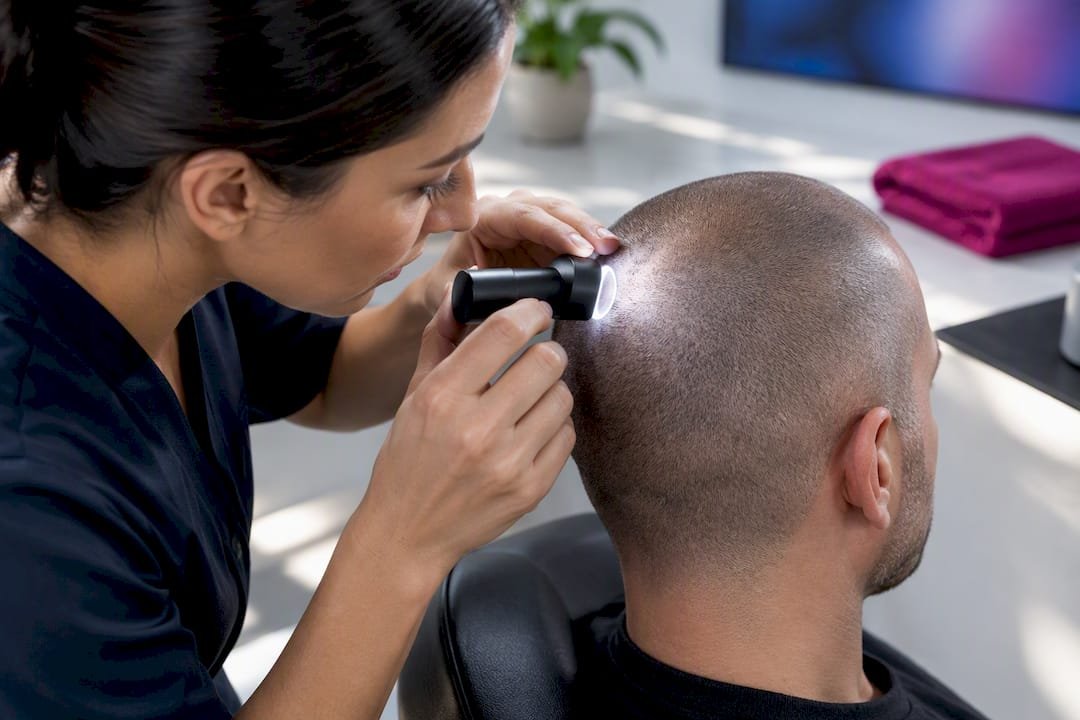
- Get written dermatology clearance confirming your seborrheic dermatitis is stable, with no active pustules, oozing or widespread scaling
- Confirm your current medications and disclose any immunosuppressants or biologics to both your dermatologist and your SMP technician
- Stop any newly started topical treatment long enough to judge whether your skin has settled, since a fresh product change can mask or trigger a flare right before your appointment
- Request a test patch, typically a small area near the treatment zone, and expect an observation window of several weeks rather than days, since delayed reactions do not always show up immediately
- Treat a clean, calm, non-scaling patch after the observation period as a pass; any redness, swelling or slow healing at the test site is a reason to wait longer
Pro Tip: Keep a simple log of flare dates and triggers for a few months before your consultation. It gives your dermatologist and your technician a clearer picture than a single snapshot visit ever could.
Technique considerations for scalps with prior inflammation or scarring
Skin that has been through repeated flares often behaves differently under the needle than skin that has never been inflamed, even once it looks clinically clear. Experienced practitioners adjust for that rather than treating every scalp the same way.
- Depth control matters more on atrophic or previously inflamed tissue, since thinner or scarred skin gives a different feel of resistance than healthy scalp
- SMP procedural literature points to needle grouping choice and rotor speed as variables technicians modify when working on cicatricial or fragile patches
- Conservative pigment loading, meaning lighter passes rather than heavy saturation on the first attempt, reduces the risk of diffusion on skin that has a history of barrier issues
- Staged sessions, spaced out rather than compressed, let the technician assess healing and uptake before committing to a full density pass
Starting light and building density over multiple sessions costs more patience but gives both practitioner and client a way to catch a poor healing response early, before it is baked into a large area.
Aftercare and long-term maintenance after SMP with seborrheic dermatitis
The days right after treatment matter as much as the treatment itself, particularly for someone managing a chronic skin condition on the same scalp.
- Keep the area clean using the aftercare products your technician recommends, and avoid picking, scratching or exposing fresh pigment to direct sun for the first stretch of healing
- Watch for signs that go beyond normal healing, such as spreading redness, warmth or discharge, and contact your provider if anything looks off
- Hold off on resuming medicated antifungal shampoos on the treated area until your technician confirms the surface has healed, then reintroduce your regular maintenance schedule
- Coordinate the timing of any topical steroid or antifungal restart with your dermatologist so the treated skin gets a full uncomplicated healing window first
A rotating maintenance approach, combining antifungal agents with anti-inflammatory strategies rather than one product alone, is what expert consensus recommends for durable long-term control, according to the international consensus review. Keeping flares infrequent after healing also protects the pigment itself, since repeated scaling and inflammation over treated skin can accelerate how quickly color looks uneven and prompt earlier touch-up work.
When to postpone SMP and red flags for dermatology
Some presentations are clear signals to wait, regardless of how eager you are to book.
- Active, widespread inflammation, visible scaling or oily crusting anywhere on the scalp
- Pustular lesions or any area that is oozing rather than dry and calm
- New systemic symptoms, fever, or redness that appears to be expanding rather than staying in one patch
- A recent start on systemic immunosuppressants, oral immunomodulators or a new biologic, which calls for coordination with the prescribing doctor before any elective skin procedure
None of these mean SMP is off the table permanently. They mean the timing is wrong today, and a dermatologist is the right person to say when it becomes right.
A practitioner’s view on balancing safety and cosmetic goals
The clients who do best with a history of seborrheic dermatitis are the ones willing to wait for stability rather than push for a booking during a flare. A small test patch and a staged first session tell you more in a few weeks than any amount of reassurance can. Most people reach a workable timeline within a couple of months of consistent dermatology-guided treatment, and the ones who skip that step are the ones who come back with uneven results. Coordinate with a dermatologist first. The cosmetic outcome holds up better when the medical groundwork is done properly.
— James Christopher
How Enhanced Scalp supports clients with inflammatory scalp conditions
Once your seborrheic dermatitis is under control, some scalp micropigmentation clinics may offer a conservative, well-documented path into scalp micropigmentation rather than a rushed one-size-fits-all session. Booking starts with a consultation that reviews your medical history, including any inflammatory scalp conditions, followed by a test spot before committing to a full treatment plan.
- Conservative hairline design and staged sessions rather than one aggressive pass
- A test patch process built into the consultation for clients with a history of scalp inflammation
- Transparent documentation of healed results to help show realistic outcomes, not just fresh photos
Scalp Micropigmentation at Enhanced Scalp is priced at 3,000 to 4,000 CAD for a one-off treatment, and you can review the treatment details and book a consultation when you are ready to move forward.
Sources
For readers who want the primary guidance behind this article: the Cleveland Clinic covers seborrheic dermatitis basics, the AAFP review details treatment protocols, the EADV leaflet addresses tattooing on inflamed skin, and the JCAS review covers SMP technique standards.
This article is general information, not a substitute for advice from a qualified doctor. Consult a qualified healthcare professional about your own circumstances before acting on anything here.
- Seborrheic dermatitis — Cleveland Clinic
- Seborrheic dermatitis: Diagnosis and Treatment — American Family Physician (AAFP)
- Comprehensive literature review and international expert consensus on scalp SD — Journal of the European Academy of Dermatology
- EADV patient leaflet — Tattoos and inflammatory dermatitis
FAQ
What is the fastest way to get rid of seborrheic dermatitis?
There is no instant cure since seborrheic dermatitis is a chronic, relapsing condition, but medicated antifungal shampoos used consistently bring most flares under control within weeks. Clinical guidance recommends starting with twice-weekly use before tapering to a maintenance schedule as symptoms improve.
Why did I all of a sudden get seborrheic dermatitis?
Flares are commonly triggered by stress, seasonal changes, or shifts in medication, often against a background of Malassezia yeast overgrowth on oil-rich skin. According to the Cleveland Clinic, the condition can appear or worsen suddenly even in people with no prior history of skin issues.
What kills the fungus that causes seborrheic dermatitis?
Topical antifungal agents such as ketoconazole, zinc pyrithione and selenium sulfide target the Malassezia yeast associated with seborrheic dermatitis. The AAFP treatment review lists these as first-line options, typically left on the scalp for about 5 minutes before rinsing.
What not to put on seborrheic dermatitis?
Heavy, oily hair products and harsh cleansers can aggravate seborrheic dermatitis by feeding yeast overgrowth or irritating already inflamed skin. Long-term use of potent topical steroids without dermatologist supervision is also discouraged, since it can thin the skin over time.
Can I get scalp micropigmentation if I have seborrheic dermatitis?
Scalp micropigmentation is generally workable once seborrheic dermatitis is stable and cleared by a dermatologist, rather than during an active flare. Guidance from the EADV notes that controlled inflammatory skin conditions are not an automatic disqualifier for procedures like tattooing or micropigmentation.

