 Skip to content

Yes, scalp micropigmentation is a viable option for many contact-sports players, but with real caveats. You need strict infection control, a longer break from full-contact activity than most guides suggest, and a practitioner experienced with test spots on scar tissue. Skip any of those three and you raise your odds of infection, patchy pigment, or a result that fades unevenly under the stress of training.
TL;DR:
- Contact-sports athletes need to strictly follow infection control, avoid full-contact activities for at least four to six weeks, and test on scar tissue to predict pigment retention.
- Sweat, helmet friction, and skin trauma can cause uneven pigment retention, delayed reactions, or infection if proper precautions are not maintained during healing.
- Most unsatisfactory SMP results are linked to non-specialized operators or inadequate evaluation, making choosing an experienced practitioner crucial.
- A healing window of two to four weeks is recommended before returning to light training, with full contact delayed until six weeks if the scalp heals evenly.
- Proper aftercare involves gentle cleansing, wearing breathable barriers under helmets, and monitoring signs of infection or delayed healing.
Table of Contents
- What risks do contact sports add to scalp micropigmentation?
- How long until you can return to contact training after SMP?
- Aftercare for athletes: managing sweat, helmets, and friction
- Choosing a clinic that understands athlete-specific risk
- What to do if healing does not go as expected
- Practitioner note: what athletes usually ask before booking
- Enhanced Scalp: SMP built around real training schedules
- Sources
- FAQ
What risks do contact sports add to scalp micropigmentation?
Contact-sports players face two overlapping problems: skin trauma and a compromised healing environment. Clinical reviews of tattoo and micropigmentation reactions describe both immediate effects, such as swelling and redness, and delayed ones that can surface weeks or years after the procedure, including hypersensitivity, granulomas, and in rare cases deep infection, according to a clinical review of tattoo and pigment reactions. Athletes who return to helmets, mats, or turf too soon expose healing skin to friction and bacteria at exactly the wrong moment.
Sweat is a separate issue. Its salt and lactic acid content can interfere with how fresh pigment settles into the skin, which is why practitioners generally advise prioritizing cool, low-sweat conditions during the first several days.
Scar tissue, common among wrestlers and athletes with prior head injuries, absorbs pigment differently than unbroken skin. A 2025 study found that unsatisfactory scalp micropigmentation results most often trace back to poor technique or inadequate evaluation rather than bad luck, and that test spots on scar tissue help predict how the pigment will hold before committing to full treatment, according to research on SMP outcomes.
The practical risk list for athletes includes:
- Delayed hypersensitivity reactions that appear well after the initial healing window.
- Infection risk from helmet straps, mats, or turf contacting unhealed skin.
- Uneven pigment retention on scar tissue without a prior test spot.
- Sweat-driven pigment migration during the first days after treatment.
A 2025 study on scalp micropigmentation outcomes found that most unsatisfactory results were linked to non-specialized operators rather than the procedure itself, according to a retrospective review of corrective SMP cases. Choosing a practitioner matters as much as the aftercare that follows.
How long until you can return to contact training after SMP?
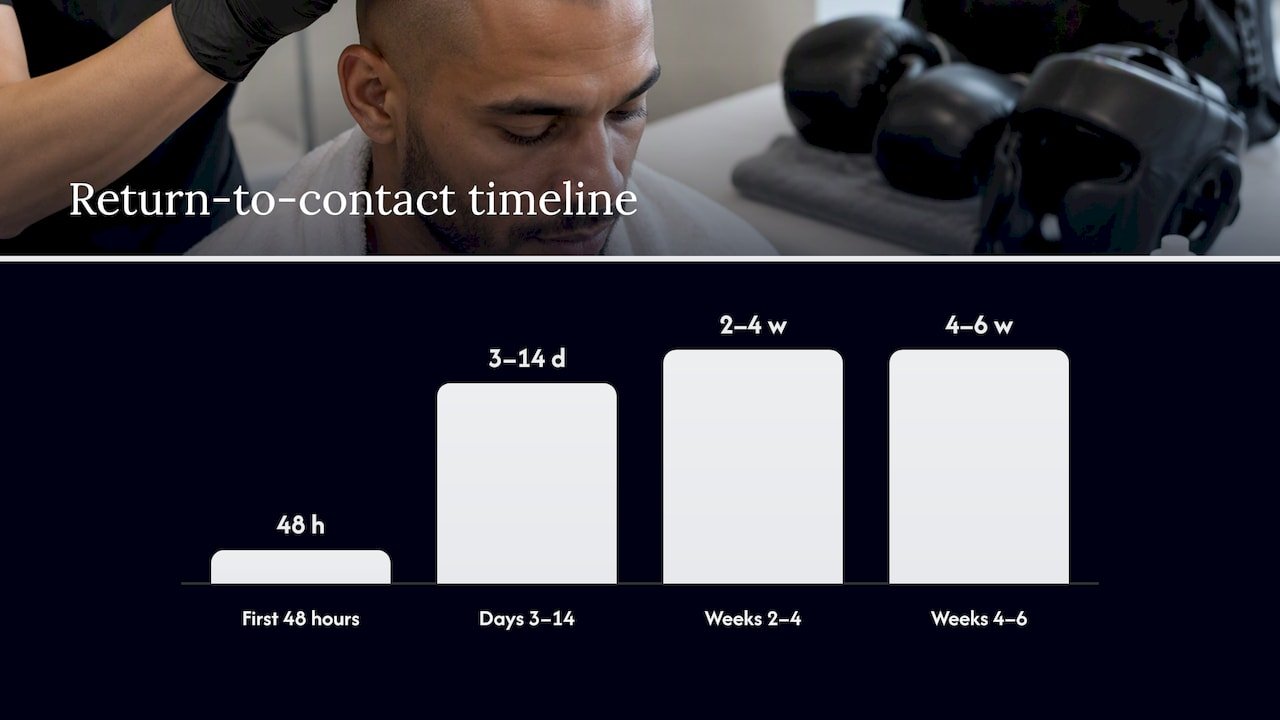
Healing follows a fairly predictable arc, though the exact pace depends on the individual and the size of the treated area. Athletes planning around a season should build in more buffer than a casual timeline suggests.
- First 48 hours: Expect redness and mild swelling. Avoid sweating and any direct contact with the treated area.
- Days 3 to 14: This is the critical pigment-settling window. Skip full-contact drills, minimize helmet or headgear friction, and avoid activities that trigger heavy sweating.
- Weeks 2 to 4: Light training is generally fine once initial healing is confirmed, but padding and helmets should still avoid direct rubbing on the treated scalp.
- Weeks 4 to 6: This is the checkpoint for a fully healed appearance. It is typically the safe window for touch-up sessions or a return to full-contact play if the scalp has healed evenly.
Any sign of prolonged redness, oozing, or pain past the expected window is a reason to check in with the clinic or a physician before resuming contact activity.
Pro Tip: Schedule your procedure during the off-season or a lighter training block so the pigment-settling window does not overlap with games or full-contact practice.
Aftercare for athletes: managing sweat, helmets, and friction
The aftercare routine for a contact-sports player looks stricter than what a typical client follows, mainly because sweat and equipment friction are harder to avoid entirely.
- Rinse the scalp gently after any light activity, using a mild antimicrobial foam rather than scrubbing.
- Pat the area dry with a clean towel instead of rubbing it.
- Avoid saunas, steam rooms, and pools until the clinic confirms the scalp has healed.
- Skip topical products with fragrance or active ingredients like retinoids during the first two weeks.
- Call the clinic if redness spreads, pain increases, or discharge appears instead of waiting it out.
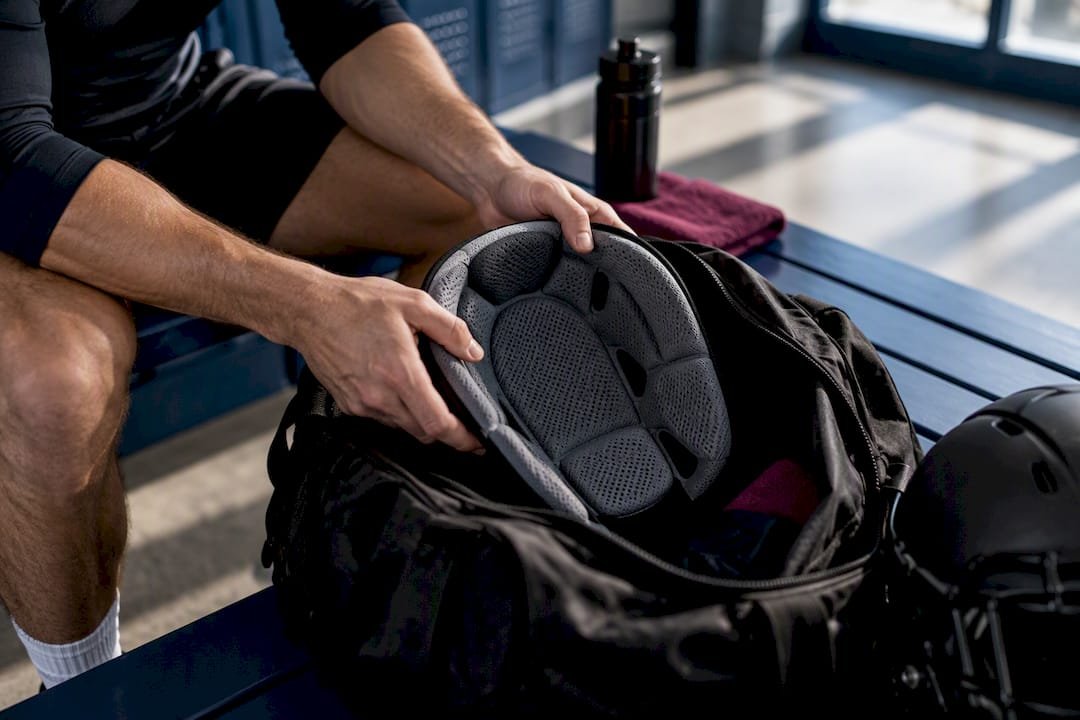
Helmets and padding need extra thought. A breathable barrier, such as a soft liner or bandana, worn under the helmet for the first one to two weeks reduces direct friction on fresh pigment. Straps that dig into the scalp should be loosened or repositioned where possible, and rough plastic liners are worth swapping for a softer alternative during the healing period.
A gentle cleansing oil made for sensitive scalps, such as the Davroe Scalp Remedy Micellar Cleansing Oil, can help remove sweat and buildup without the friction of a standard shampoo routine.
Pro Tip: Keep a spare, breathable liner in your gear bag specifically for the first two weeks after treatment, and swap it in before every practice.
Choosing a clinic that understands athlete-specific risk
Not every SMP provider is equipped for the added risk profile of contact-sports clients. A short checklist before booking:
- Ask to see healed-result galleries, not just fresh, dark, post-procedure photos.
- Confirm the clinic uses test spots for clients with scar tissue or prior transplants.
- Ask how needles are sterilized and whether single-use equipment and written consent forms are standard.
- Check for direct experience treating athletes or clients with active, physical lifestyles.
- Look for clear, written aftercare instructions specific to sweat and equipment contact.
Some clinics document their test-spot process on scar tissue, which is relevant for wrestlers and athletes with prior head injuries or transplant scarring. Some clinics publish guidance on normal side effects versus warning signs, giving athletes a reference point for what to expect during a healing period that overlaps with training demands.
At consultation, ask about scar-tissue experience directly and steer clear of low-cost operators that skip sterilization documentation or consent paperwork entirely. Public-health guidance in several Canadian jurisdictions treats micropigmentation as an invasive personal service requiring sterile, single-use needles and documented client records, a standard worth confirming wherever you book, according to infection-prevention guidance for personal service settings.
What to do if healing does not go as expected
Most healing issues resolve on their own, but a few signs mean it is time to call a physician rather than wait.
- Pain that increases instead of easing after the first few days.
- Redness that spreads beyond the treated area.
- Fever, chills, or visible discharge.
- Symptoms lasting well past the typical two-week healing window.
Corrective options exist for unsatisfactory outcomes. A 2025 retrospective study of 120 patients who sought correction after unsatisfactory scalp micropigmentation found that most poor outcomes stemmed from non-specialized operators, and that revision procedures performed by experienced clinicians achieved satisfactory results in most cases, according to research on corrective SMP outcomes. Some providers outline their own approach to editing and correcting prior SMP work for clients in that situation.
Keep records of your procedure, including photos and any consent paperwork. They make follow-up conversations with a clinic or physician far more useful if something needs adjusting later.
Practitioner note: what athletes usually ask before booking
Most athletes who come in worried about contact sports and SMP ask the same two things: will it hold up under sweat and helmets, and will scar tissue take pigment the same way skin does. Conservative planning answers both. A test spot on scar tissue tells us how it will heal before we commit to a full session, and healed-result documentation gives a realistic picture instead of a hopeful one. If you play a contact sport and are weighing this decision, a consultation with a test spot is the most honest way to plan around your season.
— James Christopher
Enhanced Scalp: SMP built around real training schedules
Some scalp micropigmentation providers treat athletes as a distinct case. Conservative hairline design, individualized pigment selection, and documented healed results help give contact-sports players a realistic picture of how the work may hold up once training resumes.
If you play a contact sport and want a plan built around your season rather than a generic timeline, see the scalp micropigmentation treatment page for details on booking a consultation.
This article is general information, not a substitute for advice from a qualified doctor. Consult a qualified healthcare professional about your own circumstances before acting on anything here.
Sources
- Guide to Infection Prevention and Control in Personal Service Settings (Durham Health)
- Cutaneous adverse reactions associated with tattoos and permanent makeup pigments (PMC)
- Revision for unsatisfactory outcomes of scalp micropigmentation – Park – 2025
- 2025 study (PubMed) noting satisfaction and causes of unsatisfactory SMP outcomes
FAQ
Can wrestlers or football players get scalp micropigmentation?
Yes, most contact-sports athletes can get SMP, but they should plan for a longer break from full-contact activity than a typical client and confirm the clinic has experience with scar tissue and test spots. Wrestlers in particular benefit from a practitioner familiar with mat-related scarring, according to research on SMP outcomes.
How soon can you wear a helmet after scalp micropigmentation?
Light helmet use is generally fine after the first two weeks, once initial healing is confirmed, but a breathable liner or barrier is worth using to reduce direct friction during that period. Full-contact use with heavy helmet friction is safer to delay until the four to six week healed-appearance checkpoint.
Does sweating ruin scalp micropigmentation results?
Heavy sweating during the first several days can interfere with how pigment settles, since sweat’s salt and lactic acid content affects the fresh treatment area. Once healed, normal sweating from training does not undo results, though a gentle cleansing routine helps protect pigment over time.
What happens if scalp micropigmentation gets infected?
Signs of infection, including spreading redness, increasing pain, fever, or discharge, should prompt a call to the clinic or a physician rather than waiting it out. Clinical reviews note that deep infections are rare but possible, and prompt medical attention limits complications, according to research on tattoo-related adverse reactions.
Can a bad scalp micropigmentation job be fixed?
Yes, revision procedures performed by experienced practitioners have achieved satisfactory outcomes for most patients who sought correction after an unsatisfactory result, according to a retrospective review of corrective SMP cases. Enhanced Scalp offers a dedicated corrective SMP editing service for clients dealing with prior poor work.

