 Skip to content


Scalp micropigmentation at the temple points creates the tiny shadowed follicle effect that frames the face at the temporal corners. Done conservatively, with randomized dot placement and a soft edge, it reads as a real hairline. Done poorly, with sharp triangles or mirrored symmetry, it reads as a tattoo. Expect mild healing reactions and a touch-up within a few years as pigment settles.
TL;DR:
- Proper technique using single-prong needles and controlled depth ensures natural-looking temple points that blend smoothly into the surrounding scalp.
- Irregular, randomized dot placement and soft edges are essential to mimic real follicles and avoid a tattoo-like appearance.
- Healing reactions are common, but pigment typically softens within the first month, requiring touch-ups for maintaining long-term density.
- SMP works best for clients with stable, short hair styles and a contrast between scalp and hair color, not for those planning to grow hair long.
- Waiting at least 12 months after a hair transplant helps prevent pigment mismatch and ensures full growth stabilization before SMP application.
Table of Contents
- What are temple points and why do they shape the hairline?
- SMP technique essentials for natural temple-point results
- How to evaluate temple-point SMP in photos and in person
- Timing after a transplant and special cases for scarred skin
- Healing, fading, and what maintenance actually looks like
- Who is a good fit for temple-point SMP?
- Our approach to temple points at Enhanced Scalp
- Planning a temple frame that fits the face
- Get a natural temple frame done right
- FAQ
- Sources
What are temple points and why do they shape the hairline?
The temple points, also called temporal corners, are the areas where the hairline recedes slightly above each temple before curving into the forehead. They are rarely identical on both sides, and the hair there often grows in a slightly different direction than the crown or front hairline. That asymmetry is part of what makes a hairline look like it grew in naturally rather than being drawn on.
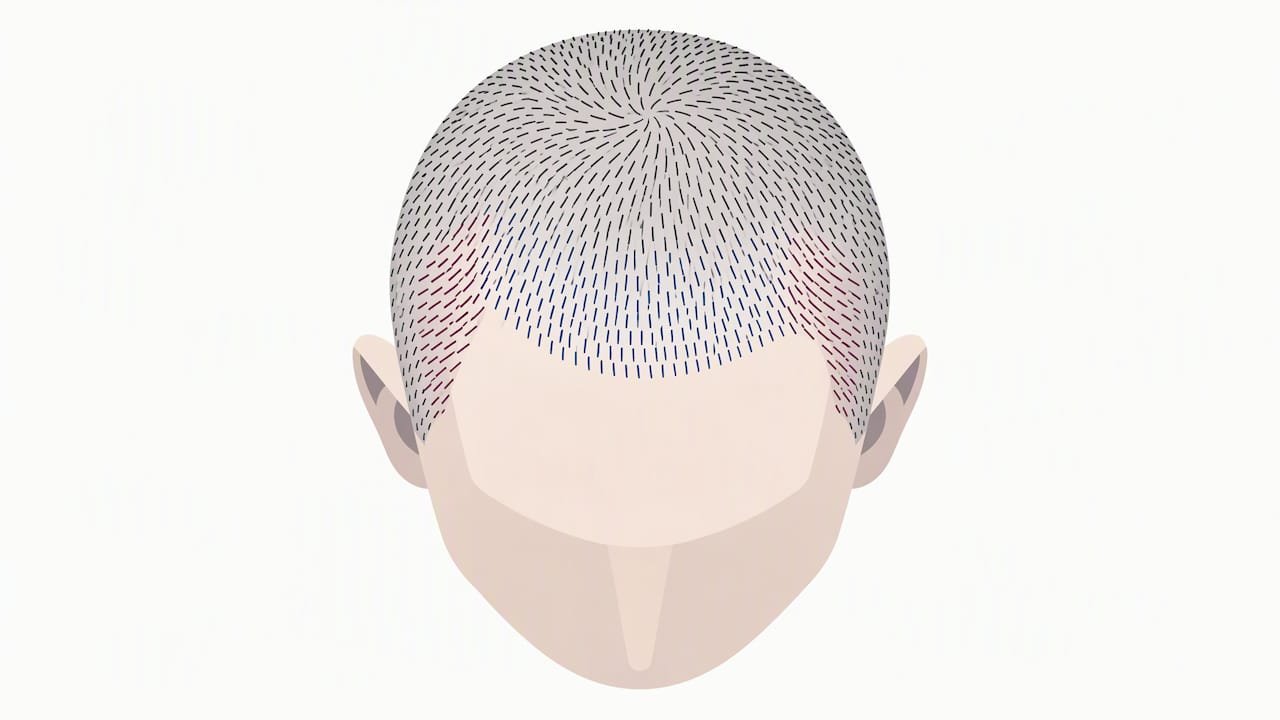
Because the eye is drawn to the face, the temple points carry an outsized share of the visual work in framing it. A hairline that is too high, too low, or too symmetrical at the corners changes how old or how “done” the result looks, even when the rest of the scalp is flawless.
Common mistakes that break the illusion include:
- A straight line across the forehead with no corner recession at all
- Mirror-image triangles on each side, which the brain reads as artificial
- A hard edge with no gradual thinning into the surrounding scalp
SMP technique essentials for natural temple-point results
Getting the temple corners right depends on a few technical choices that matter more there than almost anywhere else on the scalp.
- Needle selection: single-prong needles produce the finer, rounder dots needed along the temple edge, while multi-prong cartridges are reserved for filling density behind the hairline, a distinction confirmed in research on SMP procedure standardization.
- Insertion angle and depth: a near-vertical insertion and shallow, controlled depth in the papillary dermis keep dots round instead of smudged into streaks.
- Dot pattern: irregular, randomized placement rather than a grid mimics how real follicles actually grow in.
- Pigment choice: viscosity and color selection affect how quickly pigment washes out or shifts toward a blue or green tint over time.
- Test patches: on scarred or fibrotic skin, a small test area shows how pigment will diffuse before committing to the full temple design.
Pro Tip: Ask to see a practitioner’s healed work specifically at the temple edges, not just full-scalp photos, since that is where technique flaws show up first.
How to evaluate temple-point SMP in photos and in person
Judging temple work well means looking at the right images, not just the most flattering one.
- Straight-on shots reveal whether the two sides match in spirit without being identical
- 45-degree angles show how the corner transitions into the rest of the hairline
- Profile views expose whether the dot density tapers naturally or stops abruptly
- Close-up healed photos taken under normal light show the actual dot pattern, not a filtered version
Quality work shows soft edge blending, natural asymmetry, and density that fades gradually rather than stopping in a line. Red flags include dots arranged in visible rows, unnaturally dark or high-contrast patches, and a faint grid or “halo” effect around the hairline. Immediate post-procedure photos almost always look darker and crisper than the final result, so healed images taken at six to twelve months or later are far more useful for judging what the work will actually look like long term.
Timing after a transplant and special cases for scarred skin
Timing matters most for people who have had a hair transplant and are considering SMP to add density or refine the hairline.
- The ISHRS recommends waiting roughly 12 months after a hair transplant before adding SMP, so the transplanted hair has time to fully grow in and stabilize.
- Applying SMP too early risks covering areas where hair may still emerge, creating a mismatch between pigment and live follicles later.
- Scarred or fibrotic tissue, whether from a transplant or another cause, often takes pigment unevenly and benefits from a small test patch plus staged sessions rather than one full pass.
- Combined approaches, transplant for density and SMP for refining the temple points, work best when each procedure is allowed to settle before the next is added.
Healing, fading, and what maintenance actually looks like
Early healing reactions after SMP are common and usually temporary. A clinical study on SMP outcomes recorded edema in about two-thirds of patients, crusting in over half, and pain or bruising in roughly a third, most resolving within the first couple of weeks after treatment, according to outcomes research in scarring alopecia.
- Expect mild swelling and redness in the first 48 to 72 hours, easing steadily after that.
- Light crusting or flaking can appear in the first one to two weeks as the skin heals over the pigment.
- Pigment typically softens and diffuses slightly within the first month, which is a normal part of settling into its final tone.
- Touch-ups are a standard part of long-term care, since the same research found pigment fading progressed in every patient tracked over time.
Temple edges tend to soften faster than denser areas of the scalp because the dot pattern there is lighter by design. Avoiding vigorous scrubbing, delaying the first wash for 48 to 72 hours, and using sun protection all support better pigment retention during healing.
Who is a good fit for temple-point SMP?
Temple-point SMP works best for people who plan to keep their hair short or fully shaved long term, since the illusion depends on visible scalp contrast rather than longer styles covering it.
- Strong candidates have stable hair loss patterns and enough contrast between natural hair color and scalp tone for the dots to read clearly
- Poor fits include anyone planning to grow hair out long, those with active scalp disease, or cases with unpredictable or still-forming scar tissue
- Alternatives and complements worth knowing about include hair transplant surgery for adding real density, topical concealer products for short-term coverage, and adjunctive scalp therapies that some people use alongside either option
Our approach to temple points at Enhanced Scalp
We design temple points conservatively, favoring a natural, asymmetrical hairline over one that looks sharp or overly artificial. Staged sessions let us build density gradually and check how pigment settles before adding more.
- We document healed results, not just fresh work, so clients can see examples of long-term outcomes
- We run test patches on scarred or previously treated tissue when appropriate before committing to full treatment
- We provide an aftercare plan at consultation to set clear healing expectations
Planning a temple frame that fits the face
When we sit down with someone to plan temple points, the goal is always proportion first. Hair direction, forehead shape, and how someone actually wears their hair day to day all shape where the corners sit. A good plan is built in stages, with time between sessions to see how the frame reads before refining it further.
— James Christopher
Get a natural temple frame done right
If you are weighing temple-point SMP, we offer a few paths depending on what you are starting from. For most clients, our core Scalp Micropigmentation service covers hairline design and temple framing from the first consultation. For anyone with scar tissue from a prior transplant or earlier SMP work, our Scar Camouflage Treatment includes a test patch before any full session.
- Review healed galleries before booking so you know what long-term results look like, not just day-one photos
- Ask about a test patch if you have any scarring near the temple area
- Book a consultation to get a design plan specific to your hairline and hair goals
Book a consultation to start with an assessment of your temple points and overall hairline.
This article is general information, not a substitute for advice from a qualified doctor. Consult a qualified healthcare professional about your own circumstances before acting on anything here.
FAQ
What are the disadvantages of SMP hair treatment?
SMP is permanent camouflage, not hair regrowth, so it only works well if you keep your hair short or shaved. Transient side effects like swelling, crusting, and mild bruising are common in the first couple of weeks, and pigment fading means touch-ups are a normal part of long-term upkeep, as shown in clinical outcomes research.
Is SMP good for thinning hair?
SMP can add the appearance of density by filling in visible scalp between thinning hairs, which works well for many people with diffuse thinning. It is not a fit for everyone, though, and the technique and pigment plan differ from full-baldness coverage, so a consultation matters more than a generic answer.
Is SMP cheaper than hair transplant?
Pricing depends heavily on the provider and scope of work, so there is no universal answer, but SMP is generally a non-surgical alternative rather than a direct cost comparison to transplant surgery. Our own Scalp Micropigmentation treatment is priced from the consultation based on the specific plan, with service details available on our treatment page.
When should I get SMP after a hair transplant?
The ISHRS recommends waiting around 12 months after a hair transplant before adding SMP, so transplanted hair has time to fully grow in. Getting SMP too early risks covering areas where hair may still emerge later, creating a visible mismatch.
Does SMP work on scar tissue?
SMP can work on scarred or fibrotic tissue, but pigment often takes unevenly there, so a small test patch is standard practice before committing to a full session. Retention on scars can be less predictable than on healthy scalp skin, which is why staged sessions are generally recommended.
Sources
- Efficacy, safety, and patient-reported outcomes of scalp micropigmentation in scarring alopecia – JCAS
- Scalp Micropigmentation (SMP): All You Need to Know – ISHRS
- Standardization of SMP procedure and its impact – Journal of Cutaneous and Aesthetic Surgery (extract)

