 Skip to content


Scalp micropigmentation is generally possible for people on blood thinners, but it carries a higher risk of bleeding and bruising during and after the procedure. The one rule that matters most: never stop or change a prescribed anticoagulant or antiplatelet medication without approval from the clinician who prescribed it. Book an SMP consultation only after that conversation happens.
TL;DR:
- Extra bleeding can push pigment from needle channels before it settles, while uneven scabbing may cause patchy retention if scabs are disturbed.
- Warfarin clearance may require recent INR results, while direct oral anticoagulants leave the body faster; never change either medication without prescriber guidance.
- Before booking, give the SMP provider a complete list of prescriptions, nonprescription products, and supplements, plus recent bleeding, bruising, procedures, and relevant lab results.
- Dark, tarry stools or blood in urine are warning signs of internal bleeding and require prompt medical attention, unlike expected light bleeding at needle sites.
- After SMP, tell imaging technicians because a Canadian clinic review reported site heat or skin reactions during MRI in 0.17% to 0.30% of cases.
Table of Contents
- How blood thinners raise bleeding risk during SMP
- Which medications count as blood thinners
- What to ask your prescribing clinician before booking
- Pre-treatment checklist for clients on blood thinners
- During and after SMP: what to expect and warning signs
- Our approach to clients on blood thinners
- Why we treat safety-first SMP as the better long-term outcome
- How Enhanced Scalp supports clients on blood thinners
- FAQ
- Sources
How blood thinners raise bleeding risk during SMP
Anticoagulants and antiplatelets are often grouped together as “blood thinners,” but they work by preventing dangerous clots from forming rather than literally thinning the blood. That distinction matters for scalp micropigmentation because the procedure involves tiny needle deposits into the scalp’s dermal layer, and any medication that slows clotting will change how the skin responds to that many small punctures.
The Heart and Stroke Foundation notes that the primary and most significant side effect of these drugs is an increased risk of excessive or prolonged bleeding from injuries or procedures. For someone getting SMP, that risk shows up in a few predictable ways:
- Prolonged bleeding at needle points that might otherwise stop quickly
- Heavier bruising around the treated area, sometimes extending beyond the hairline
- Nosebleeds or gum bleeding unrelated to the procedure but reported more often by people on these medications
- Rare signs of internal bleeding, such as dark stools or blood in urine, which require prompt medical attention
Extra bleeding during a session can interfere with how pigment settles into the skin. When blood surfaces faster than normal, it can push pigment back out of the micro-channel before it has a chance to anchor, which affects uptake and may mean a spot needs more attention in a follow-up session. Heavier scabbing during healing is also more common, and scabs that form unevenly can lead to patchy retention if they’re picked or disturbed.
Pro Tip: Tell your SMP provider about any blood thinner before your consultation, not on the day of treatment, so the technician can plan technique and timing around it.
Which medications count as blood thinners
Not every drug that affects clotting works the same way, and knowing which category you’re in helps you describe your medication accurately when a provider asks.
Antiplatelet medications make platelets less likely to stick together and form a clot. According to the Heart and Stroke Foundation, common examples include:
- Aspirin (ASA)
- Clopidogrel
- Prasugrel
- Ticagrelor
Anticoagulants work differently, slowing the chemical steps the body uses to form a clot in the first place. This group includes:
- Warfarin
- Heparin
- Direct oral anticoagulants, such as apixaban, dabigatran, and rivaroxaban
The practical difference matters for scheduling. Warfarin typically requires regular blood testing, known as INR monitoring, to track how long it takes blood to clot, and a clinician may want recent lab values before clearing an elective procedure. Direct oral anticoagulants act more quickly and leave the system faster, which changes how a prescriber thinks about timing around a procedure, but both drug classes raise bleeding risk and neither should be adjusted without medical guidance.
What to ask your prescribing clinician before booking
Stopping or changing a blood thinner on your own is never the right call, because the clinician who prescribed it is weighing a risk you can’t see from the outside: the danger of a stroke or clot if the medication is paused against the bleeding risk of an elective cosmetic procedure like SMP. That balance depends on details only your prescriber has.
When you bring up SMP with the clinician managing your medication, they’ll typically consider:
- Why you’re on the medication (atrial fibrillation, a mechanical heart valve, a prior clot) and how recently that event occurred
- Recent lab results, including INR if you’re on warfarin
- Your fall and bleeding history
- Whether any temporary pause is even an option, and if so, what timeline keeps you safe
Bring a short, specific script to that appointment. Ask directly: “Do I need to pause this medication for an elective cosmetic skin procedure?” Follow with, “If so, what timing or bridging plan do you recommend?” and “Is there anything specific I should watch for after the SMP session?”
Pro Tip: Ask your prescriber to put any instructions in writing, even a short note, so you can share it with your SMP provider at the consultation.
Pre-treatment checklist for clients on blood thinners
A little preparation before your SMP appointment makes the consultation faster and the procedure safer. Before your session, plan to:
- Bring a complete medication list, including prescription drugs, over-the-counter products, and herbal supplements; the Heart and Stroke Foundation recommends keeping this list current and asking a pharmacist to print one if needed
- Share any recent lab results or hospital discharge summaries relevant to your anticoagulant or antiplatelet therapy
- Disclose any recent bleeding, unusual bruising, or bleeding disorders, even ones that seem minor
- Mention any recent surgeries or procedures, especially anything involving blood thinners or anesthesia
- Follow your clinician’s advice on timing, and avoid alcohol or NSAIDs beforehand if you’ve been told to
- Pack extra aftercare supplies such as sterile gauze and a pressure dressing in case bleeding runs longer than expected
When your case is more complex, such as a recent clot or a mechanical valve, it helps to have your prescribing clinician and your SMP provider in direct contact so both sides understand the plan.
During and after SMP: what to expect and warning signs
People on blood thinners can expect more oozing during the procedure itself and heavier scabbing in the days after, compared to someone not on these medications. A conservative, staged approach, treating smaller sections across multiple sessions rather than rushing a full scalp in one sitting, gives the skin more time to recover between appointments and tends to protect how well pigment holds.
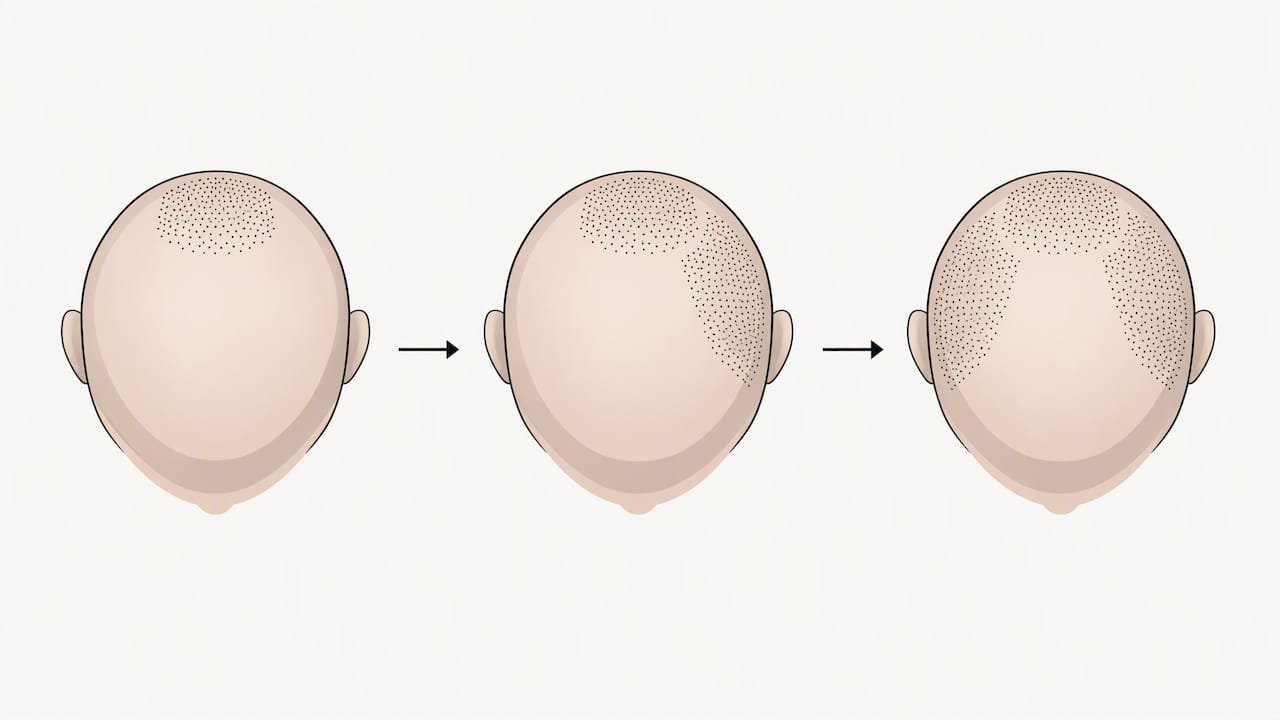
Some bruising and light bleeding at needle points is a normal part of SMP healing for anyone, blood thinners or not. What’s not normal, and what the Heart and Stroke Foundation flags as a sign of internal bleeding, is dark, tarry stools or blood in urine, either of which calls for prompt medical attention rather than a wait-and-see approach.
One documented risk worth knowing: magnetic resonance imaging after SMP carries a small reported risk of a heat or skin reaction at the treated site, estimated at 0.17% to 0.30% in a Canadian clinic review, a separate consideration from bleeding risk but one worth mentioning to any imaging technician in the future.
If bleeding runs longer than expected after a session:
- Apply firm, direct pressure with clean gauze for several minutes without lifting to check
- Keep the area elevated if practical and avoid lying flat immediately after treatment
- Contact your SMP provider if bleeding doesn’t slow within a reasonable time, and contact your prescribing clinician or seek urgent care if you notice signs of heavier internal bleeding
Avoiding alcohol in the days around a procedure is a precaution echoed across cosmetic treatments more broadly, including advice from clinics offering injectable treatments like Botox and dermal fillers, where reducing alcohol intake around the appointment is a standard aftercare step for anyone trying to limit bruising.
Our approach to clients on blood thinners
We ask clients to disclose their full medication list before scheduling a session, and we won’t move forward with someone on a blood thinner without confirming they’ve spoken with the clinician managing that medication. That conversation isn’t a formality: it shapes how we plan the appointment.
Our approach for clients with elevated bleeding risk includes:
- Requesting a full list of prescription drugs, supplements, and recent procedures at consultation
- Asking clients to confirm clearance with their prescriber before their first session
- Considering clients’ medication in pre-treatment planning
- Favoring conservative hairline design and staged sessions over a single aggressive pass, which gives healing tissue more room to recover
We focus on healed results, because how pigment settles over time is the real test of a session done carefully.
Why we treat safety-first SMP as the better long-term outcome
A single rushed session might look fine on the day, but clients with elevated bleeding risk are the clearest example of why patience pays off in this work. Conservative, staged treatment gives the scalp time to heal between passes, which means fewer complications and a cleaner final result once everything settles.
Working with a prescriber rather than around them protects both the client’s health and the outcome of the treatment itself. A technician who understands a client’s bleeding risk will adjust density and depth accordingly, and that adjustment is what separates a healed result that looks natural from one that needed correction later. Speed is not the goal. The goal is a result that still looks right over time.
— James Christopher
How Enhanced Scalp supports clients on blood thinners
If you’re on a blood thinner and considering scalp micropigmentation, we build your consultation around that fact rather than treating it as an afterthought. We ask for a medication list upfront, and when a client is on an anticoagulant or antiplatelet, we ask them to confirm with their prescriber before scheduling.
That same safety-first process applies across our work, including scar camouflage treatment and female scalp micropigmentation, where healed documentation and conservative technique matter just as much. If you’d like a safety-focused consultation, reach out with your medication list and any questions about timing, and we’ll walk you through what a session would look like for your specific case.
This article is general information, not a substitute for advice from a qualified doctor. Consult a qualified healthcare professional about your own circumstances before acting on anything here.
FAQ
Does an anticoagulant actually thin your blood?
No. Anticoagulants and antiplatelet drugs don’t thin the blood itself; they prevent dangerous clots from forming by slowing the clotting process or making platelets less sticky, according to the Heart and Stroke Foundation. The practical effect is the same either way: a higher risk of excessive or prolonged bleeding from injuries or procedures.
Can you get microblading or SMP if you take blood thinners?
Both procedures involve repeated fine needle punctures, so the same bleeding and bruising considerations apply to microblading and scalp micropigmentation alike. Anyone on a blood thinner should confirm with their prescribing clinician before booking either treatment, since the decision depends on their specific medical history.
Can you take BPC-157 while on blood thinners?
There’s no clinical guidance in the sources we rely on covering peptides alongside anticoagulant or antiplatelet medications, so this question should go directly to a prescribing clinician or pharmacist rather than general research. Combining any unregulated peptide with a blood thinner carries unknown risk without that kind of individualized review.
What is the most common side effect of warfarin?
The most significant side effect of warfarin, like other anticoagulants, is an increased risk of excessive or prolonged bleeding, according to the Heart and Stroke Foundation. This can appear as easy bruising, prolonged bleeding from small cuts, nosebleeds, or, in rarer cases, signs of internal bleeding such as dark stools or blood in urine.
What should I tell my SMP provider if I’m on a blood thinner?
Share your complete medication list, including the specific blood thinner, any recent bleeding or bruising history, and confirmation that you’ve discussed the procedure with your prescriber. This lets the provider plan technique, session length, and aftercare around your specific risk level.

