 Skip to content


Microneedling with SMP can be done cautiously, but only once your pigment is fully healed and your clinicians coordinate. The two main risks are pigment displacement or fading and scarring. Dermatology guidance from the American Academy of Dermatology lists microneedling contraindications, and standard micropigmentation healing guidance calls for 4–6 weeks before further work. We at Enhanced Scalp serve as a clinician resource.
TL;DR:
- Micropigmentation guidance recommends waiting at least 4–6 weeks before another procedure, and treatment should resume only after the area is fully healed.
- Avoid microneedling if you heal poorly, have a keloid history or active skin infection, or have used isotretinoin within the past month.
- Combined microneedling and minoxidil improved hair count and diameter versus minoxidil alone, but trials have not established safety over healed SMP.
- Start with a small test patch away from the hairline, choose conservative needle depth, and avoid repeated aggressive passes over one small area.
Table of Contents
- How does microneedling work, and what does the evidence say?
- How can microneedling change the look of healed SMP?
- When should you wait, and what should you avoid?
- What should you ask your SMP technician and microneedling clinician?
- Why we take a conservative line on combining the two
- How we can help you protect or correct your SMP
- FAQ
- Sources
How does microneedling work, and what does the evidence say?
Microneedling, sometimes called collagen induction therapy, uses fine needles to create controlled micro-injuries in the skin. The body responds by repairing them, which stimulates collagen and, in the scalp, may encourage follicle activity. Dermatologists describe it as minimally invasive and collagen-inducing, and generally safe across skin tones.
For hair, the strongest support comes from pairing it with topical therapy:
- In at least one randomized study, weekly microneedling plus 5% minoxidil produced significantly more hair growth at 12 weeks than the topical treatment alone.
- Other trials report benefit when microneedling is combined with PRP or corticosteroids for hair-related indications.
- A systematic review and meta-analysis of randomized trials found combined therapy improved hair count and diameter versus minoxidil alone, with more frequent but generally mild adverse events.
Across the trials, the combined approach beat minoxidil alone on hair count and diameter, and needle depth, duration and device showed no consistent effect on results.
The gap that matters to you is this: a comprehensive review finds microneedling effective and safe for many dermatologic uses but notes that its effect on existing tattooed pigment is relatively unexplored. Nobody has run a large trial on needling over healed SMP, so caution has to fill that gap.
How can microneedling change the look of healed SMP?
SMP deposits pigment in the upper dermis. Microneedling disturbs that same layer. The concern is not that needles erase your work on contact, but that an irritated, inflamed or aggressively treated area can lose or shift pigment as it repairs.
Here is what we watch for:
- Pigment displacement or loss: deep or repeated passes over one small spot can push pigment around or let it clear as the skin remodels.
- Scabbing: needled skin may crust, and picking or early shedding can pull pigment with it.
- Darkening, then fading: micropigmentation heals through a heal, peel, fade sequence, and a freshly irritated area can briefly look darker or patchy before settling.
- Vulnerable tissue: scar tissue and earlier corrective areas heal less predictably, so they deserve extra restraint. If your scalp has scarring, our guide to SMP for alopecia explains why a small test area comes first.
Healing support is another area people ask about. Some readers look at topical options such as copper peptide GHK-Cu, which is discussed in connection with skin and tissue repair. Whatever you consider, raise it with your clinician before adding it to a freshly needled scalp.
Pro Tip: Photograph your healed SMP in the same lighting before any needling session, so you and your technician can compare it afterward.
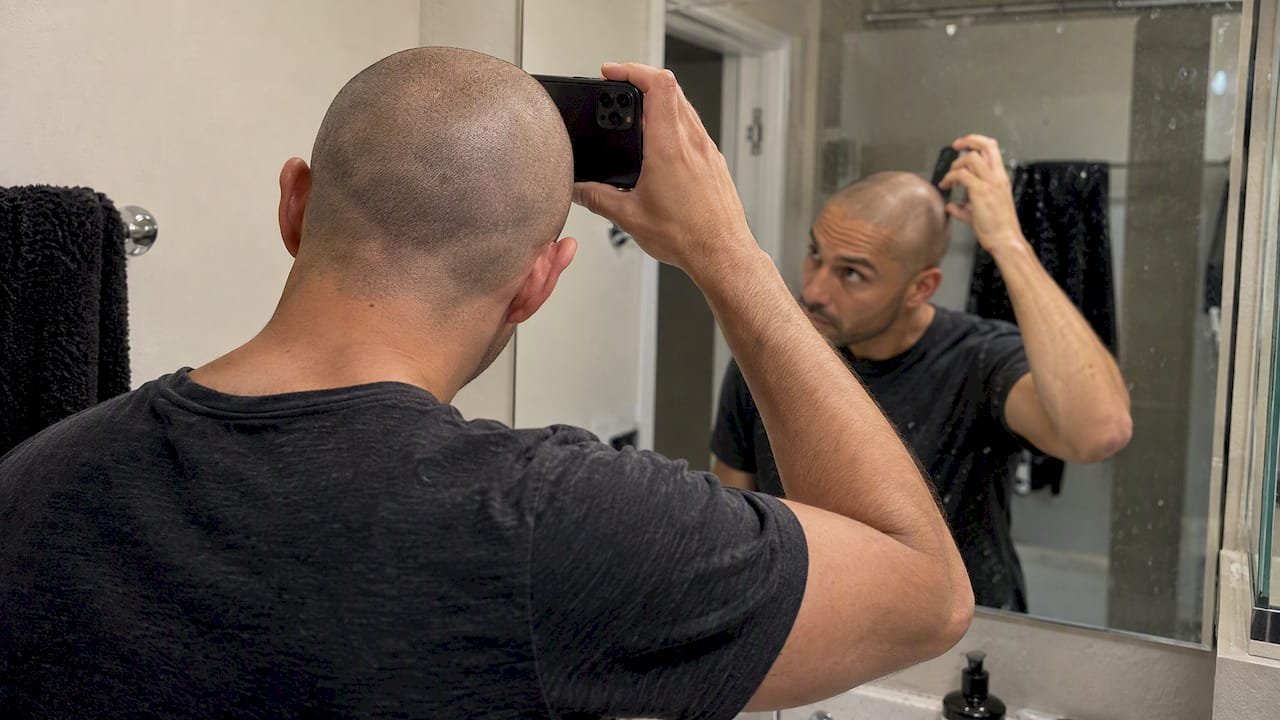
Remember the evidence gap: few direct clinical studies exist on needling over healed SMP, so a conservative approach is the only responsible default.
When should you wait, and what should you avoid?
The practical rule is patience. Practitioner guidance for micropigmentation recommends waiting at least 4–6 weeks before further procedures, and warns that extra work before full healing causes pigment loss or scarring. The same logic runs the other way: let needled skin fully heal before any SMP retouching. For shorter-term aftercare habits, see our notes on protecting pigment early on.
Dermatology guidance, as summarized here, says microneedling is generally safe but not for people who:
- heal poorly,
- have a history of keloid scarring,
- have an active skin infection, or
- have used isotretinoin within the last month.
Common side effects are mild, such as redness, swelling and sensitivity, and typically resolve in 1–2 days.
Follow these steps if you and your clinicians decide to proceed:
- Confirm the area is fully healed and your SMP technician agrees.
- Start with a test patch well away from the hairline.
- Choose a conservative needle depth.
- Avoid repeated aggressive sessions over the same small area.
- Cleanse gently afterward and never pick at scabs or flakes.
- Coordinate any minoxidil or PRP changes with your clinicians instead of adjusting them yourself.
What should you ask your SMP technician and microneedling clinician?
A safe plan is built in conversation, so bring specific questions to both appointments:
- Has this area fully healed, and how can you tell?
- Can we test a small spot first?
- What needle depth will you use, and why?
- Will you document healed photos before and after?
- How do you change your technique over scar tissue?
A responsible technician will agree to a test patch, keep depth conservative, record healed-photo documentation and postpone more work until healing is complete. We offer evaluation and test-spot planning for clients worried about how microneedling might interact with their SMP.
Pro Tip: Ask both clinicians to write down the date of your last session, so each can time their work around the other.
Why we take a conservative line on combining the two
In our practice, we treat healed SMP as work worth protecting. We favor conservative timing, small test spots and detailed healed-photo documentation, because long-term results matter more to us than speed. That is also why we choose realistic pigment shades rather than overly dark ones. Microneedling may genuinely help hair growth for some people, and we see no reason to talk you out of exploring it. The mistake is doing it without coordination. Before booking any needling, talk to your SMP clinician first. The evidence on needling over settled ink is thin, so the safest protocol is the one built around your own scalp.
— James Christopher
How we can help you protect or correct your SMP
If you are weighing microneedling alongside SMP, we can discuss how to approach it cautiously.
- Test-spot guidance before any new treatment touches your scalp
- Conservative touch-ups timed around your healing
- Corrective SMP when earlier work has faded or shifted
- Healed-photo documentation so changes are easy to judge
An assessment and a small test spot can help you evaluate the area before proceeding. Current prices for our scalp micropigmentation treatment are on our website. Book a consultation or a test spot with us and we will map out a safe sequence.
FAQ
How does SMP look after 5 years?
Healed SMP typically softens and lightens gradually rather than vanishing, and the change varies with skin type, sun exposure and technique. A touch-up can refresh density if you want it. Our results gallery shows healed work.
How long does it take for SMP to fully heal?
Micropigmentation moves through heal, peel and fade phases over about 4–6 weeks, with transient redness and swelling early on. Your technician confirms when the area is truly settled.
What not to do after SMP?
Avoid picking at flakes or scabs, and do not schedule other skin-disturbing procedures, including microneedling, before healing is complete. Follow your clinic’s aftercare guidance, such as our advice on waiting before swimming.
Does SMP look better than bald?
Many people prefer the look of a fuller, defined shaved head, but that is personal. A test spot or healed photos can help you judge before committing.
Sources
- Mdpen
- Applications of microneedling for various dermatologic indications with a special focus on pigmentary disorders: A comprehensive review study
- Areola micro pigmentation post procedure

