 Skip to content

Scalp micropigmentation (SMP) reliably reduces visible scalp shine for people with hair loss, and it does so permanently enough to matter. The Cleveland Clinic classifies SMP as a noninvasive cosmetic procedure that deposits medical-grade pigment into the upper dermis, creating the appearance of hair follicles with minimal downtime. For a shaved or thinning scalp, that translates to a measurably duller, more natural-looking surface.
Before you book anything:
- Check candidacy first. SMP works best on shaved or very short hair. If you prefer longer styles, the technique has limits.
- Request healed-gallery photos, not fresh post-session results. Healed work shows the true matte outcome.
- Book a consult with a clinic that documents corrective cases, not just ideal ones. Enhanced Scalp, for example, publishes transparent healed results including challenging scalp conditions.
Key Takeaways
Scalp micropigmentation reliably reduces visible scalp shine for suitable candidates when performed with carbon/grayscale pigments, 0.5 mm needle depth, and a staged three-session protocol.
This article is general information, not a substitute for advice from a qualified doctor. Consult a qualified healthcare professional about your own circumstances before acting on anything here.
Table of Contents
- How does scalp micropigmentation reduce scalp shine?
- Who is a good candidate to reduce scalp shine with SMP?
- What does the treatment process look like?
- How long does SMP’s shine-reducing effect last?
- What are the risks and side effects of SMP?
- How do you choose the right SMP provider?
- What do healed results actually look like?
- What the evidence actually points to
- Enhanced Scalp: a clinic built for long-term, matte results
- Sources
- FAQ
How does scalp micropigmentation reduce scalp shine?
A bald scalp reflects light the same way any smooth, unbroken surface does. SMP interrupts that reflection by placing thousands of tiny pigment dots across the scalp, each one replicating the look of a shaved follicle. The visual effect is a reduction in scalp-hair contrast through tonal blending, spacing control, and layered microdot placement that scatters rather than reflects light.
The technical variables that control how much shine is reduced:
- Needle depth: The ISHRS recommends targeting approximately 0.5 mm, placing pigment in the upper dermis. Too shallow and pigment fades fast; too deep and it migrates, creating blotchy discoloration.
- Pigment chemistry: Carbon-only or iron-oxide-based grayscale pigments are formulated to stay neutral over time, avoiding the blue or green color shifts that standard tattoo inks produce. A matte, neutral tone is what keeps the scalp looking dull rather than shiny or artificial.
- Dot density progression: Practitioners typically build from a sparse foundational layer (roughly 40 dots/cm²) in session one, to moderate density in session two, to full density (80–100 dots/cm²) in session three. This staged approach, described in clinical SMP protocols, prevents over-saturation and allows the practitioner to fine-tune tone under different lighting before committing to final density.
| Technical Variable | Target Value | Why It Matters |
|---|---|---|
| Needle depth | ~0.5 mm | Prevents migration and blotching |
| Pigment type | Carbon/iron-oxide grayscale | Avoids color shift; produces matte finish |
| Session 1 dot density | ~40 dots/cm² | Foundational layer, allows tone assessment |
| Session 3 dot density | 80–100 dots/cm² | Full density, natural matte appearance |
A conservative, layered protocol matters more than most people realize. Going too dark in session one locks in a result that is hard to correct and can actually worsen perceived shine by creating an unnatural, flat block of color rather than a textured, follicle-like surface.
Who is a good candidate to reduce scalp shine with SMP?
Ideal candidates share a few consistent traits:
- Preference for a shaved or very short stubble look (typically a grade 0–1 razor)
- High contrast between scalp and remaining hair, where grayscale pigment blends most effectively
- Stable or predictable hair loss pattern, or a plan to combine SMP with sparse transplant grafts
Borderline cases require honest conversation at consult. People who want to keep longer hair on top, or who anticipate significant future surgery, may need a phased approach. SMP can still work, but the hairline design and density plan need to account for future changes.
Contraindications and caution flags:
- Recent hair transplant: wait at least 11–12 months before SMP so the scalp heals fully and graft survival is confirmed
- Active scalp infections, psoriasis flares, or open dermatologic conditions
- Extremely oily scalps, where a test patch is strongly recommended before committing to full treatment, since excess sebum can affect pigment retention
- Unrealistic expectations about hair growth — SMP is a visual camouflage, not a follicle-restoration therapy
Quick self-check before booking a consult:
- [ ] I prefer a shaved or very short look
- [ ] My hair loss has been stable for at least 6–12 months
- [ ] I have no active scalp infections or open wounds
- [ ] I understand SMP does not grow hair
- [ ] I’m prepared to maintain a shaved or close-cropped style
What does the treatment process look like?
Most SMP protocols run across three sessions, each building on the last. Here is what to expect:
- Session 1 (foundational layer): The practitioner maps the hairline, confirms pigment tone against your skin, and places a sparse dot layer. This session looks lighter than the finished result. Duration: 2–3 hours.
- Session 2 (density build): Dot density increases and the practitioner adjusts tone based on how session 1 healed. This is where the matte appearance starts to become visible. Duration: 3–4 hours.
- Session 3 (completion): Final density is reached, hairline is refined, and any uneven areas from healing are corrected. Duration: up to 5 hours for full-scalp work.
Healing milestones to know:
- Days 1–3: Scalp appears darker than the final result; mild redness and sensitivity are normal.
- Days 7–14: Epidermal regeneration softens the appearance as the outer skin layer renews. Pigment settles to its true healed tone during this window.
- Day 30+: Final healed result is visible and stable.
Practical session checklist:
- Arrive with a freshly shaved scalp
- Avoid alcohol 24 hours before your appointment
- Bring reference photos of your goal look
- Skip heavy moisturizers or sunscreen on the scalp the morning of treatment
- Arrange to avoid direct sun, pools, and heavy gym sessions for at least 5–7 days post-session
How long does SMP’s shine-reducing effect last?
SMP is semi-permanent. Pigments typically fade over a multi-year window, commonly cited between 4–10 years depending on skin type, UV exposure, and aftercare habits. UV exposure is the primary accelerant: unprotected scalp skin breaks down pigment faster than almost any other factor.
Maintenance schedule:
- Annual check-in: Assess whether tone has shifted or density has thinned visibly.
- Touch-up at 3–5 years: Most clients refresh at this interval to restore density and correct any fading.
- Earlier refresh triggers: Significant sun exposure without protection, very oily skin, or aggressive exfoliation routines.
On removal: SMP is difficult to remove completely. Laser removal requires multiple sessions and often leaves residual pigment, particularly in scar tissue. This is exactly why conservative initial work matters so much. A practitioner who layers gradually and avoids going too dark gives you far more flexibility if your preferences change. Corrective SMP, which adjusts tone or density from a prior treatment, is a different process than removal and is more predictable when the original work was done at the correct depth.
What are the risks and side effects of SMP?
Common short-term reactions are mild and resolve within days:
- Redness and mild swelling for 24–72 hours
- Temporary darker appearance during the first 7–14 days of healing
- Light scalp sensitivity or tenderness at the treatment site
Risks worth knowing before you commit:
- Pigment migration: Occurs when pigment is placed too deep. Dots spread and blur, creating a blotchy, unnatural look. Depth control near 0.5 mm is the primary safeguard.
- Uneven retention on scar tissue: Scar tissue accepts pigment differently than healthy scalp skin. Retention can be patchy, and additional sessions may be needed.
- Infection: Rare with proper sterile technique, but a real risk if aftercare is ignored.
Aftercare to protect your matte result:
- Avoid direct UV exposure for at least 30 days post-session; use SPF 30+ after that window
- Stay out of chlorinated pools and saunas for 4–5 days
- Skip heavy sweating (intense workouts) for 5–7 days
- Moisturize the scalp gently with fragrance-free products once healed
- Use a non-abrasive razor or electric shaver to maintain the shaved look without irritating pigment
Pro Tip: If your scalp develops unusual swelling, persistent redness beyond 72 hours, or any discharge, contact your provider immediately. These are not normal healing signs and may indicate infection.
How do you choose the right SMP provider?
The single biggest mistake people make is judging a clinic by its fresh post-session photos. Fresh results always look sharp. What you need to see is healed work, photographed under consistent lighting, at multiple angles, weeks or months after treatment.
Provider checklist:
- Documented healed-gallery photos (not just day-of results)
- Transparent pigment chemistry (carbon/grayscale, not standard tattoo ink)
- Sterile, single-use needle protocols
- Training specific to SMP technique, not general tattooing
Questions to ask at your consult:
- What needle depth do you target, and how do you control it?
- What pigment formulation do you use, and why?
- Can I see healed photos of clients with a similar scalp type to mine?
- Do you offer test patches for oily or scarred scalps?
- What is your session protocol — how many sessions, and how do you build density?
- What does your touch-up policy look like after 3–5 years?
- Have you worked with corrective cases or prior poor SMP?
Red flags to walk away from:
- Pressure to complete full density in a single session
- Vague or evasive answers about pigment chemistry
- No healed photos available, only fresh results
- Upfront full payment required before any consult or test patch
Request written aftercare instructions and a touch-up policy in writing before you commit.
What do healed results actually look like?
The case types that consistently show the strongest reduction in scalp shine share one thing: conservative technique applied across multiple sessions.
- Full shaved-head replacement for advanced loss: The most common case type. A uniform matte appearance replaces a high-contrast, reflective scalp. Results hold well when pigment tone is matched carefully to skin undertone.
- Density boost for diffuse thinning: SMP fills visible gaps between existing hair, reducing the patchwork contrast that creates shine. Works well for both men and women with diffuse loss.
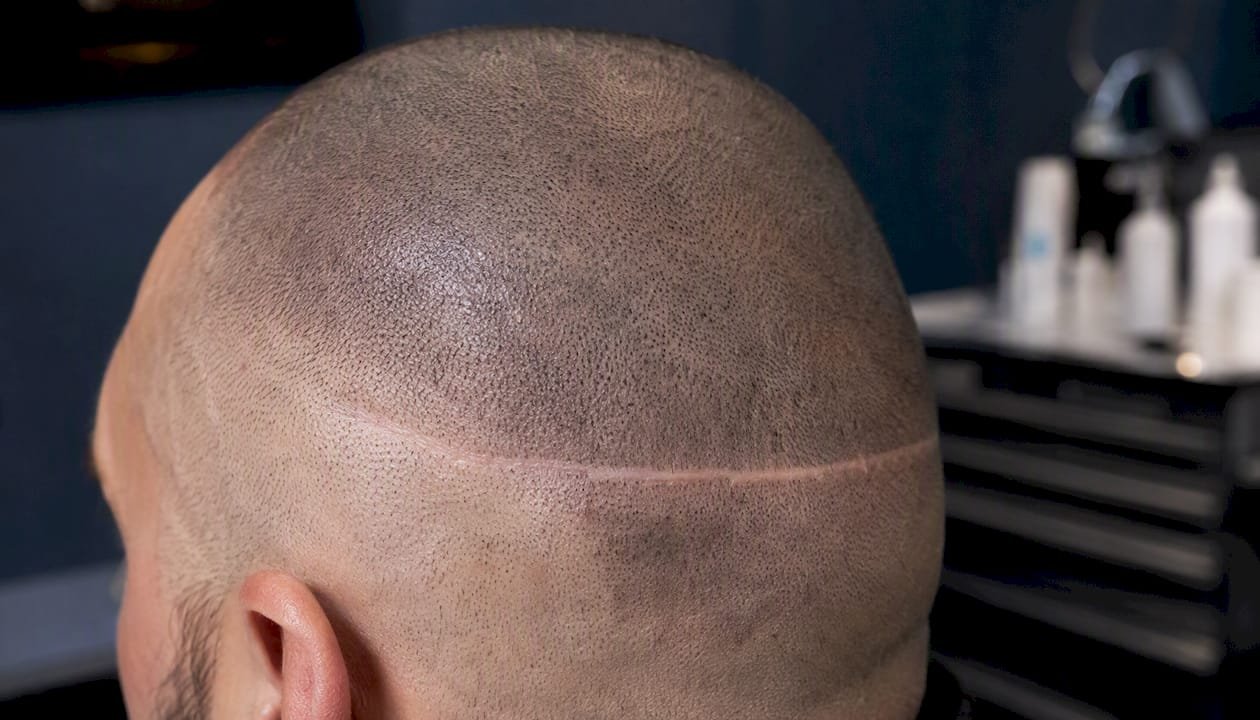
- Scar camouflage: Hair transplant scars, alopecia scarring, and injury scars can be blended with surrounding scalp tone. Retention varies by scar type, and realistic expectations are critical. Additional sessions are often needed.
When reviewing a clinic’s gallery, look for photos taken weeks or months post-treatment, under natural or consistent artificial light, from multiple angles. A single glamour-lit photo taken the day of treatment tells you almost nothing about the healed matte outcome.
Review Enhanced Scalp’s healed gallery before your consult to calibrate what a natural, matte result should look like.
What the evidence actually points to
The conventional wisdom around SMP tends to oversell the “instant transformation” angle and undersell the importance of what happens between sessions. The real work is in the healing window. A practitioner who rushes density, goes too dark in session one, or uses the wrong pigment chemistry can produce a result that looks sharp on day three and artificial by month six.
The 0.5 mm depth target is not a suggestion; it is the technical boundary between a stable, matte result and a migrated, blurry one. Clinics that treat it as approximate are the ones generating the corrective cases that more experienced practitioners spend years fixing.
Conservative hairline design follows the same logic. A hairline placed too low or too sharp looks wrong immediately and gets harder to correct over time. The clients who are happiest years later are almost always the ones who were talked into a softer, more receded line at consult, not the ones who pushed for maximum coverage.
Enhanced Scalp: a clinic built for long-term, matte results
If you’ve read this far, you already know what to look for. Enhanced Scalp specializes in exactly the kind of work this article describes: conservative hairline design, carbon/grayscale pigments, staged sessions, and transparent documentation of healed results. The clinic serves clients across the United States, with regional presence in New York and beyond, and handles corrective cases from prior poor SMP and failed transplants.
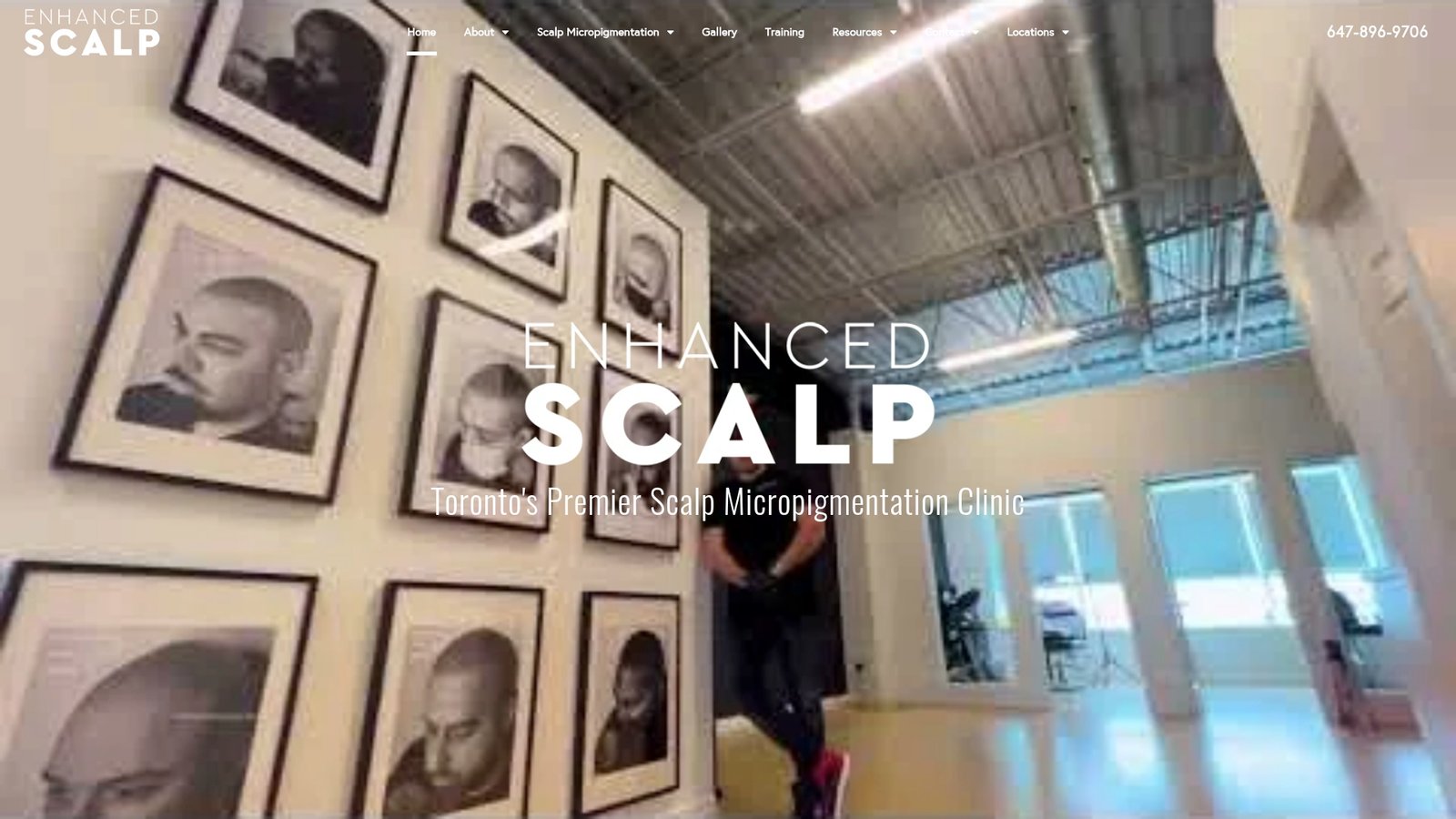
Bring reference photos, a list of any prior scalp procedures, and your current shaving routine to your consult. Enhanced Scalp’s team will assess your scalp condition, recommend a session plan, and walk you through pigment options before any commitment. For women with diffuse thinning, the female SMP service page covers technique adaptations specific to that presentation.
Book a consult with Enhanced Scalp and see what a matte, natural result looks like on a scalp like yours.
Sources
- Scalp Micropigmentation
- Micropigmentation of Scalp
- Scalp Micropigmentation (SMP): Complete Guide (2026)
- How Scalp Micropigmentation Creates the Appearance of Denser Hair
FAQ
Does SMP permanently reduce scalp shine?
SMP is semi-permanent, not permanent. Results typically last 4–10 years before a touch-up is needed, with UV exposure being the main factor that accelerates fading.
Can SMP work on a very oily scalp?
Yes, but with caution. Oily scalps increase the risk of pigment migration, so a test patch is strongly recommended before full treatment to assess retention.
How many sessions does it take to see a matte result?
Most clients need three sessions. The matte appearance becomes visible after session two, with full density and tone refinement completed in session three.

Is SMP safe for scalp scars from a hair transplant?
SMP can camouflage transplant scars, but scar tissue retains pigment differently than healthy skin. Additional sessions are often needed, and results vary by scar type.
What should I look for in a provider’s gallery?
Look for healed photos taken weeks or months after treatment, under consistent lighting, across multiple skin tones and scalp conditions, not just fresh day-of results.

