 Skip to content

Yes, scalp micropigmentation can effectively camouflage alopecia areata patches, but only when the condition is stable and a dermatologist confirms it. SMP for alopecia areata works by depositing pigment into the scalp to mimic hair follicles, filling in patchy areas or creating a uniform shaved look. It’s a cosmetic technique, not a treatment for the autoimmune process itself, and it won’t stop new patches from forming.
- SMP camouflages existing patches; it doesn’t cure alopecia areata or prevent flare-ups.
- Dermatologist clearance on disease stability comes before any consultation, not after.
- Enhanced Scalp works with clients navigating alopecia-specific candidacy questions and staged treatment plans.
Key Takeaways
SMP works for alopecia areata when the scalp has been stable for a long period and a dermatologist confirms it, because pigment implanted into active or inflamed skin heals unevenly and risks early failure.
| Point | Details |
|---|---|
| Stability comes first | Dermatologist confirmation of a disease-free scalp over an extended period is recommended before booking, per ISHRS guidance. |
| SMP is cosmetic, not curative | It camouflages patches but doesn’t stop alopecia areata from spreading or returning elsewhere. |
| Expect staged sessions | Two to four sessions spaced one to two weeks apart build density gradually and reduce trauma. |
| Healed photos reveal the truth | Judge a provider by healed results at six to eight weeks, not fresh, day-one images. |
| Enhanced Scalp offers alopecia-aware SMP | The clinic applies conservative hairline design and staged density building for alopecia areata and corrective cases. |
Table of Contents
- How SMP Works for Alopecia Areata Patches
- Are You a Candidate? Disease Stability and Medical Coordination
- What to Expect: Sessions, Timeline, Cost, and Touch-Ups
- Reading Before-and-After Photos the Right Way
- What SMP Can’t Fix: Risks and Realistic Limits
- Choosing a Provider: Your Consultation Checklist
- Our Approach to Alopecia Areata Candidates
- Ready for an Alopecia-Informed SMP Consultation?
- Authoritative Resources for Medical Context
- Sources
- FAQ
How SMP Works for Alopecia Areata Patches
Scalp micropigmentation deposits tiny dots of pigment into the upper dermis to simulate the look of individual hair follicles. Cleveland Clinic describes it as a non-surgical technique that hides thinning and bald spots by replicating that stubble texture at the skin’s surface. On alopecia-affected skin, the technique needs more precision, not less, because patches vary in size, shape, and how the surrounding hair frames them.
The process typically follows this sequence:
- Map the affected areas and design a pattern that blends with existing hair density.
- Select pigment tone and depth based on skin tone and how the color will heal, not how it looks fresh.
- Implant dots shallowly across a first session, focused on the perimeter of each patch.
- Build density in follow-up sessions, layering dots to match the surrounding hair rather than overshooting it.
- Fade the edges of each treated patch so there’s no visible boundary line once healed.
Depth control matters more here than in standard male-pattern SMP work. Go too deep and pigment can blur or migrate under the thinner, sometimes more reactive skin common in active or recently active alopecia areas.
Pro Tip: Ask your technician how they handle the transition zone between a patch and surrounding hair. A soft, irregular fade reads as natural; a hard edge reads as a tattoo.
Are You a Candidate? Disease Stability and Medical Coordination
Timing is the single biggest factor separating a good SMP outcome from a wasted one on alopecia-affected skin. The ISHRS advises against treating active, inflamed scalp areas, recommending they remain stable and disease-free for two to three years before micropigmentation. That’s a long window, and it exists because pigment implanted into inflamed or actively shedding skin can heal unevenly or fail outright.
Watch for these signs before booking a consultation:
- New patches appearing or existing ones expanding in the past several months.
- Redness, scaling, or itching in or around the affected areas.
- Recent changes to systemic treatment, including starting or stopping JAK inhibitors or corticosteroids.
- No documented period of stability confirmed by a dermatologist.
If you’re on active treatment, coordination matters. Regrowth from JAK inhibitor therapy can shift the map of what needs pigment versus what’s filling back in naturally, so timing SMP around your treatment plan avoids covering hair that was about to return on its own. The American Academy of Dermatology outlines the signs of active inflammation worth flagging to your doctor. The practical step: get written or verbal confirmation of stability from your dermatologist, then bring that context into your SMP consultation.
What to Expect: Sessions, Timeline, Cost, and Touch-Ups
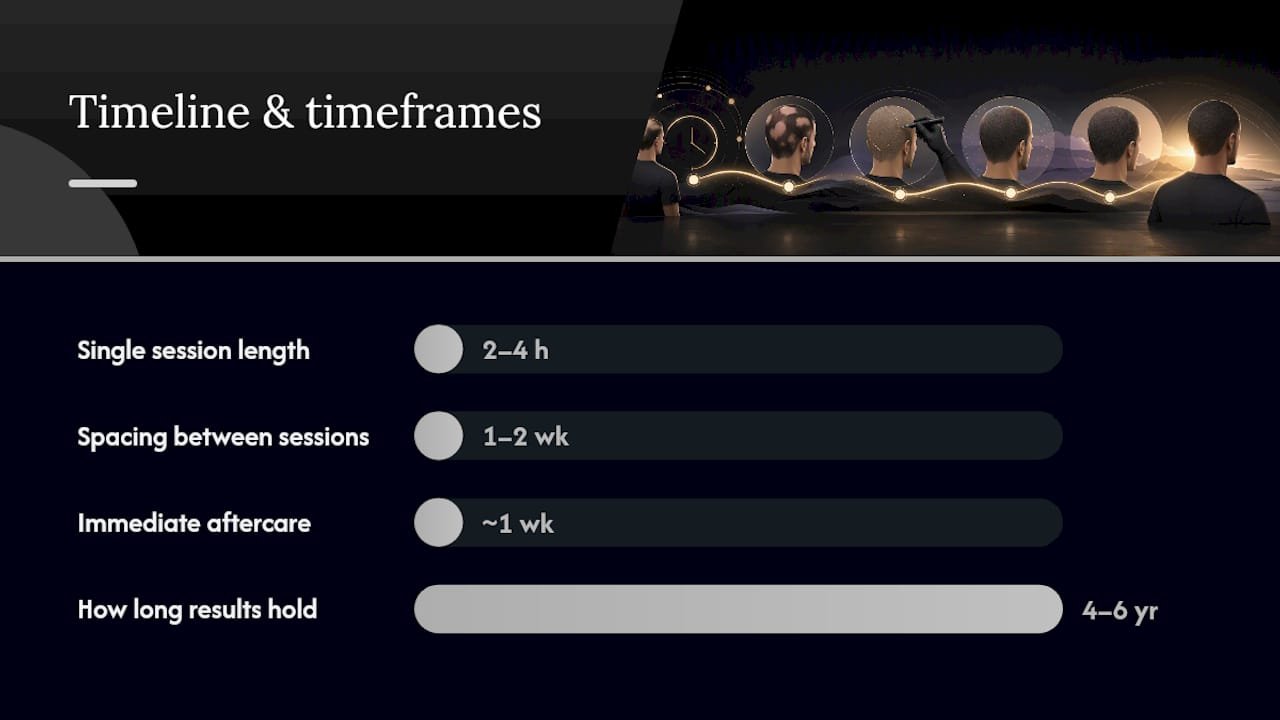
Most alopecia areata clients need two to four sessions, spaced one to two weeks apart, to let pigment settle and skin heal between visits. Building density gradually, rather than in one aggressive pass, reduces trauma to skin that may already be more sensitive than a typical male-pattern-baldness case.
Here’s what the process generally looks like:
- Sessions run two to four hours depending on the size and number of patches treated.
- Immediate aftercare includes avoiding sweat, sun exposure, and swimming for about a week.
- Results tend to hold for four to six years before pigment softens enough to warrant a refresh, according to Alopecia UK’s patient guidance.
- Small, isolated patches cost less than full-scalp or large-area coverage, since pricing scales with treatment area and session count.
- Touch-ups aren’t a sign something went wrong. They’re a normal part of maintaining density as pigment fades or as your patch pattern shifts over time.
Ask any provider for a written session plan before you commit. A vague “we’ll see how it goes” answer is a red flag, not flexibility.
Reading Before-and-After Photos the Right Way
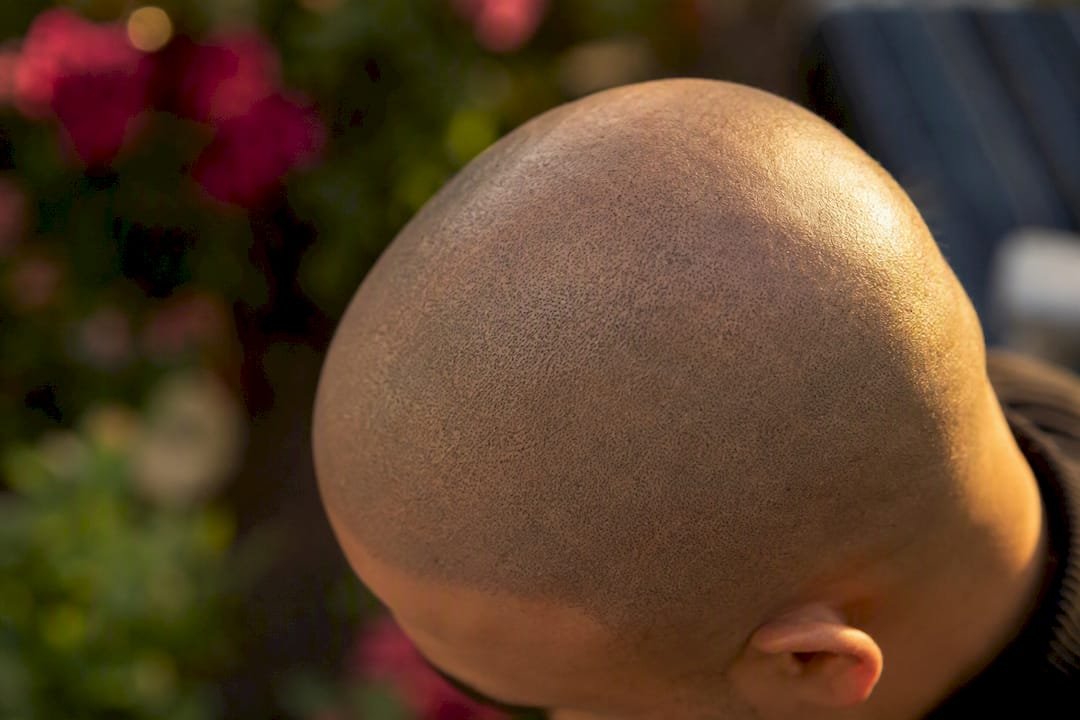
Healed photos tell you far more than day-one photos ever will. Fresh pigment always looks sharp and slightly dark; it’s the healed result, typically six to eight weeks out, that shows you what you’re actually buying. Look for close-up shots alongside wider angles, taken in natural light rather than a studio ring light designed to flatter every dot.
A few things separate a genuinely strong portfolio from a curated highlight reel:
- Multiple angles of the same client, not just one flattering frame.
- Dot size that’s fine and irregular, not uniform like a stencil.
- Healed tone that’s soft gray-brown, not solid black.
- Alopecia-specific cases, not just standard hairline or crown work relabeled.
- Evidence of corrective work, which signals a provider comfortable fixing mistakes, not just making them.
Enhanced Scalp’s healed results gallery documents this kind of long-term outcome across different patch patterns and skin tones, which is worth studying before you evaluate any other provider’s portfolio.
What SMP Can’t Fix: Risks and Realistic Limits
SMP is cosmetic. It doesn’t cure alopecia areata, and it won’t stop new patches from appearing somewhere else on the scalp. On skin that’s still inflamed, pigment retention can be uneven, and correcting a poor result sometimes means laser removal before starting over.
- Regrowth in a treated patch can create a mismatch between pigment and new hair, requiring a touch-up to blend the two.
- Active, unpredictable alopecia areata is generally a poor fit for hair transplant surgery, since transplanted follicles can fail if surrounding areas keep shifting.
- SMP’s advantage here is flexibility. Unlike a transplant, it can adapt session by session as your pattern changes.
- Expect ongoing maintenance, not a one-time fix, especially if your alopecia areata remains active in any capacity.
Choosing a Provider: Your Consultation Checklist
Not every SMP technician has alopecia-specific experience, and that gap shows up in outcomes. Before booking anything, confirm the basics.
- Ask for dermatologist clearance documentation, or confirm the provider requires it before scheduling.
- Request healed photos of alopecia areata cases specifically, not general hairline or density work.
- Ask how many sessions they anticipate and what the density plan looks like stage by stage.
- Confirm their infection-control protocol and needle-depth approach for sensitive or previously inflamed skin.
- Ask what their maintenance schedule looks like and whether they offer removal or correction if something needs adjusting later.
Pro Tip: If a provider promises full density in one session or waves off the need for medical clearance, walk away. Those are the two clearest signs of inexperience with autoimmune hair loss.
Red flags are easy to spot once you know what to look for: no healed photos, guarantees that sound too fast or too easy, and zero interest in your dermatologist’s input.
Our Approach to Alopecia Areata Candidates
Enhanced Scalp treats every alopecia areata case with a conservative hairline design and staged density building, never a rushed one-session promise. Our corrective SMP work and documented healed results reflect that same patient-first standard.
Ready for an Alopecia-Informed SMP Consultation?
Enhanced Scalp brings something most general SMP providers don’t: specific experience with alopecia areata’s unpredictable patch patterns and the corrective work needed when an earlier treatment didn’t heal well. That matters if you’ve already had a disappointing consultation elsewhere or you’re simply not willing to gamble on a technician’s first attempt at autoimmune hair loss.
Our approach stays conservative by design: staged sessions, soft-fade perimeters, and pigment choices matched to your healed skin tone rather than day-one appearance. You can review healed case documentation before you ever book, and our team’s training background reflects the same technical standards applied in every client session. If you’ve got dermatologist clearance in hand or you’re close to it, the next step is straightforward: visit our scalp micropigmentation page to see treatment details and book a consultation where we’ll walk through your specific patch pattern and realistic timeline together.
Authoritative Resources for Medical Context
For deeper medical background alongside this guide, the ISHRS covers micropigmentation candidacy standards, Cleveland Clinic explains SMP mechanics and side effects, the AAD details alopecia types and active-disease signs, and NAAF offers patient support resources on alopecia areata’s course.
This article is general information, not a substitute for advice from a qualified doctor. Consult a qualified healthcare professional about your own circumstances before acting on anything here.
Sources
- Micropigmentation of the scalp | ISHRS
- Scalp Micropigmentation: Before & After, Benefits, Side Effects | Cleveland Clinic
- Alopecia areata | National Alopecia Areata Foundation
- Types of alopecia | American Academy of Dermatology (AAD)
- Scalp micropigmentation | Alopecia UK
FAQ
What Are the Disadvantages of SMP for Hair Loss?
SMP can’t regrow hair, requires touch-ups every few years as pigment fades, and on active or unstable alopecia areata skin it risks uneven healing or poor retention.
Will Hair Regrow Over SMP?
Yes, if your alopecia areata is still active, regrowth can occur in a treated area, which sometimes creates a mismatch between pigment and new hair that needs a touch-up to blend.
How Much Does SMP Cost for Alopecia Areata?
Cost scales with the size and number of patches treated, since small, isolated areas require far less pigment and time than full-scalp coverage.
Is SMP Better Than a Hair Transplant for Alopecia Areata?
For active, unpredictable alopecia areata, SMP is often the more practical choice because transplanted follicles can fail if surrounding hair keeps shifting, while pigment can adapt session by session as patterns change.

