 Skip to content

Yes, most bad SMP can be improved, and some cases need pigment removal before any rework begins. Book a corrective consultation or send healed photos to a specialist for assessment. Depending on what caused the problem, you’re looking at either a conservative corrective SMP edit or a lightening/laser phase followed by a rebuild.
TL;DR:
- Corrective SMP often involves stage-wise lightening followed by a conservative rebuild to avoid embedding deeper pigment or worsening discoloration.
- Deeply implanted or discolored pigment requires multiple laser sessions spaced weeks apart to break down the ink before any new work can begin.
- Proper diagnosis relies on magnified inspection, scalp health assessment, session history review, and comparison of healed versus fresh photos.
- A qualified correction specialist should provide a clear staged treatment plan in writing, including estimated sessions, timeline, and pigment choices.
- Healing and aftercare involve gentle cleansing, avoiding sun and sweat for at least a week, with healed results typically visible in four to six weeks.
Table of Contents
- Why SMP Goes Wrong: Common Technical And Design Errors
- How An Expert Evaluates Bad SMP: The Consultation Checklist
- Repair Options Explained: Editing, Lightening, And Staged Rework
- Timeline And Cost Expectations For Repair Work
- How To Choose A Corrective SMP Artist: Questions And Red Flags
- What To Expect During Repair Sessions And Aftercare
- Enhanced Scalp’s Approach To Corrective SMP
- A Realistic Take On Fixing A Bad SMP
- If your first SMP didn’t go as expected, specialized corrective work often follows a conservative, staged philosophy: assess first, lighten only if the pigment truly requires it, then rebuild with realistic density and a hairline that ages well.
- Primary Sources And Further Reading
- Sources
- FAQ
Why SMP Goes Wrong: Common Technical And Design Errors
Bad results almost always trace back to one of four technical mistakes made during the original sessions. Recognizing which one applies to your case tells you a lot about which repair path makes sense.
- Depth errors: pigment implanted too deep spreads under the skin, creating large, blurred dots instead of crisp follicle points.
- Wrong pigment choice: iron-oxide-based or poorly formulated pigments oxidize to blue or gray over time instead of aging to a soft brown or black.
- Density and hairline mistakes: overly dark, uniform density and hairlines drawn too straight or too low look artificial rather than like natural regrowth.
- Rushed sessions: cramming an entire treatment into one or two sittings instead of the multiple sessions spaced at least a week apart that technique standards recommend often produces uneven, over-saturated results.
Prior transplant scarring or previous procedures can complicate all four of these, since scar tissue absorbs pigment differently than healthy skin.
How An Expert Evaluates Bad SMP: The Consultation Checklist
A corrective consultation isn’t a quick glance. Specialists work through a specific sequence before recommending anything, and knowing that sequence helps you prepare better questions and better photos.
- Magnified pigment inspection. The technician examines how deep the ink sits and whether it’s clustered or migrated under magnification.
- Scalp health check. They look for scarring, keloiding, irritation, or trauma from prior needling that could affect how new pigment takes.
- Session history review. How many sessions were done, how far apart, and with what settings tells a specialist whether the problem is technique or just incomplete work.
- Healed vs. fresh photo comparison. Fresh ink always looks darker and sharper than healed pigment, so judging a bad result on day 3 photos is a common mistake.
- Correctability decision. Based on all of the above, the technician decides whether this is a design fix (correctable now) or a pigment problem (needs lightening or removal first).
That last step is the one that determines your entire timeline.
Repair Options Explained: Editing, Lightening, And Staged Rework
The right fix depends entirely on where the pigment sits and how dark it’s gone, not on how frustrated you are with the current look. Three paths cover almost every corrective case Enhanced Scalp sees.
Corrective SMP editing works when the underlying pigment isn’t implanted too deep and the core problem is design: a hairline that’s too low, density that’s too heavy in spots, or shape that doesn’t match your natural growth pattern. A skilled artist can soften edges, add texture, and rebalance density without touching the deeper ink. This is usually the fastest and least invasive route.
Laser removal or professional lightening is the more reliable answer for pigment that’s deeply implanted or has oxidized to blue or gray. Clinic reports and patient forums describe removal as commonly requiring several sessions, since lasers break down pigment gradually and skin needs weeks to recover between passes.
- Best for: deep pigment, discoloration, or heavy over-saturation
- Downside: multiple sessions and a longer overall timeline before rework can start
Combined staged approach is what most serious correction cases actually need. Lighten first, let the scalp fully heal, then rebuild with conservative, realistic follicle work. Clinics that specialize in correction generally follow this assess, lighten, rework sequence rather than layering new pigment over a bad foundation.
Microneedling and saline lifts get mentioned often in forums as lightening shortcuts, but they have a limited, inconsistent track record against deeply set pigment. Treat them as minor adjuncts, not a primary fix.
Pro Tip: Never let anyone talk you into “just adding more pigment” over an existing bad job to fix color or shape. Covering a problem rarely disguises it once healed; it usually just adds a second layer of mistakes on top of the first.
Timeline And Cost Expectations For Repair Work
Design-only corrections typically run one to three sessions, since the artist is refining shape and density rather than fighting existing pigment. Removal cases run longer. Multiple-session laser treatment is the norm when pigment sits deep or has discolored, and clinics wait several weeks between sessions to let the skin process each laser pass fully.
What drives the cost of a correction? Area size, how deep the original pigment sits, whether removal is required before rework, and the experience level of the correcting artist. A design-only edit costs far less than a case needing multiple laser sessions plus a full rebuild afterward.
Be skeptical of any quote that promises a fast, one-session fix for a case involving deep or discolored pigment. SMP pigment is permanent and doesn’t fade away on its own, so a rushed correction on top of a bad foundation tends to compound the original problem rather than solve it.
How To Choose A Corrective SMP Artist: Questions And Red Flags
Not every SMP artist is qualified to correct someone else’s work. Correction requires a different skill set than fresh application: you’re diagnosing another practitioner’s mistakes, not just drawing follicles on clean skin.
Ask to see healed before-and-after photos of actual correction cases, not just first-time client results. Anyone can show flattering fresh photos; healed documentation from real corrective work is what separates an experienced technician from one guessing at your case.
- Request a written, staged plan (lighten, then rework) with an estimated session count and timeline.
- Ask directly about pigment selection and why they’d choose it for your skin tone and existing ink.
- Confirm the technician has dedicated SMP-specific training, not a generic tattoo background with SMP added on.
Red flags to walk away from: no healed correction photos anywhere in their portfolio, a guarantee of full correction in a single session for a complex case, or a studio that treats SMP as a side offering rather than a specialization.
Pro Tip: If a consultation ends without a clear session count or timeline in writing, that’s a sign the artist hasn’t actually diagnosed your case yet, they’re just guessing at a price.
What To Expect During Repair Sessions And Aftercare
A corrective SMP session follows roughly the same structure as an original treatment, just with more diagnostic time up front. A laser or lightening session is shorter but comes with a longer recovery window between visits.
- Consultation and photo review to confirm the plan agreed on beforehand.
- Numbing and the actual pigment work or laser pass, typically two to four hours for SMP editing.
- Immediate aftercare instructions: gentle cleansing, no sun exposure, and specific topical products for the first several days.
- Avoiding swimming, saunas, and heavy sweating for at least a week while the scalp seals and heals.
- A healed check, usually four to six weeks later, before scheduling any further sessions.
Mild redness and tightness for a few days is normal. Persistent scabbing, spreading redness, or fluid discharge past the first week isn’t, and warrants a follow-up call to the clinic.
Enhanced Scalp’s Approach To Corrective SMP
Enhanced Scalp treats correction as its own discipline, not an extension of standard SMP work. The clinic’s approach leans on conservative hairline design and realistic density rather than chasing a fast fix, which is exactly the philosophy that prevents a second bad result. Most correction cases fall into a one-to-three-session range, with lightening added first only when the existing pigment genuinely requires it.
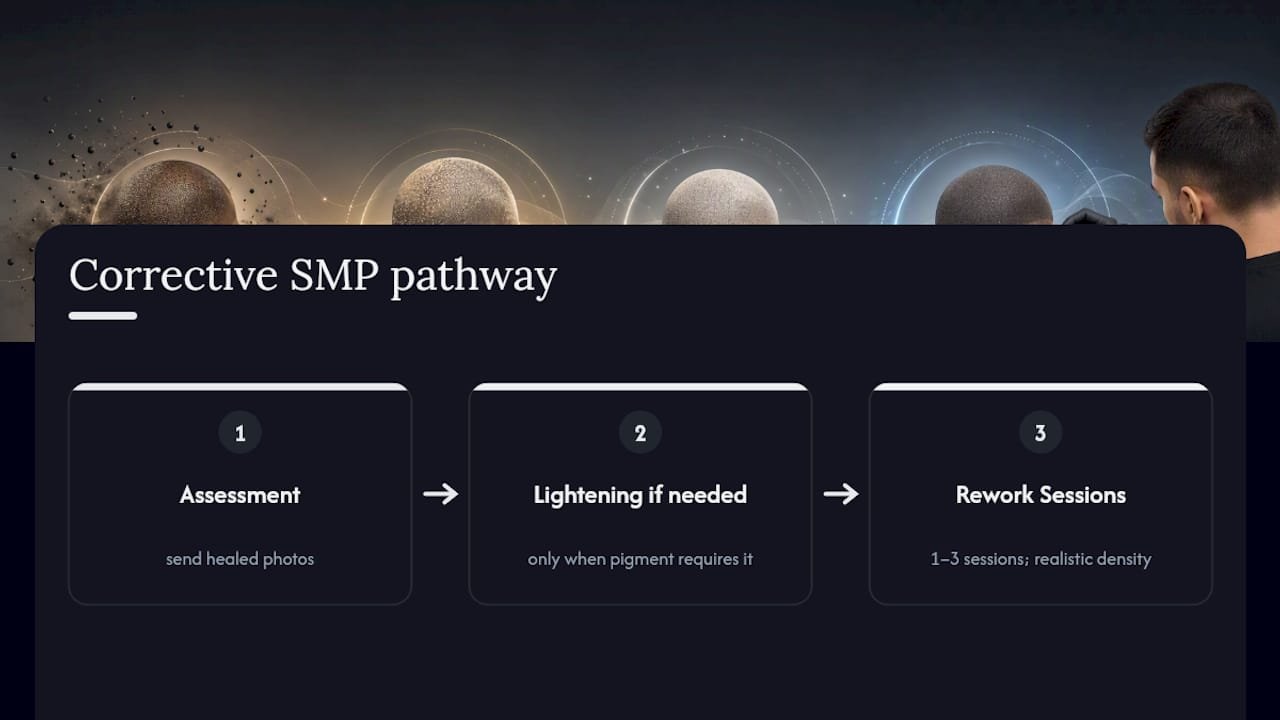
Healed documentation matters here more than fresh photos, since healed pigment is what you’ll actually be living with. If you’re unsure which category your case falls into, sending healed photos for review before booking anything is a reasonable first move, and it’s one Enhanced Scalp offers as part of its scalp micropigmentation consultation process.
A Realistic Take On Fixing A Bad SMP
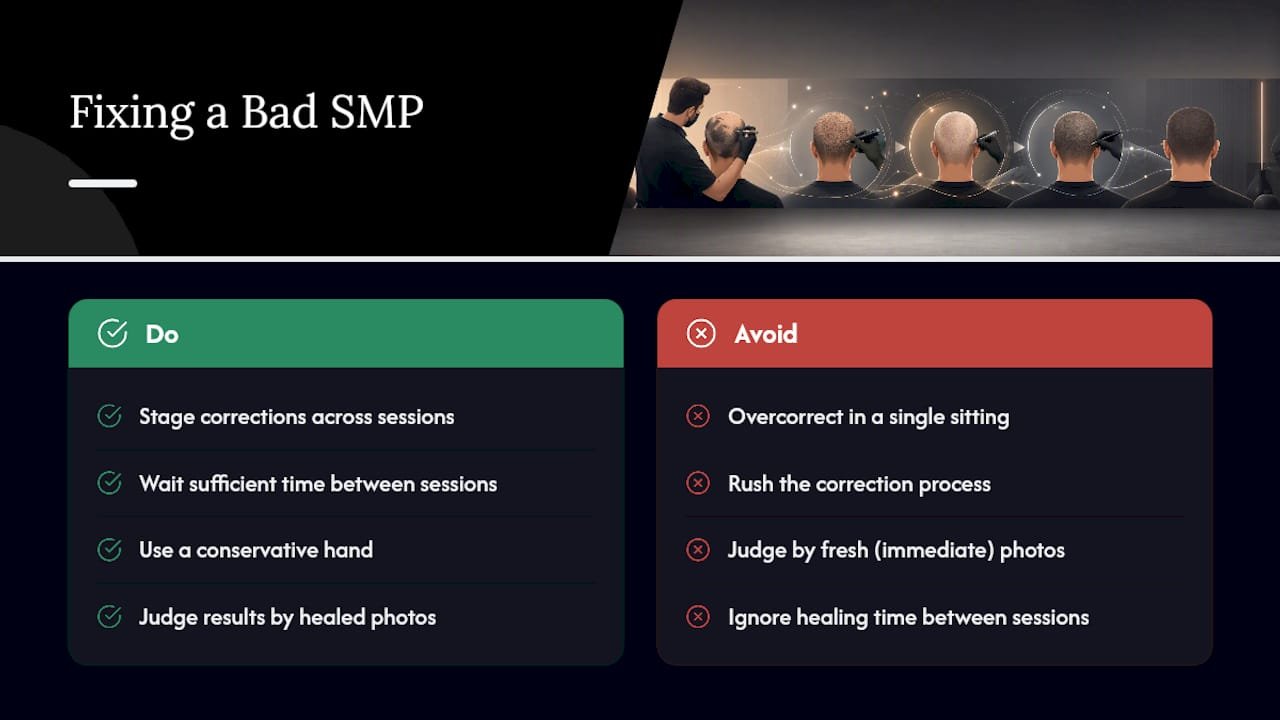
A bad SMP takes a toll beyond the mirror. People delay swimming, avoid certain lighting, second-guess every haircut. That reaction is fair, and it’s exactly why rushing a correction is the wrong instinct.
The cases that heal best are the ones where the artist resisted the urge to overcorrect in one sitting. Staged work, patience between sessions, and a genuinely conservative hand produce results that hold up in daylight six months later, not just in the mirror the day you leave the chair. Judge any correction by its healed photos, never its fresh ones.
— James Christopher
If your first SMP didn’t go as expected, specialized corrective work often follows a conservative, staged philosophy: assess first, lighten only if the pigment truly requires it, then rebuild with realistic density and a hairline that ages well.
A diagnostic consultation includes a magnified review of your existing pigment, a scalp health check, and a straightforward answer on whether you’re looking at a design edit or a longer removal path. Most corrective clients land in the one-to-three-session range once the plan is set. If you’d rather start remotely, send healed photos for an initial review before committing to anything. Book a scalp micropigmentation treatment consultation to get a clear, honest read on your specific case.
Primary Sources And Further Reading
For deeper technique standards and correction methodology, the SMPCA Academy publishes training resources on depth control and conservative design. Healthline’s SMP overview covers longevity and maintenance basics, while Melissa Carr Cosmetic Tattooing’s clinic write-up documents real staged-correction workflows in detail.
Sources
- Healthline — Scalp micropigmentation: What to know
- SMPCA Academy
- Melissa Carr Cosmetic Tattooing — How SMP can go wrong and how we fix it
FAQ
Can SMP Go Wrong?
Yes. The most common failure points are pigment implanted too deep, the wrong pigment shade oxidizing to blue or gray, and design mistakes like an unnaturally low or straight hairline. Rushed, single-session treatments are a frequent underlying cause of all three.
Does SMP Eventually Go Away?
No, SMP pigment is permanent and won’t fade away completely on its own, though it can lighten gradually over years and typically needs touch-ups. If you want a bad result gone rather than faded, professional lightening or laser removal is the reliable path, not waiting it out.
How Long Does It Take For SMP To Fully Heal?
Initial healing takes about four to six weeks, when the scalp settles and pigment shows its true healed color and depth. Clinics wait for this full healing window before judging results or scheduling any follow-up correction session.
Can SMP Be Removed If I Don’t Like It?
Yes, laser removal can break down unwanted SMP pigment, though multiple sessions are commonly needed depending on how deep the ink sits and how it has discolored. Many corrective cases combine partial lightening with a conservative rework rather than full removal, since a total removal followed by fresh SMP is usually the longer, costlier route.

