 Skip to content

Yes, scalp micropigmentation works with long hair, but the technique changes completely. Instead of the dot pattern used for shaved-head SMP, practitioners use hair-stroke or blending methods that soften the contrast between scalp and strands, which typically improves a widening part, a thinning crown, or a receding frontal area without requiring anyone to cut their hair short. Naturalness and how long the result lasts still come down almost entirely to the artist’s skill.
TL;DR:
- Long-hair SMP uses hair-stroke and blending techniques that follow natural hair flow, making it less disruptive to hair length and style.
- Results mainly improve the appearance of narrowing parts, fuller crowns, and reduced scalp shine, but do not add hair density or volume.
- Successful treatment relies heavily on careful pigment matching, stroke placement, and adherence to styling habits to maintain natural results.
- Most cases require two to four sessions, with healing taking several weeks, and results gradually fading over several years depending on pigment and sun exposure.
- Candidates should have enough remaining hair to blend pigment into and avoid expecting SMP to restore lost volume or fill completely bald patches.
Table of Contents
- How Long-Hair SMP Works: Strokes, Blending, and Visual Logic
- What Results Actually Look Like, and Where the Limits Are
- Who Is a Good Candidate for Long-Hair SMP?
- The Treatment Journey: Consultation Through Healing
- Cost, Maintenance, and How Long Results Last
- Practitioner Evidence and Healed Long-Hair Results
- Common Challenges With Long-Hair SMP and How Practitioners Solve Them
- SMP on Long Hair vs. Short Hair: What Actually Differs
- Styling Tips That Make SMP Look Its Best With Long Hair
- Choosing SMP for Long Hair: A Quick Reality Check
- Explore Enhanced Scalp’s Long-Hair and Density Services
- Sources
- FAQ
How Long-Hair SMP Works: Strokes, Blending, and Visual Logic
SMP creates the illusion of density by closing the gap between what your scalp shows and what your hair covers. On a shaved head, that means replicating follicles with tiny dots. With long hair, the goal shifts. Pigment gets placed near existing hair shafts and along the part line so it visually merges with real strands instead of standing apart from them.
That’s why long-hair treatments rely on a hair-stroke technique that follows the natural flow of existing hair rather than isolated stippling. A few things separate this approach from standard SMP:
- Strokes are angled to match the direction hair naturally grows, not placed as uniform dots.
- Pigment tone is matched carefully to avoid a flat or gray cast under longer strands.
- Depth and saturation stay lighter than shaved-head work, since dense pigment reads as artificial once hair covers part of it.
- Technicians avoid blocky shading entirely, keeping the treated area textured rather than solid.
Practitioner restraint matters more here than almost anywhere else in SMP. Undertone matching and careful stroke placement determine whether the final result looks like added hair or like a smudge under a part.
What Results Actually Look Like, and Where the Limits Are
The realistic wins are specific: a narrower-looking part, less scalp shine coming through under bright light, and a crown that reads fuller from a few feet away. These are the areas most commonly treated in long-hair SMP: the part line, the temples, and the crown, where thinning first makes scalp visible through hair.
SMP does not add hair. It doesn’t change texture, thicken individual strands, or restore volume where hair has already stopped growing. If you’re picturing a full head of hair returning, that’s not what this treatment does. It’s a camouflage technique, and a highly effective one when the goal is reducing visible scalp, not manufacturing new growth.
Lighting changes everything about how healed SMP reads. Overhead fluorescent light exaggerates scalp shine, so a treatment that looks perfect in a bathroom mirror might look different under office lighting. Gray hair adds another variable, since pigment matched to your current hair color may need adjustment as more gray comes in. Parting habits matter too: someone who parts their hair the same way every day gets more consistent camouflage than someone who switches sides often, because the treated area is designed around a specific part location.
Pro Tip: Bring a few photos of how you actually wear your hair day to day, not just your best hair day, so your artist designs pigment placement around your real styling habits.
Fading happens gradually over the following years, and longevity depends on pigment quality, sun exposure, and skin type, which is a pattern true of SMP generally, not something unique to long-hair cases.
Who Is a Good Candidate for Long-Hair SMP?
Good candidates share one trait: enough hair length remains to physically mask the strokes, but thinning has already created visible scalp contrast. Think widened parts, a crown that shows through under bright light, or a hairline that’s softened at the edges.
People who tend to get less satisfying results:
- Those with completely bald patches where no hair exists to blend the pigment into.
- Anyone experiencing rapid, unmanaged shedding, since new bald areas can appear faster than SMP can be adjusted.
- Clients expecting SMP to restore lost volume rather than reduce scalp visibility.
For active or progressive hair loss, pairing SMP with a medical evaluation makes more sense than treating the cosmetic side alone. SMP handles the visual problem. Medication or other therapies address the underlying cause.
At a consultation, ask direct questions: Can I see healed examples on hair similar to my length and color? How will you handle my part if my hairstyle changes? What happens if my hair thins further after treatment? The answers tell you more about candidacy than any marketing page will.
The Treatment Journey: Consultation Through Healing
A consultation starts with photos, a discussion of your styling habits, and a shade match that accounts for both your current hair color and how it might change over time. This is also where the practitioner maps which areas, part, temples, crown, will actually benefit from treatment.
Sessions run longer than shaved-head SMP because the artist has to work through your hair in sections rather than across an open scalp. Working section by section increases total session time compared with a fully shaved treatment, and most long-hair cases need two to four sessions spaced a few weeks apart to build density gradually.
Healing follows a fairly predictable pattern:
- Days 1 to 7: pigment appears slightly darker and sharper than the final result; the scalp may feel tight or mildly tender.
- Weeks 2 to 4: pigment settles and softens as the skin fully heals underneath.
- Ongoing: color continues to mature slightly over the following months.
Aftercare for long hair carries a few extra rules beyond standard SMP guidance. Avoid washing the treated area for the first several days, skip color treatments or chemical processing until fully healed, and be gentle with brushing near the part line so you don’t disturb settling pigment. Tight ponytails or braids pulled directly over the treated zone should wait until healing is complete.
Cost, Maintenance, and How Long Results Last
Pricing varies by clinic, the size of the area treated, and whether the work is corrective (fixing a prior poor SMP job costs more than a first-time treatment). Rather than quote a number that won’t hold across markets, treat any clinic’s quote as a starting point for comparison, not a final answer until you’ve had a consultation.
A few things worth knowing before you shop by price:
- Touch-ups are typically needed every few years, not annually, depending on pigment quality and how your skin responds to it.
- Sun exposure speeds up fading more than almost any other factor, so scalp sunscreen habits matter long-term.
- Skin type and the pigment brand used both affect how true the color stays over time.
- A cheaper quote from an inexperienced artist often costs more later in corrective work, so prioritize a strong healed results gallery over the lowest bid.
Practitioner Evidence and Healed Long-Hair Results
Immediate post-session photos flatter almost any SMP work. Pigment sits sharp and dark right after treatment, then softens over the following weeks as the skin heals. That’s exactly why healed documentation is a far more reliable indicator of real outcomes than day-of photos, and why serious clinics show both.
Enhanced Scalp builds its long-hair approach around a few consistent priorities:
- Conservative hairline and part design rather than aggressive, dense placement.
- Careful pigment selection matched to natural undertone, which matters more with long hair than with shaved-head work.
- Stroke direction that follows how the client’s hair actually falls, not a generic pattern.
- Corrective work for clients arriving with prior poor SMP, treating the existing pigment as a constraint to design around rather than ignore.
Any clinic’s healed gallery, not just its before-and-after marketing shots, tells you more about what to expect on your own head.
Common Challenges With Long-Hair SMP and How Practitioners Solve Them
The biggest challenge is scalp visibility management: hair naturally moves, gets wet, gets styled differently day to day, and none of that stays static the way a shaved head does. A treatment designed for one part location can look less effective the day you part your hair differently. The fix is usually practical rather than technical. Practitioners design pigment placement around your most common styling pattern and discuss upfront what happens if you change it later.
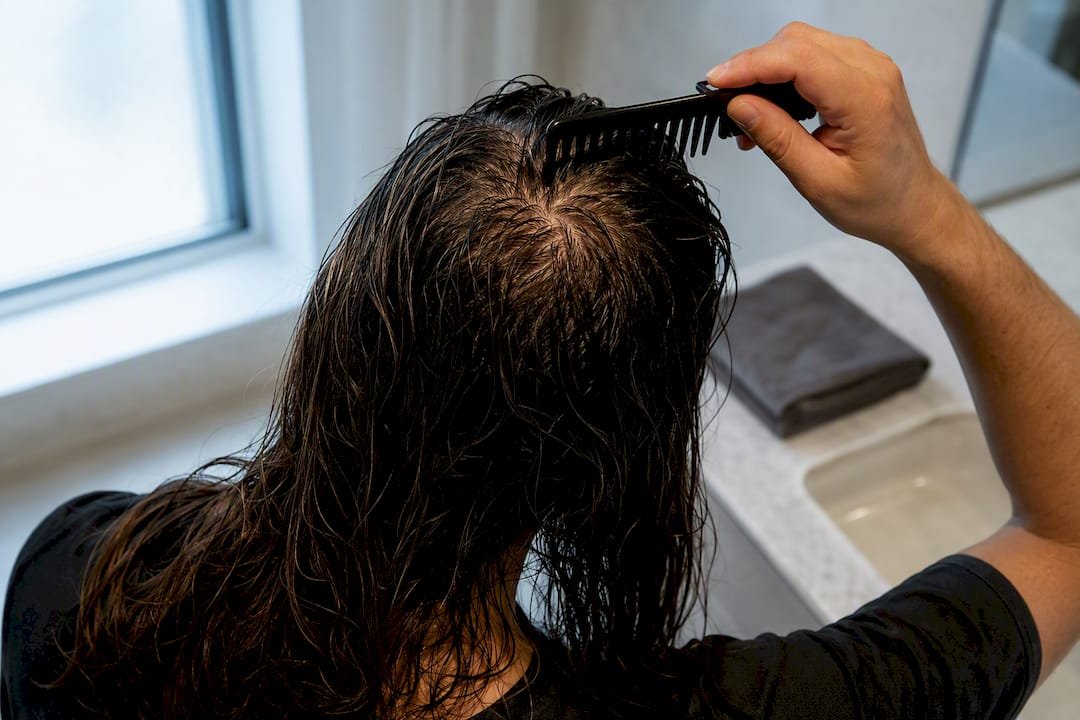
Density impact is the second recurring issue. Because SMP doesn’t add actual hair, areas with severe thinning can still show through, especially under harsh lighting or when hair is wet and clings to the scalp. Some clients find wet hair the most revealing moment of the day. Artists address this by focusing pigment where it does the most visual work: the part line and crown, where scalp-to-hair contrast is most noticeable, rather than trying to blanket the entire scalp evenly.
Hair color mismatches create a third challenge, particularly for clients going gray or planning to color their hair after treatment. Pigment that matched perfectly at the time of treatment can look slightly off a year later if your natural color shifts. The solution is proactive: discuss your graying pattern and coloring plans at consultation so the artist can choose a shade that ages well, or plan for a minor touch-up adjustment down the road.
Finally, hair density itself, how thick your hair is per square inch, changes how much camouflage SMP can realistically provide. Thicker hair hides more; fine or sparse hair leaves more scalp visible even with well-placed pigment. Setting that expectation before treatment prevents disappointment after.
SMP on Long Hair vs. Short Hair: What Actually Differs
Both approaches solve the same underlying problem, visible scalp, but the visual math works differently depending on hair length.
Short or shaved-head SMP replicates a full head of stubble using dot patterns that mimic individual follicles. Because there’s no existing hair to blend with, the pigment does all the visual work, and the result is judged against a completely bald or buzzed reference point. This tends to produce more dramatic, immediately visible change, since the transformation is total.
Long-hair SMP is inherently more subtle by design. The pigment isn’t creating the appearance of hair from scratch, it’s filling gaps between hair that already exists. That makes the visual improvement more incremental: a part that looks half as wide, a crown that reads noticeably fuller, rather than a complete before-and-after transformation. It also means long-hair SMP is more forgiving of imperfect technique in one sense (existing hair covers minor inconsistencies) and less forgiving in another (mismatched pigment tone is more obvious next to real hair than against bare skin).
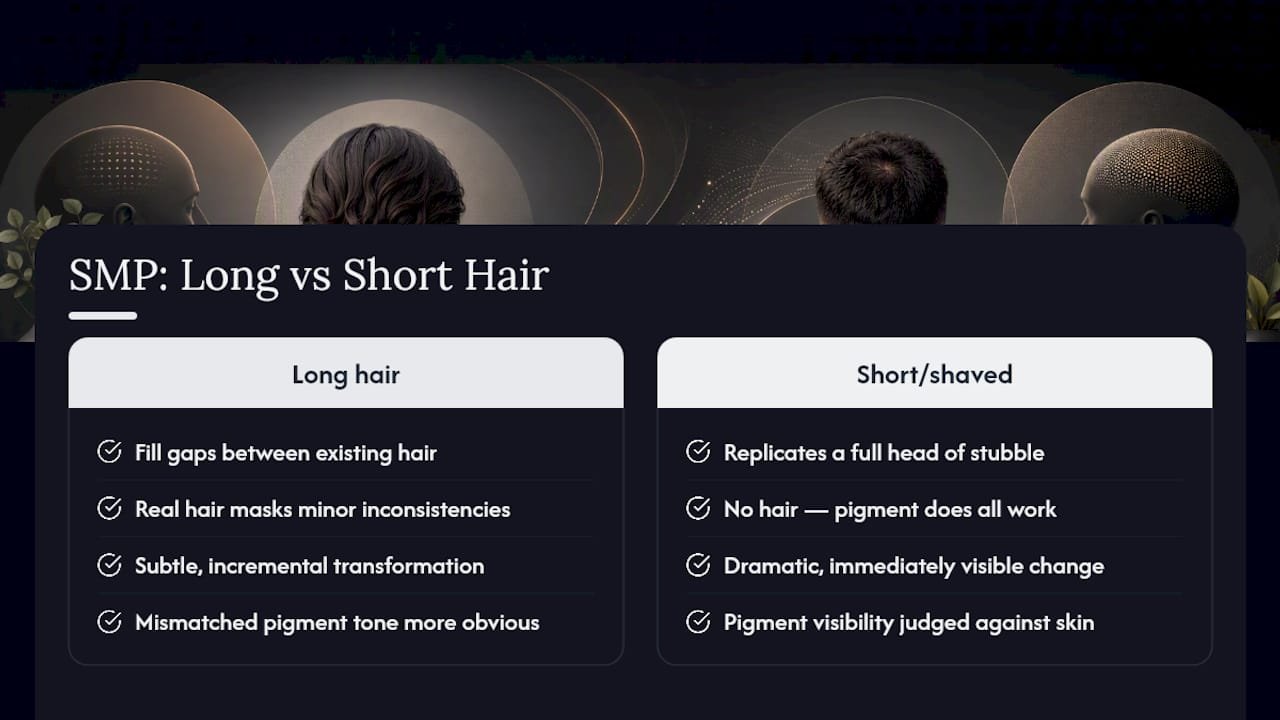
Session time runs longer for long-hair work because of the sectioning required, and results tend to look more natural sooner after healing, since real hair is already doing most of the visual heavy lifting. Shaved-head SMP, by contrast, often needs the full healing period before the dot pattern settles into something that reads as genuine stubble rather than tattoo-fresh dots.
Neither approach is objectively better. They’re solving different visual problems for people at different points in hair loss.
Styling Tips That Make SMP Look Its Best With Long Hair
How you style your hair day to day has more influence on SMP’s visible results than most people expect going in.
Keep your part consistent, or close to it. Since pigment is placed around a specific part location, switching sides regularly exposes untreated scalp on the side that isn’t usually parted. If you like variety, mention it at consultation so the artist can plan a slightly broader treatment zone.
Avoid pulling hair back into tight, high ponytails or slicked styles that stretch the scalp and expose more skin than usual. Looser, more textured styles tend to work with SMP rather than against it, since they naturally create the layered look the treatment is designed to enhance.
Root-touch powders or scalp concealer sprays, the kind sold for thinning hair generally, can supplement SMP on days when you want extra coverage, though most clients find they need them far less often once pigment has healed fully. Blow-drying with volume at the roots also helps lift hair slightly away from the scalp, which increases the visual density effect SMP is designed to create.
Finally, be mindful with hair coloring. Chemical treatments and color changes should wait until SMP has fully healed, and any future coloring should account for how it might interact with the pigment underneath.
Choosing SMP for Long Hair: A Quick Reality Check
If you’re weighing this decision, the core question is simple: does your hair still cover enough of your scalp that pigment can blend in rather than stand alone? If yes, SMP is one of the more reliable ways to reduce visible thinning without cutting your hair short. If loss is active or progressive, pair the cosmetic decision with a medical opinion first. When picking an artist, skip past the flattering day-of photos and ask specifically for healed galleries showing long-hair work similar to yours.
— James Christopher
Explore Enhanced Scalp’s Long-Hair and Density Services
Enhanced Scalp treats long-hair density loss with the same conservative, healed-result focus it applies to every case: careful pigment matching, restrained stroke placement, and hairline design built around how you actually wear your hair, not a generic template. The clinic’s female scalp micropigmentation service covers density work for widening parts and thinning crowns, while corrective SMP is available for anyone arriving with a previous treatment that turned out too dark, too blocky, or poorly placed.
Before booking anything, look through the healed results gallery to see how pigment settles on hair lengths and textures similar to your own. Once you’ve got a sense of what’s realistic, the next step is a consultation. Bring photos of how you currently part and style your hair, and you’ll walk out with a specific plan rather than a generic quote. You can start that process on the scalp micropigmentation services page.
Sources
FAQ
Does SMP Work if I Never Plan to Shave My Head?
Yes. Long-hair SMP uses hair-stroke and blending techniques instead of the dot pattern used for shaved-head work, so you can keep your hair at any length while still reducing visible scalp.
Will SMP Make My Hair Look Thicker?
SMP doesn’t add hair or change texture. It reduces the visual gap between scalp and existing strands, which makes thinning areas like the part and crown look denser without altering the hair itself.
How Many Sessions Does Long-Hair SMP Typically Need?
Most long-hair cases need two to four sessions spaced a few weeks apart, with sessions running longer than shaved-head SMP because the artist works through hair section by section.
How Long Do Results Last Before a Touch-Up?
Results fade gradually over a few years, with actual timing depending on pigment quality, sun exposure, and skin type; a touch-up becomes noticeable once color visibly softens or scalp contrast starts returning.
Can I Color My Hair After Getting SMP?
Wait until your scalp has fully healed before any chemical color treatment, and mention your coloring plans at consultation so your artist can choose a pigment shade that ages well alongside future color changes.

