 Skip to content


Scalp micropigmentation (SMP) after chemotherapy is usually considered once treatment has ended, your blood counts have recovered, your scalp skin is healthy and your oncology team has said yes. There is no universal date. Many people wait several months, and some wait until they know whether their hair will grow back fully, patchily or not at all. This guide explains how to decide, what to ask your care team, and what the process looks like at our clinic in Vaughan, Ontario.
TL;DR
- SMP is a cosmetic procedure that creates thousands of tiny skin punctures, so your oncologist or care team should clear it first. We do not treat anyone who has not been cleared.
- Hair often starts to return 2 to 6 months after chemotherapy ends, so waiting to see your regrowth pattern is usually wise before you design anything.
- SMP works for a fully shaved look, for added density in thin or patchy regrowth, and for areas where hair does not come back.
- Healing takes weeks, and the final result is judged only after the pigment settles. Plan your sessions around your health, not around an event.
- Sun protection afterward is what keeps the result looking natural for years.
Table of Contents
- Why people consider SMP after chemo
- When is it safe to get SMP after chemotherapy?
- Should you wait for your hair to grow back first?
- What SMP can and cannot do after chemo
- What the process looks like with us
- Aftercare that protects the result
- Our perspective
- Who we can help
- Ready to talk it through?
- Frequently asked questions
- Sources
Why people consider SMP after chemo
Chemotherapy attacks fast-growing cells, and hair follicles are among them. The Canadian Cancer Society explains that hair loss is a common side effect of chemotherapy and that in most cases the hair grows back. Loss usually begins two to four weeks after treatment starts. Regrowth usually begins two to six months after treatment ends, and full regrowth can take anywhere from six months to two years.
That range is the heart of the question. Some people get their hair back thick and even. Others get thin areas, patches, a different texture or a different color. A smaller group, including some people who had very high doses before a stem cell transplant, find that hair does not grow back in the way they expected.
SMP does not grow hair. It deposits pigment into the upper layers of the scalp to replicate the look of tiny, closely cropped follicles. People come to us after chemo for a few reasons:
- They want a fully shaved look that does not read as bald, and a way to feel like themselves again.
- Their hair came back thin, patchy or uneven, and they would rather shave it and add density than keep styling around gaps.
- They are tired of wigs, scarves and hats, particularly in summer.
- They have lingering hair loss from other causes as well, such as pattern baldness, that chemo made more visible.
When is it safe to get SMP after chemotherapy?
This is a medical question first and a cosmetic one second. We are an SMP clinic, not your cancer team, so the final word belongs to your oncologist, hematologist or family doctor.
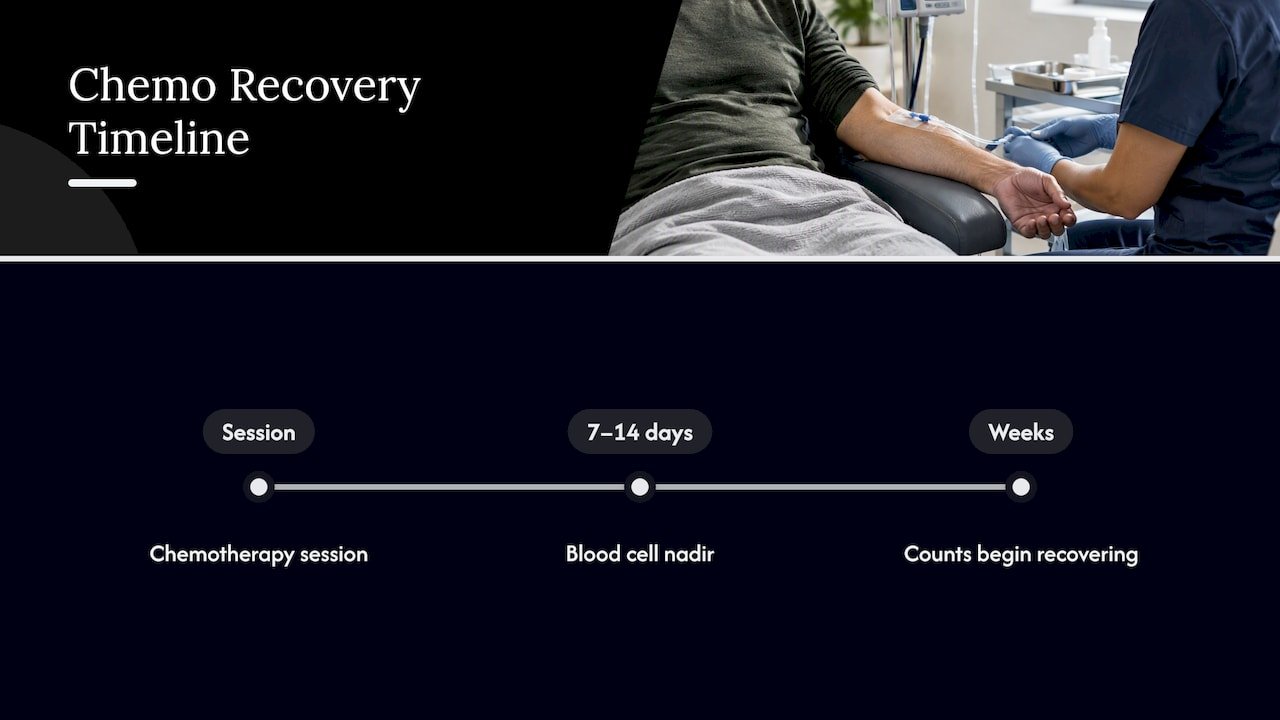
Here is why the timing matters. SMP creates controlled micro-wounds in the scalp, and your body has to heal them. Chemotherapy can suppress the bone marrow, which makes your blood cells. The Canadian Cancer Society notes that low blood cell counts come from bone marrow suppression, and that people on treatment are most vulnerable to infection when white blood cells, especially neutrophils, are low. Counts typically hit their lowest point (the nadir) about 7 to 14 days after a chemo session, then begin recovering over the following weeks.
A review of chemotherapy-induced alopecia in the medical literature takes the same cautious line: SMP can be a useful tool for post-treatment restoration, but only once the scalp skin is healthy and the person’s overall health and immune status have stabilized.
What to ask your care team
Bring these questions to your next appointment:
- Is my immune system recovered enough for a cosmetic procedure that breaks the skin on my scalp?
- Are my blood counts (white cells, neutrophils, platelets) in a range you are comfortable with?
- Am I on any ongoing treatment, such as immunotherapy, targeted therapy or hormone therapy, that affects healing?
- Have I had radiation to the scalp or head? If so, is that skin ready?
- Do I have any upcoming scans, surgeries or further treatment that could affect timing?
If you had radiation to the scalp, tell us at consultation. Irradiated skin heals differently and may not accept pigment in the same way. This is a case where we would want your oncology team’s written view before going further.
A note on scans: if you will be having MRI follow-ups, we have written about MRI after scalp micropigmentation, which covers what to tell the imaging team.
Should you wait for your hair to grow back first?
In most cases, yes, at least for a while. Since regrowth can begin two to six months after chemo ends and continue for up to two years, designing SMP too early means you may be pigmenting skin that would have grown hair, or building a hairline around a pattern that later changes.
A practical way to think about it:
| Where you are | What it usually means for SMP |
|---|---|
| Treatment just ended, no regrowth yet | Wait. Focus on recovery and clearance from your team. |
| Early, fine, uneven regrowth | Usually too early to judge. Texture and color can still change. |
| Regrowth has plateaued with thin or patchy areas | A good time to consult. SMP can add density or support a shaved look. |
| Hair has not returned in some areas | SMP can fill those areas, once you are medically cleared. |
| Full, even regrowth you are happy with | You may not need SMP at all. |
There is no prize for rushing. If an event is pushing you, such as a wedding or a return to work, tell us. We would rather discuss realistic timing than book sessions your body or your hair has not caught up with.
What SMP can and cannot do after chemo
What it can do. It can give the appearance of a closely shaved head of hair, add the look of density to thin regrowth, and soften the contrast between sparse and fuller areas. For a shaved look, it can make a bald scalp read as short hair instead.
What it cannot do. It does not regrow hair, and it cannot match long hair. If your regrowth is curly, grey or a different color than before, the pigment has to work with that, and we choose the shade with your current hair and skin tone in mind. It also will not reverse any ongoing hair loss, so if you plan to keep your regrowth, we build the design to blend with it.
People with a lot of hair coming back sometimes ask whether SMP will clash. It can work well when regrowth is fine and sparse, because the pigment adds the look of density between hairs. When regrowth is still changing, we often suggest waiting.
What the process looks like with us
We cover the full flow in our guide to what to expect from the SMP process, session by session. Here is how it applies to someone coming after chemo.
- Consultation. We look at your scalp, your regrowth, your skin tone and your goals. We also ask about your treatment history, dates, current medications and your oncologist’s advice. If anything is uncertain, we ask you to check with your care team before booking.
- Design. We favor a conservative hairline. After chemo, many people want something soft and natural rather than a sharp, dark line. We would rather start light and build.
- Sessions. SMP is built in layers across multiple sessions, and the gaps between them matter. We schedule them in sequence and talk through your energy and health at each step, since fatigue can linger long after treatment ends.
- Healing and review. The scalp may look lighter or patchy for a short stretch as new skin forms over the pigment. This is normal. Final settling takes several weeks after the last session, and that is when we judge results and decide whether a touch-up is needed.
Session counts vary with the size of the area and how your skin takes pigment. We confirm the plan at consultation rather than promise a number in advance.
Healing: what is normal and what is not
Expect some redness and tiny scabs in the first days. Avoid sweating heavily, swimming, saunas and steam rooms during the early healing window, and follow the specific aftercare sheet we give you.
Because you have recently been through treatment, be stricter about watching for infection. Call your doctor, not just us, if you notice spreading redness, swelling, pus, warmth or a fever. Your care team has told you what temperature counts as urgent for you, so follow that guidance.
Aftercare that protects the result
After the scalp has healed, the most important habit is sun protection. UV exposure fades pigment over time, so a broad-spectrum sunscreen on the scalp, or a hat, is part of living with SMP. Skin that has been through chemotherapy can also be more sensitive, so ask your care team about sun safety for your situation.
If you shave your head, our guide to shaving with SMP explains how to protect the pigment in the first 72 hours.
Our perspective
We see SMP after chemotherapy as a decision that belongs to the person and their medical team, not to a clinic’s calendar. Our work is built around conservative hairlines, realistic follicle replication and pigment chosen for your skin, and that matters even more for someone who has just been through treatment. You do not need a dramatic transformation. You need to look in the mirror and see yourself.
That is why we ask for your medical clearance, we are happy to wait, and we prefer to document healed work rather than show freshly done photos. If you are not sure whether you are ready, a consultation is a conversation, not a commitment. We will tell you honestly if we think it is too early, or if SMP is not the right fit.
— James Christopher
Who we can help
We treat men and women. If you are a woman with thinning after chemo, our female scalp micropigmentation page explains how density work differs from a shaved look. Men can see our SMP for men page. If chemo-related loss overlaps with an existing condition, our article on SMP for alopecia may help. If you have scarring from surgery on the scalp, we also offer scar camouflage.
Ready to talk it through?
Standard scalp micropigmentation at Enhanced Scalp is priced at 3,000 to 4,000 CAD as a one-off. Female SMP and scar camouflage have no published price, so we quote those after a consultation. We are based in Vaughan, Ontario, and we serve Toronto, the GTA and clients who travel to us from elsewhere in Canada and the United States. When you have your care team’s go-ahead, you can see our SMP treatment and book a consultation.
Frequently asked questions
How soon after chemotherapy can I get SMP?
There is no single answer. Many practitioners suggest waiting several months after treatment ends, until your blood counts have recovered and your oncologist approves. Because hair regrowth can begin 2 to 6 months after chemo, waiting also lets you see what your hair does first.
Can I get SMP during chemotherapy?
We do not recommend it. During treatment your immune system may be suppressed, and the risk of infection is highest when white blood cells are low. Pigmenting the scalp also adds a skin wound your body has to heal at a time when it is already under strain.
Will SMP look natural if my hair is growing back?
It can, especially when regrowth is fine or patchy, because the pigment adds density between existing hairs. We match shade to your current hair and skin tone. If your hair is still changing in texture or color, waiting usually gives a better result.
Do I need a doctor’s note?
We ask for your oncology team’s clearance and will not proceed without it when your treatment history makes it relevant. A short written note, or a clear statement from your doctor that you are fit for a minor cosmetic skin procedure, is helpful.
Sources
- Hair loss, Canadian Cancer Society
- Low blood cell counts, Canadian Cancer Society
- Infection, Canadian Cancer Society
- Prevention and treatment of chemotherapy-induced alopecia, PubMed Central

