 Skip to content


To protect your SMP, follow your clinician’s healing timeline (keep the scalp dry, avoid sweating, never scratch), use sunscreen and a light moisturizer regularly, and expect touch-ups as needed. This advice reflects our clinic practice, and following aftercare closely lowers the odds that you will ever need corrective work.
TL;DR:
- Once your clinician allows washing, use lukewarm water, fragrance free cleanser, and fingertips; let scabs fall naturally, and avoid razors and scrubbing.
- Harsh exfoliants, heavy oils, and repeated pool or ocean exposure can fade pigment or blur stippling; rinse after swimming and choose lightweight moisturizer.
- Book an assessment for patchy fading, sparse dots, tone shifts, or blurred edges; compare photos taken in consistent lighting every few months.
- Before a refresh, avoid sunburn, arrive with a clean scalp, and bring healed photos and details of earlier sessions for pigment depth and tone assessment.
- A 2025 study of 120 patients documented revisions after unsatisfactory SMP; corrective options include laser removal, repeat SMP, or hair transplant by experienced professionals.
Table of Contents
- How should you care for your scalp in the first 14 days?
- What daily habits protect your SMP for years?
- When do you need a touch-up, and what happens during one?
- What signs tell you it is time for a touch-up?
- Which mistakes shorten the life of your SMP?
- Why can you trust this maintenance guidance?
- What is our philosophy on realistic expectations?
- Where can you book a maintenance check or touch-up?
- FAQ
- Sources
How should you care for your scalp in the first 14 days?
The healing period can affect how much pigment stays put. As the skin renews itself and scabs form, irritation can pull superficially placed pigment out with them, so patience here pays off for years.
- Immediately after treatment: Keep the scalp dry. Do not touch, scratch, or shave it, skip exercise and anything that makes you sweat, and avoid tight hats that press on the skin.
- As healing progresses: Wash gently with lukewarm water and a fragrance-free cleanser, using only your fingertips and no scrubbing. Pat dry with a clean towel, then apply a thin layer of lightweight moisturizer regularly. If your clinician approves, a gentle electric shave is the only kind to consider, and never a razor.
- As the scalp heals: Watch for scabs separating on their own and let them fall off. Do not pick. Wait for your technician’s go-ahead before returning to swimming, saunas, or stronger grooming products.
- After the initial healing period: Keep your routine simple and ease back into normal activity at the pace your technician recommends.
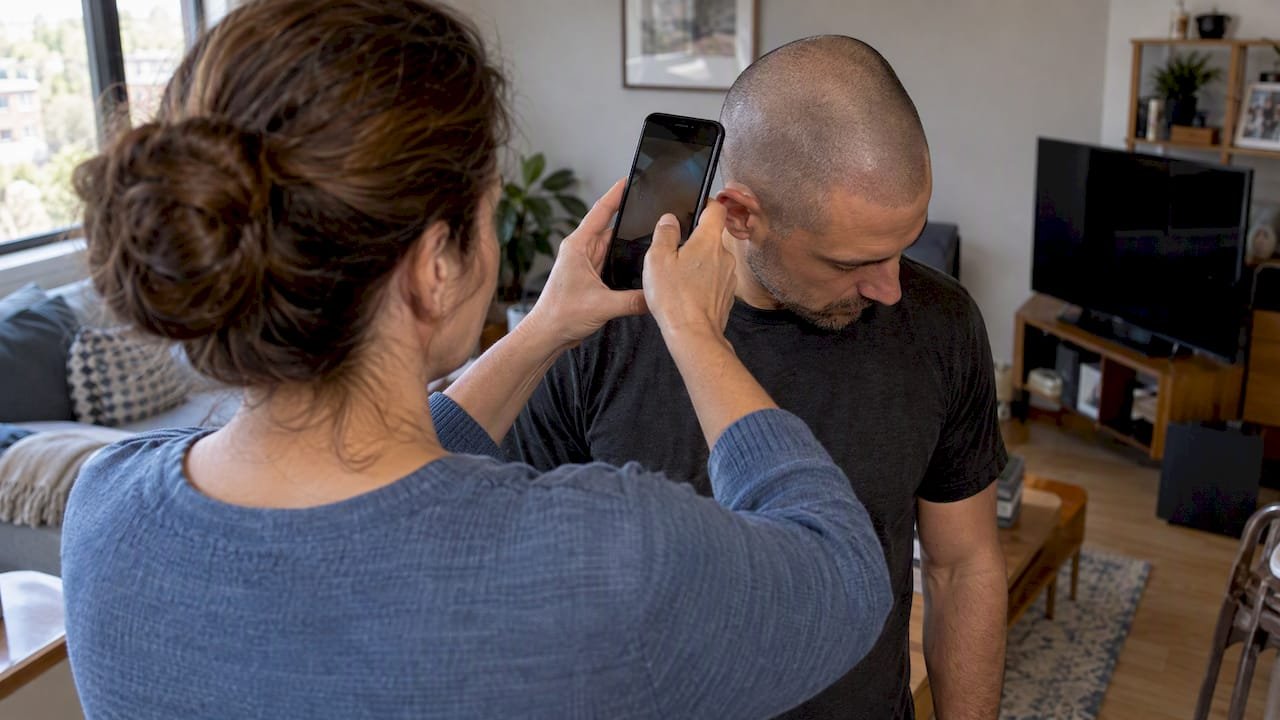
Pro Tip: Take a clear photo of your scalp after the initial healing period in the same lighting each time. It gives your technician a baseline to compare against later.
What daily habits protect your SMP for years?
Long-term care is mostly about two things: blocking UV and avoiding anything that strips pigment. ISHRS guidance notes that pigment composition and insertion depth influence permanence and UV responsiveness, which is why sun habits matter so much. A clinical report in PMC likewise ties fading over time to pigment type and depth, so you cannot control everything, but you can slow what you do control.
- Apply sunscreen to your exposed scalp regularly. A spray sunscreen is convenient along the hairline, and reapply after long outdoor stretches or heavy sweating.
- Choose lightweight, non-greasy moisturizers. Heavy oils add sheen and make the stippling look less defined.
- Limit repeated chlorinated or saltwater exposure. Rinse afterward, apply sunscreen, and consider a swim cap if you swim often.
- Wash with a gentle cleanser and blot oil and sweat instead of scrubbing. Harsh exfoliants wear down the surface skin and speed pigment loss.
- Treat sun exposure and frequent hard workouts as lifestyle factors that shorten the time between refreshes.
Pro Tip: Keep a small sunscreen stick or spray in your gym bag and car so protection never depends on remembering at home.
When do you need a touch-up, and what happens during one?
You can read more in our guide to SMP touch-up timing and our fading timeline. This is practice-based guidance, and it fits the clinical observation that SMP typically holds its appearance for several years.
A touch-up is not simply adding more pigment. Your technician assesses pigment depth and tone shifts, re-saturates only the areas that need it, matches color, and preserves the stippling pattern so the result stays natural. Skin changes and pigment migration make this technical work, and an experienced practitioner gives you better continuity.
To prepare:
- Avoid sunburn in the weeks before your visit.
- Arrive with a clean scalp.
- Bring healed photos and details of your past sessions.
What signs tell you it is time for a touch-up?
Gradual, even fading is normal. Sudden changes are different and deserve a prompt look.
- Patchy or uneven fading across the scalp
- Loss of stippling density, so the dots look sparser
- A noticeable shift in tone, such as warmer or cooler than before
- Blurred or migrated pigment at the edges
Take photos in consistent lighting every few months and compare them. If you see blotchy patches rather than slow, even softening, book a consult instead of waiting, since that can point to a technique or healing issue.
Which mistakes shorten the life of your SMP?
Most early fading traces back to a handful of habits, and each has an easy fix.
- Skipping sunscreen: Apply sunscreen regularly instead.
- Strong chemical exfoliants: Switch to a gentle cleanser.
- Wetting or sweating too soon: Follow your technician’s timeline, then reintroduce activity gradually.
- DIY pigment fixes: Never try them; see a qualified technician instead.
Corrective SMP and editing exist, but they are more complex and belong with experienced hands. See our resource on SMP editing.
Pro Tip: If something looks wrong, photograph it and wait for your assessment rather than trying to fix it at home.
Why can you trust this maintenance guidance?
Our advice rests on clinic practice and published research. Correct pigment depth and a layered approach reduce rapid fading and migration, while poor technique raises the chance of revision. A 2025 retrospective study of 120 patients documented revisions after unsatisfactory SMP and found that corrective options such as laser removal, repeat SMP, or hair transplant can work when experienced professionals perform them.
Poor initial technique increases the need for revision, while experienced corrective measures can achieve satisfactory results in many cases.
What is our philosophy on realistic expectations?
We design conservative hairlines, choose pigment carefully, and judge our work by how it looks once fully healed, not on day one. Routine maintenance is a normal part of owning SMP, not a sign that something went wrong. If you want timing tailored to your skin and your sun and swim habits, we are glad to talk it through with you.
— James Christopher
Where can you book a maintenance check or touch-up?
We offer maintenance touch-ups and SMP editing, and we can assess healed work, ours or another clinic’s.
- Assessment: We examine pigment depth, density, and tone.
- Timing: We recommend when a refresh makes sense for you.
- Booking: Choose a time that suits you.
Learn more or book on our scalp micropigmentation treatment page.
FAQ
What does SMP stand for?
SMP stands for scalp micropigmentation, a cosmetic technique that deposits pigment in a stippling pattern to resemble closely cut hair. It is typically built over multiple treatments.
What happens to SMP after 10 years?
Pigment fades gradually over time, so some people may choose to have a refresh. The PMC clinical report says SMP typically retains its appearance for several years when performed correctly, and a touch-up restores density and tone.
What are the post-SMP care instructions?
Keep the scalp dry, avoid sweating and scratching, and wash gently with a fragrance-free cleanser once your technician allows. Moisturize lightly, then use sunscreen regularly for the long term.
Is SMP worth it?
Many people find it worthwhile because it gives a low-maintenance shaved-head look without surgery. Expect periodic touch-ups, and our direct price for a treatment is 3000-4000 CAD.
Sources
- Revision for unsatisfactory outcomes of scalp micropigmentation – Park – 2025 – International Journal of Dermatology – Wiley Online Library
- Scalp Micropigmentation: A Clinicopathologic Correlation
- Scalp Micropigmentation (SMP): Semantics, Terminology, and Standards – ISHRS

