 Skip to content


Yes, scalp micropigmentation can be a smart complement to a hair transplant once your scalp has fully healed. Specialist guidance from the ISHRS favors waiting roughly 11 to 12 months before recipient-area SMP so transplanted hairs have time to mature. Donor-area scar camouflage is a separate decision that some clinics assess sooner, depending on how the scar has healed.
TL;DR:
- SMP should only be done after full healing, typically 11 to 12 months post-transplant, to prevent pigment fading and ensure stable results.
- Combining SMP with a hair transplant can enhance density and conceal scarring, but it cannot create new follicles or stop ongoing hair loss.
- Success depends on proper timing, scar assessment, and practitioner expertise, with test spots on scars recommended before full sessions.
- Maintenance involves layered sessions, with results gradually softening over five to ten years, requiring occasional touch-ups for optimal appearance.
- For best outcomes, clinics must follow strict sterilization protocols, and patients should review healed case photos rather than immediate results.
Table of Contents
- How SMP helps post-transplant: visual benefits and realistic outcomes
- Timing: when to schedule SMP after a transplant
- How SMP interacts with transplanted hair and scars
- Safety and vetting clinics for post-transplant SMP
- Sessions, maintenance, and how SMP ages after combining it with a transplant
- When SMP may not be the right choice and corrective considerations
- How Enhanced Scalp documents post-transplant SMP results
- What patients and practitioners notice about combining the two
- Book a consultation for post-transplant SMP
- FAQ
- Sources
How SMP helps post-transplant: visual benefits and realistic outcomes
SMP works by reducing the contrast between your scalp and your hair, which tricks the eye into perceiving more density than actually exists. For transplant patients, that means a thin crown or a slightly see-through hairline can look fuller without another surgery. When donor supply runs short and additional grafts are not realistic, combining FUE with SMP can meet appearance goals that surgery alone cannot, and the same review notes this combination can reduce the need for further procedures.
It helps to separate what SMP actually does well from what some people expect it to do:
- It can sharpen or redefine a hairline that transplanted grafts left soft or uneven.
- It can mask scalp show-through in areas where density remains below your goal.
- It can create a convincing shaved-head look if you decide to stop growing hair out.
- It cannot add new follicles or reverse ongoing hair loss in untreated areas.
Subtle density enhancement and a full shaved-head camouflage are different goals that call for different pigment choices and session planning, so it is worth deciding which one you actually want before booking anything.
Timing: when to schedule SMP after a transplant
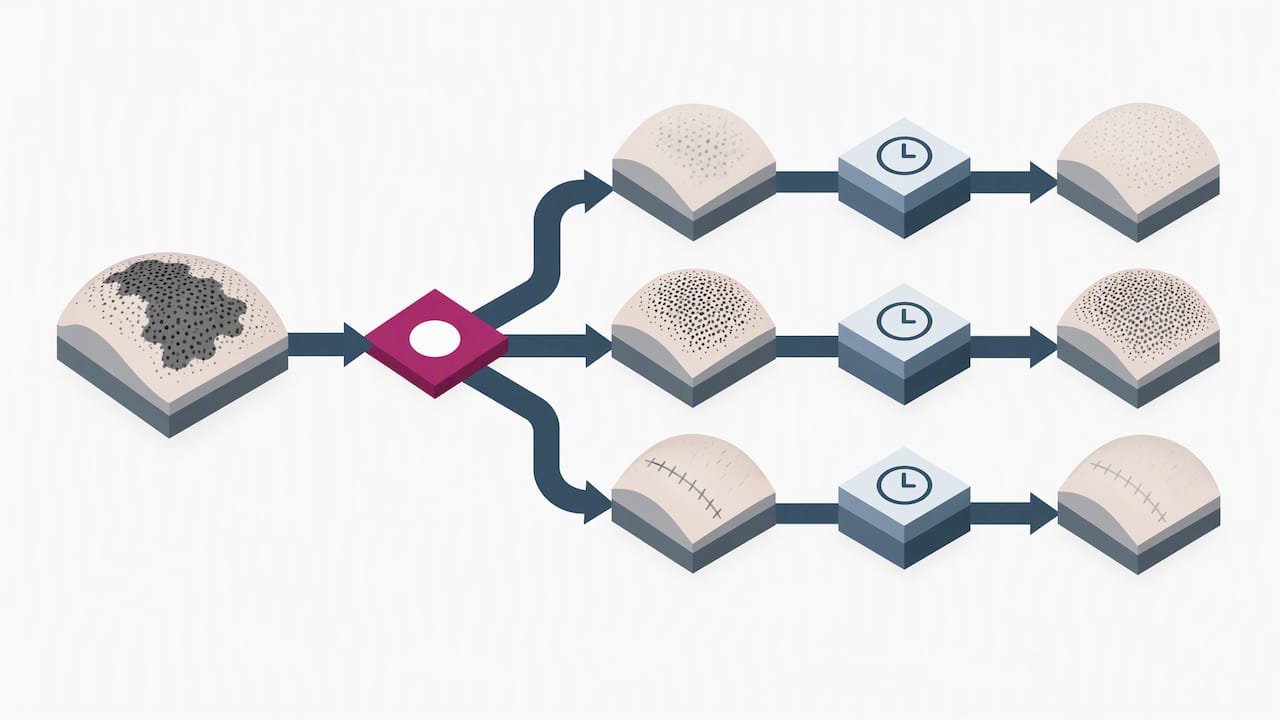
Waiting is the single biggest factor in getting a clean result. The ISHRS recommends holding off on recipient-area SMP for about 11 to 12 months after a transplant, since grafts mature unevenly and pigment placed too early can fade as the skin continues healing underneath it. Some clinics reference a shorter 6 to 12 month window, but the longer timeline reduces the odds of rework once your final hair pattern settles in.
A few markers typically guide when a clinic will proceed:
- The skin shows no redness, swelling, or inflammation at the transplant site.
- Transplanted grafts have fully settled and new hair growth has stabilized.
- Your surgeon has confirmed the area is healed enough for additional cosmetic work.
- Donor-area scars, by contrast, may be evaluated earlier since they involve different tissue than the recipient site.
Rushing this process is the most common reason patients end up needing touch-ups sooner than expected.
How SMP interacts with transplanted hair and scars
SMP uses a stippled pattern of tiny pigment deposits placed just beneath the skin’s surface, mimicking the look of hair follicles between and around your existing strands. This is the same mechanism described in the peer-reviewed review on combining FUE and SMP, which found the technique effective for building apparent density around transplanted hair.
Donor scars need a different approach depending on how they were created:
- FUE donor areas typically show small, round punctate scars that respond well to fine stippling placed directly over the marks.
- FUT donor areas leave a single linear scar that usually needs denser pigment coverage along the scar line to blend it with surrounding hair.
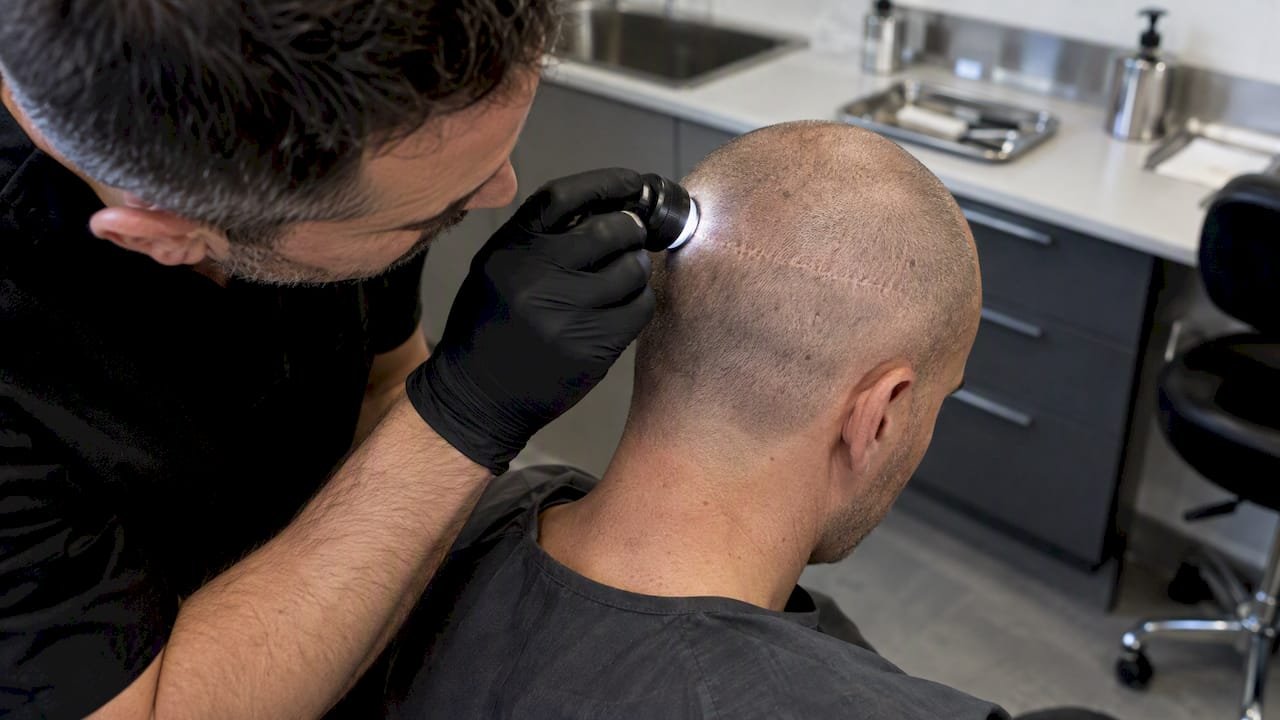
- Scar tissue can absorb pigment differently than healthy skin, which is why a test spot on scar tissue is worth requesting before committing to a full session.
- Keloid-prone skin, heavily stretched scars, or damaged grafts can make results less predictable, and a good practitioner will say so upfront rather than promise a uniform outcome.
Safety and vetting clinics for post-transplant SMP
Infection control matters more after a transplant because the scalp has already been through one surgical process. The City of Toronto’s infection prevention guidance lays out the baseline any clinic should meet: single-use needle cartridges, a fresh glove change for every client, proper antiseptic skin prep, contamination-controlled ink handling, and written aftercare instructions. Avoid treating inflamed or infected skin entirely until it clears.
Before booking, it is reasonable to ask for a few things:
- Healed photos of previous clients with a similar transplant scar or density pattern.
- A test spot on scar tissue if you are considering donor-area camouflage.
- Confirmation that the clinic follows single-use equipment and documented sanitation protocols.
- Willingness to coordinate timing with your transplant surgeon rather than rushing you in early.
Red flags include a clinic that cannot show healed results, avoids questions about sterilization, or pushes you to start before your transplant has settled.
Pro Tip: Ask to see photos taken at least six months after the SMP session, not immediately after, since freshly applied pigment always looks darker and crisper than the healed result.
Sessions, maintenance, and how SMP ages after combining it with a transplant
SMP is built in layers rather than finished in one sitting. Most treatment plans use two to three sessions, spaced a few weeks apart, so the practitioner can check how pigment settles into your skin before adding more depth.
- Longevity depends on pigment type, how deep it was placed, your skin type, and how much sun exposure the area gets over time.
- Progressive hair loss around treated areas is common, so a touch-up every few years is a normal part of ownership rather than a sign something went wrong.
- Over 5 to 10 years, expect gradual softening of the pigment rather than a sudden change, and be wary of any provider promising a fixed look for an entire decade.
When SMP may not be the right choice and corrective considerations
SMP should wait if you have active inflammation, infection, or grafts that have not fully healed. A surgeon’s clearance is the safest checkpoint before scheduling anything.
Correction is a much bigger undertaking than the original treatment. A retrospective study on corrective SMP outcomes found that many patients seeking correction had prior hair transplants, and fixing poorly placed or mismatched pigment can require laser removal, repeat SMP, or a combined surgical approach. Choosing a practitioner carefully and waiting for proper healing are the two biggest levers you control to avoid ending up in that situation.
How Enhanced Scalp documents post-transplant SMP results
We build every post-transplant plan around conservative hairline design and realistic follicle replication rather than rushing toward a dramatic before-and-after. For scar tissue specifically, we use a test spot to check how pigment holds before committing to a full session, a step that matters most for clients recovering from a prior transplant or a previous SMP that did not heal well. Our scar camouflage and gallery pages show healed cases, not fresh touch-up photos, so you can see what the pigment actually looks like months later.
What patients and practitioners notice about combining the two
Patients who add SMP after a transplant usually value the density boost it gives without facing another surgery, and they tend to ask for healed-case photos before agreeing to anything. From a planning standpoint, patience pays off: waiting for grafts to mature and checking a test spot on scar tissue first consistently produces a more natural result than moving too fast.
— James Christopher
Book a consultation for post-transplant SMP
If you are past the healing window and want to explore how SMP could sharpen your results, we start with a consultation to review your transplant history, scar type, and goals before recommending a session plan.
- A consultation to assess healing, scar type, and density goals before any pigment goes down.
- A test spot on scar tissue when donor-area camouflage is part of the plan.
- A layered session schedule built around how your skin responds, not a single rushed visit.
- A healed-photo gallery you can review before deciding anything.
Visit our scalp micropigmentation treatment page to see pricing and book a consultation, or review our FUE scar repair guide if donor-area camouflage is your main concern.
FAQ
Is SMP good after hair transplant?
Yes, SMP can be a useful complement once the scalp has fully healed, since it reduces scalp-hair contrast and can improve the appearance of density or camouflage scarring. The ISHRS notes it works well for transplant patients whose density remains below their goal, though it does not create new follicles.
Is 2 sessions of SMP enough?
Two sessions can be enough for some patients, but most plans use two to three sessions to build density gradually and let the practitioner check how pigment settles before adding more. The right number depends on your skin, the area being treated, and whether scar tissue is involved.
When can I get SMP after a hair transplant?
Specialist guidance from the ISHRS recommends waiting about 11 to 12 months for recipient-area SMP so transplanted hairs can fully mature. Donor-area scar camouflage may sometimes be assessed sooner, depending on how the scar has healed.
How does SMP look after 10 years?
SMP gradually softens over time rather than staying fixed, with the pace depending on pigment choice, depth, sun exposure, and skin type. No practitioner can promise an identical look after a full decade, since ongoing hair loss and pigment fading both play a role.
Sources
- Scalp Micropigmentation (SMP): All You Need to Know – ISHRS
- Combining Follicular Unit Extraction and Scalp Micropigmentation for the Cosmetic Treatment of Alopecias
- Micropigmentation – Infection Prevention and Control – City of Toronto
- Retrospective study on unsatisfactory SMP outcomes and corrective measures

